-
Bild
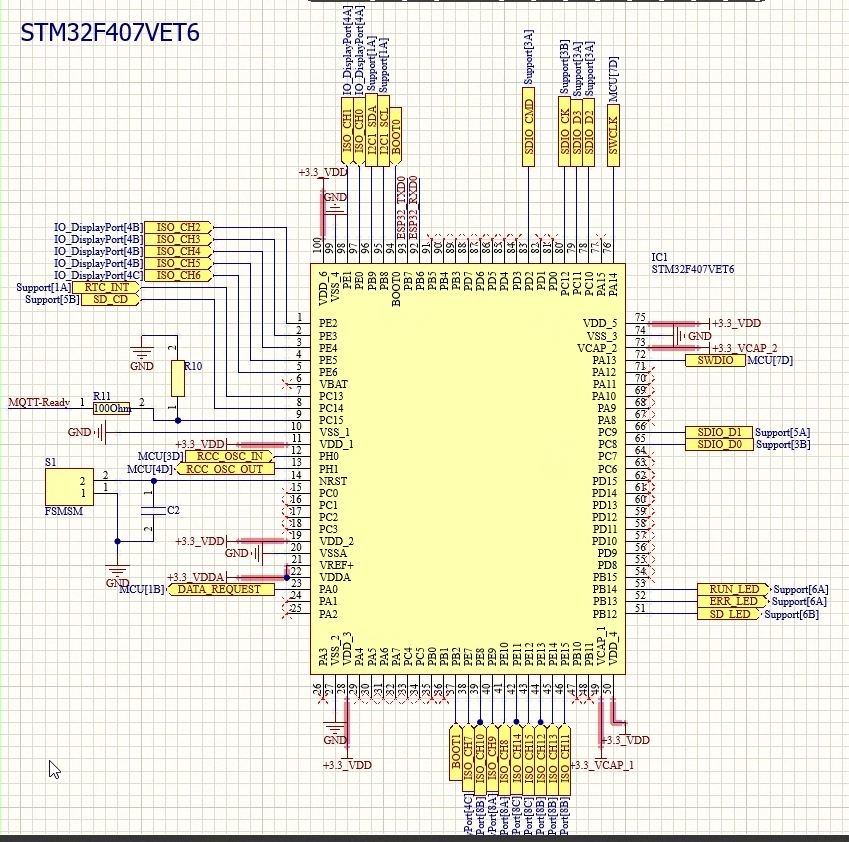
Schaltplan eines STM32F407VET6 Mikrocontrollers
STM32F407VET6, IO_DisplayPort[4A], IO_DisplayPort[4B], Support[1A], Support[5B], SD_CD, R11 100Ohm, MCU[4D] RCC OSC IN, MCU[4D] RCC OSC OUT, MCU[1B] DATA REQUEST, SD LED Support[6A], RUN LED Support[6A]
in „STM32F4 zieht zu viel Strom“ · Mikrocontroller und Digitale Elektronik · · Schaltpläne
-
Datei
main.c
MHz # define TIM_PERIOD 100 # elif defined (STM32F446RE) // STM32F446 Nucleo Board @180MHz # define TIM_CLK 90000000L // APB2 clock: 90 MHz # define TIM_PERIOD 5 # else # error STM32 unknown # endif #elif defined (BLACK_BOARD) # if defined (STM32F407VE
-
Datei
session1.txt
(sehr häufig auf Nucleo-Boards genutzt). ### Voraussetzungen * IDE: STM32CubeIDE oder STM32CubeMX * HAL-Lib für die spezifische Serie (z.B. STM32F103) * Systemtick durch `HAL_Init()` initialisiert ### `main.c` Code Hier ist der typische Aufbau der `main.c`. Wichtig ist,
-
Bild
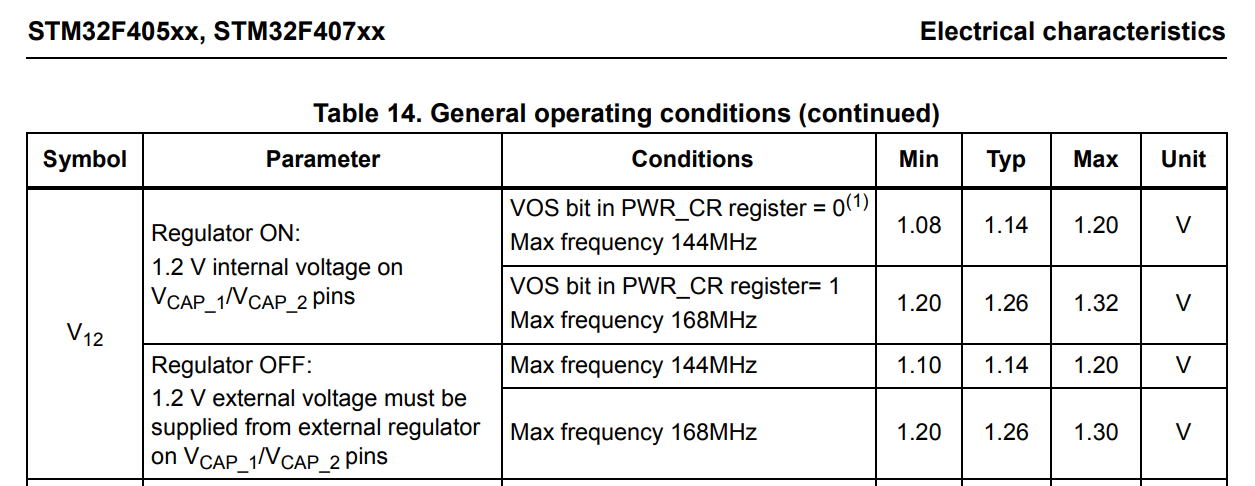
Tabelle der elektrischen Charakteristiken eines STM32F405xx Mikrocontrollers
STM32F405xx, STM32F407xx Electrical characteristics Table 14. General operating conditions (continued) Symbol Parameter Conditions Min Typ Max Unit V12 Regulator ON: 1.2 V internal voltage on VCAP_1/VCAP
in „STM32F4 zieht zu viel Strom“ · Mikrocontroller und Digitale Elektronik · · Screenshots
-
Datei
HD66766_example.c
================================================================= // Example code to drive the LCD F-51661GNCJU-MLW-AA from OPTREX CORPORATION (2002) // LCD Driver IC: Hitachi HD66766 // IM0=Low, IM1=High, 16-bit interface, 80-mcu-family // MCU: STM32 F407 VET6 // ===================================
in „LCD-Modul F51661GNCJU-MLW-AA * Info *“ · Mikrocontroller und Digitale Elektronik ·