' Emulation eines DS2501 aus Dell Notebook netzteilen ' Entwicklung basiert auf folgenden Quellen : ' Dallas DS 2501/02 Datasheet ' Webseite Wolfgang Pöllinger -> www.wpö.de ' Webseite http://www.howtofixcomputers.com/forums/dell/dell-pa-10-ac-adapter-center-pin-108608.html ' Webseite http://www.laptop-junction.com/toast/content/inside-dell-ac-power-adapter-mystery-revealed ' Webseite http://www.ringwelt.de/computer/pc/dell-d600-mit-12v-netzteil.html ' Webseite http://bascom.at.ua/publ/1-1-0-1 ' Attiny 85 V --- UB = 3,6 Volt -- 78L05 + 2x 1n4148 an dessen Ausgang -- gespeist aus 19 Volt von Dell ' 1Wire an Pin2
' Emulation eines DS2501 aus Dell Notebook netzteilen ' Entwicklung basiert auf folgenden Quellen : ' Dallas DS 2501/02 Datasheet ' Webseite Wolfgang Pöllinger -> www.wpö.de ' Webseite http://www.howtofixcomputers.com/forums/dell/dell-pa-10-ac-adapter-center-pin-108608.html ' Webseite http://www.laptop-junction.com/toast/content/inside-dell-ac-power-adapter-mystery-revealed ' Webseite http://www.ringwelt.de/computer/pc/dell-d600-mit-12v-netzteil.html ' Webseite http://bascom.at.ua/publ/1-1-0-1 ' Attiny 85 V --- UB = 3,6 Volt -- 78L05 + 2x 1n4148 an dessen Ausgang -- gespeist aus 19 Volt von Dell ' 1Wire an Pin2
300 Collector-Emitter Saturation Voltage (Note 9) — — 0.20 V VCE(SAT) C = 10mA, B = 1.0mA VBE(SAT) Base-Emitter Saturation Voltage C = 10mA, B = 1.0mA 0.65 — 0.85 V Electrical Characteristics – NPN Pre-biased Transistor – Q2 (@T = +25°C, unless otherwise specified.) A Symbol Characteristic Test Condition Min Typ Max Unit Collector-Base Breakdown Voltage 30 — — V V (BR)CBO IC= 50μA, E = 0 V (BR)CEO Collector-Emitter Breakdown Voltage (Note 9) IC= 1mA, IB= 0 30 — — V V (BR)EBO Emitter-Base Breakdown Voltage IE= 50μA, C = 0 5.0 — — V
because a low- power mode regulator with a lower accuracy will be active for small loads. If the base current on VCC3 exceeds IVCC3base > IVCC3base,Ipeak,ren the high-power mode regulator is enabled additionally to support an optimum dynamic load behavior. If the base current on VCC3 falls below the
02958 Mfr.Part No. 202X2124 Suchen geht übrigens in der html-Version des pdfs: http://209.85.129.132/search?q=cache:n0JptzI_swYJ:www.compwest.com/Library/PDF-manuals/Tektronix%2520P6015%25203-90%2520small.pdf+252-0120-00+tek&cd=3&hl=de&ct=clnk&gl=de
(Schraubverschluss) und 5 166-0301-00 shielding sleeve (Hülse) sind aus Metall, das 17 bushing base assembly ist das Plexi-Deckel, der beim Öffnen / Nachfüllen abgenommen wird (Dichtung ist der 16 Sealing Ring). 6 inner probe body assembly ist der durchsichtige Plexi-Zylinder (bei mir durch das
802.3x Flow Control specification. The PHY unit of the MacPhyter supports Auto-Negotiation for 10BaseT-/100BaseTX Half Duplex and 10BaseT-/100BaseTX Full Duplex modes. The signals of the Ethernet interface are located on the IDC10 header “Ethernet”. An adapter cable from IDC10 to RJ45 connector is available
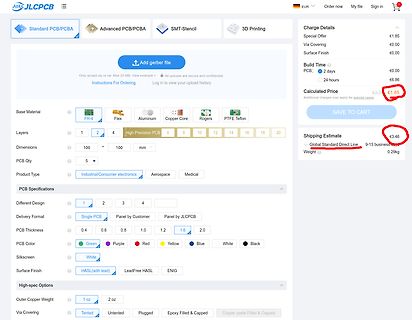
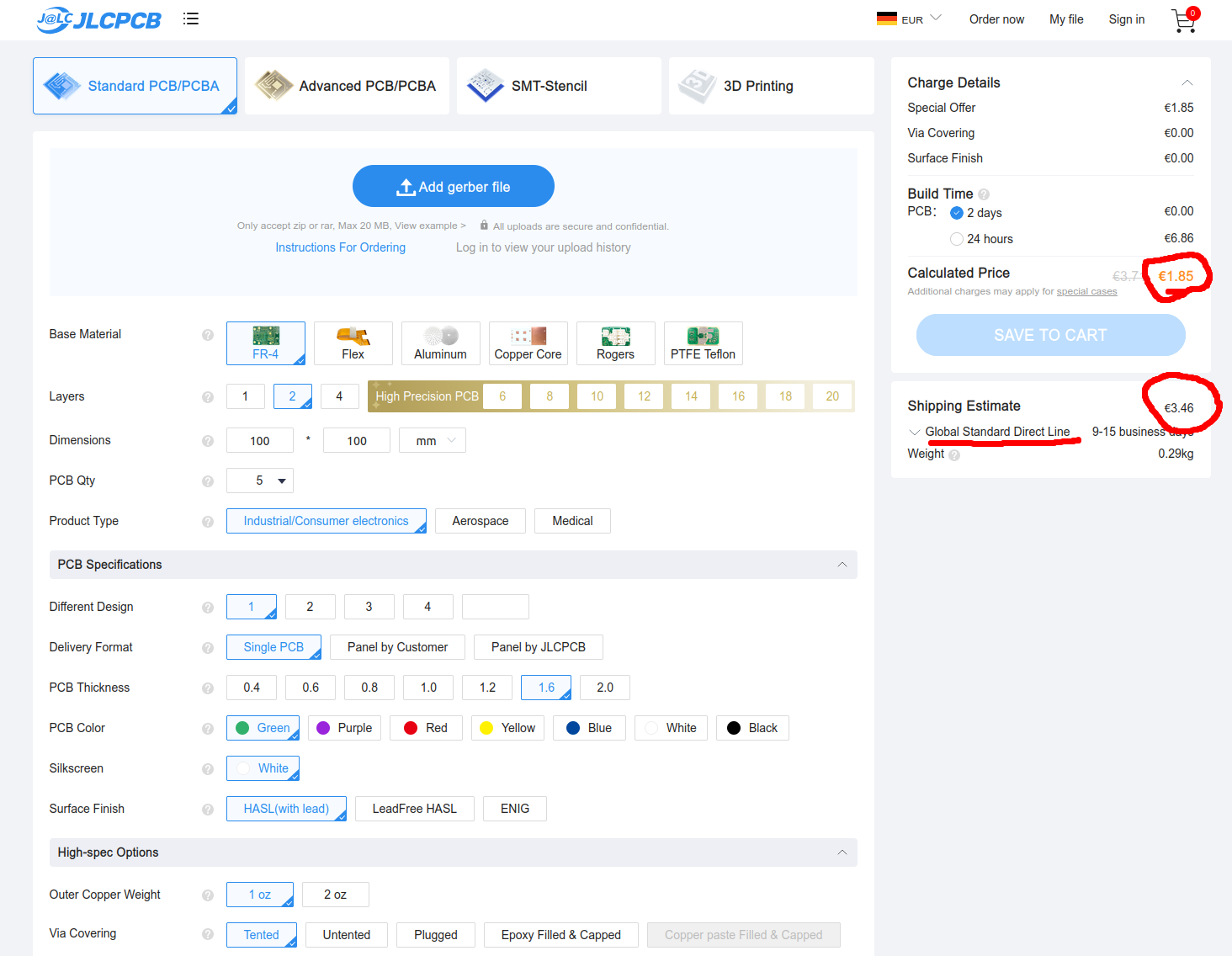
PCB/PCBA Advanced PCB/PCBA SMT-Stencil 3D Printing Add gerber file Charge Details Special Offer €1.85 Via Covering €0.00 Surface Finish €0.00 Build Time PCB: 2 days €0.00 24 hours €6.86 Calculated Price €1.85 SAVE TO CART Shipping Estimate Global Standard Direct Line 9-15 business days Weight 0.29kg Base Material FR-4 Flex Aluminum Copper Core Rogers PTFE Teflon Layers 1 2 4 6 8 10 12 16 20 Dimensions 100 mm PCB Qty 5 PCB Specifications Different Design Delivery Format PCB Thickness PCB Color Silkscreen
Auch Linux wird von der Industrie querfinanziert, und ist schon > lange nicht mehr "gratis". >85% des Linux Codes wird von Firmen > "gesponsert". Wer zahlt das wohl? Diese Unternehmen arbeiten an Linux weil sie Linux selbst für ihre Geräte nutzen und produzieren den Code aus Eigeninteresse.
aktuellen Linux-Systeme nutzen dasselbe Application Binary Interface (ABI), nämlich die Linux Standard Base (LSB). > Wobei das Problem ist, daß weniger prominente Anwendungen schon in > Debian überhaupt nicht aktualisiert werden, siehe auch den > xscreensaver-Streit von vor ein paar Jahren, und das
willkommen. Bitte per Email an . Nick Roethe, DF1FO: 80m-SMD-Peilempfänger Version 5 Dokumentenname fjrx85.doc Stand 14.9.2017 Seite 2 Nick Roethe, DF1FO: 80m-SMD-Peilempfänger Version 5 Dokumentenname fjrx85.doc Stand 14.9.2017 Seite 3 Schaltungsbeschreibung Siehe hierzu das Schaltbild auf der vorigen Seite
> Hast Du einen Link für die erwähnte SW zur FW-Modifikation der > Brücken-ICs_ Im Computer-Base-Forum gibts einen Dauerthread der ständig aktualisiert wird, dort sind auch die Tools verlinkt. Offiziell gibts die nicht zum download.
CERDIP Package Dimensions in Inches (DATUM A) B N/2 1 4 E E1 N E3 e/2 DETAIL A E D A 4 A2 (DATUM B) BASE PLANE A1 A C SEATING PLANE e L 7 c b2 Z Z E2 b .010 M C A B b1 WITH LEAD FINISH (c) c1 BASE METAL 4X b3 (b) SECTION Z-Z 3 DETAIL A S YB INCHES NOTES: OL MIN. NOM. MAX. 1. DIMENSIONING AND TOLERANCING
Fehler dabei heraus, auf den ich mir keinen Reim machen kann: "FATAL_ERROR:Xst:xstrtlviewer.c:2417:1.85 - Unsupported macro type (LPM_LATCH_) in FillNodePropFromMacroBas Process will terminate. For technical support on this issue, please open a WebCase with this project attached at http://www.xilinx.com
, unsigned long ulErrFlags) unsigned long EPIIntErrorStatus (unsigned long ulBase) March 19, 2011 85 External Peripheral Interface (EPI) void EPIIntRegister (unsigned long ulBase, void (∗pfnHandler)(void)) unsigned long EPIIntStatus (unsigned long ulBase, tBoolean bMasked) void EPIIntUnregister
PHY not able to perform half duplex 1000BASE-X 15.13 1000BASE-T Full Duplex 1 = PHY able to perform full duplex 1000BASE-T RO 0 = PHY not able to perform full duplex 1000BASE-T 15.12 1000BASE-T Half Duplex 1 = PHY able to perform half duplex 1000BASE-T
hier aussehen, wenn ich die oben genannten Bereiche messen will? Bei 330°C käme der PT1000 auf 2226,85Ω, bei 400°C auf 2470,92Ω. Vielen Dank schonmal und auch noch einen schönen Feiertag!
Rechenweg mit Linearisierung, Excel-Spreadsheet: http://www.ti.com/general/docs/lit/getliterature.tsp?baseLiteratureNumber=slyt442 http://www.ti.com/lit/an/slyt437/slyt437.pdf (Seite 21 mit RTD_Linearization_v7.xls aus slyt442.zip auch als Dreidrahtanschluss) Die Abweichung durch die 5mV Eigangsoffsetspannung
die "ZynqBerry" oder "ArduZynq" als RPi- bzw. Arduino-pinkompatible Dev-Boards. Allerdings nur 100BaseT. Ansonsten könnte vielleicht ein Z-Turn (z.B. MYS-7Z020-C-S) etwas für dich sein. Spontan sehe ich Gigabit, HDMI, USB-UART und den schon recht potenten Zynq-7020. Ansonsten gibt es noch das
RAM-freundlich. Hatte sowas aehnliches schonmal vor >10 Jahren auf einem Cyclone3 mit 32bit SDRAM (85MHz) am laufen. Da konnte man schoen sehen, dass es nach Anlegen der Adresse und des Schreib/Lesebegehrs immer minumum 12 Takte gedauert hat, bis der Burst losging. Also minimum 28 Takte fuer den Burst
kommst du tatsächlich auf so ca. 60Hz als Grenzfrequenz, weil der wirksame Quellwiderstand dann nur 85Ω beträgt (1k2 || 1k2 || 100R). Aber man hat eine Grunddämpfung von schon mal 17dB. So gesehen hätte es schon passen können, aber eben nur mit etwa 10% Restpegel. IMHO ist die Grenzfrequenz auch für die Base tief angesetzt. Da kann man ruhig 150-200Hz nehmen, gibt dann auch mehr Pegel. Hätte also einigermaßen funktionieren müssen, aber eben nur mit 100-200mV Pegel am Ausgang bei 1Vs am Eingang. Im
Schreibfehler. Die Funktion Delay_ms macht das was sie soll: Parameter sind die Millisekunden. Zur BAS software kann ich nichts hinzufügen. BAS habe ich vor 20 Jahren verlassen :-) als K&R mit C DER Standard wurde. Wiess bis heute nicht, warum es immer noch Menschen gibt, die mit BAS rumspielen !?!
: undefined reference to `TWIM_Stop' C:\Users\Simon\Desktop\Master\TWI_Master\default/../Master.c:85: undefined reference to `Delayloop32' C:\Users\Simon\Desktop\Master\TWI_Master\default/../Master.c:92: undefined reference to `TWIM_Start' C:\Users\Simon\Desktop\Master\TWI_Master\default/../Master.c
sagen. > aber alles Nützliche schon drauf. Hat z.B. ein Tiny25 ebenfalls. Kostet bei Digikey 85Cent. Hmm... Bis auf das Mikro und ein wenig Hühnerfutter zu dessen Anbindung. Zusammen noch mal so ca. ein knapper Euro. Das ist schon ein bissel was anderes als 55 Euronen...
kommen noch die Landesübliche Steuer und Mindermengenzuschlag für Bestellungen unter 60USD. BerryBase will 32€ für ein BlackPill, Eckstein führt ihn nicht. Solange die Elektronikbranche weiter aktiv ihre einstiegswilligen Jung-Kunden vergrault, bleiben eBay, Amazon-Shops und AliExpress die besten
3 V system power supply. 10 HD49815TF Electrical Characteristics (V 1 = 4CC5 V to 5.25 V, V 2 = 2.85 VCCo 3.15 V, AV = 2.85 V to 3.15 V, Ta = 25°C) CC Test Conditions Item Symbol Min Typ Max Unit Note CMOS-level VIHC VCC 0.75 — V CC V input voltage V 0.0 — V 2 0.20 V ILC CC CMOS schmitt V + 2.50 — V
+3 7:0 ADD0 Address [7:0] Base+4 7:0 DATA0 Data byte 0 Base+5 7:0 DATA1 Data byte 1 Base+6 7:0 DATA2 Data byte 2 Base+7 7:0 DATA3 Data byte 3 z Usages Write SPI instructions to Base+0. Set up the addresses and the data in Base+2
Tolerance Max. AC operating voltage of varistor voltage General technical data Climatic category 40/85/56 in accordance with IEC 60068-1 LCT – 40 °C UCT + 85 °C Damp heat, steady state 56 days in accordance with IEC 60068-2-3 (93 % r.h., 40°C) Operating temperature – 40 … + 85 °C in accordance with CECC
sind 432nV Guggst Du hier https://deacademic.com/dic.nsf/dewiki/1139239 Der Faktor pro K ist 3,85*10-3.
Zeno schrieb im Beitrag #6348132: > Der Faktor pro K ist 3,85*10-3. Das würde bei einer linearen Kennlinie (zwischen 0 und 100°C) gelten. Platin hat aber über 0°C ein Polynom 2. Gerades, darunter sogar 4. Grades Die 432nV waren für -200°C
when using START TIMER0 - generated files are in same case as the source file - tiny25,tiny45,tiny85 used the wrong register when updating the prescaler - simulator with real RS-232 data, did not set data receive interrupt. So when using buffered serial IO, it would not be read. - cls LINE for KS108
- Elektor ATM18 LCD driver added. Use $lib "lcd4-elektor.lbx". See also sample elektor-lcd-final.bas ### XMEGA NOTES ### ! In XMEGA the memory is not lineair, you can not access the registers with a pointer! registers are in a separate dataspace ! In XMEGA the access order of 16/24/32 bit registers
Arduino. Experten wie unser C-hater macht's bestimmt auch ohne Schieberegister in ASM mit nem ATtiny85 ;-)
> Experten wie unser C-hater macht's bestimmt auch ohne > Schieberegister in ASM mit nem ATtiny85 ;-) Nö, zu wenig RAM für die Aufgabe. ATtiny824 z.B. würde aber reichen. 14-Pinner ist auch immer noch deutlich kleiner als ein Kuchenblech. Das Asm-Programm für die Aufgabe hätte ca. 40 Zeilen
Value Unit Output Voltage VO 50 V Input Voltage V I 30 V Collector Current – Continuous IC 500 mA Base Current – Continuous I 25 mA B Operating Ambient Temperature Range T ⋅C A MC1413 –20 to +85 MC1413B –40 to +85 NCV1413B –40 to +125 Storage Temperature Range Tstg –55 to +150 ⋅C Junction Temperature
700 TIC226N 800 Full-cycle RMS on-state current at (or below) 85°C case temperature (see Note 2) T(RMS) 8 A Peak on-state surge current full-sine-wave at (or below) 25°C case temperature (see Note 3) I 70 A TSM Peak gate current IGM ±1 A Peak gate power dissipation at (or below) 85°C case temperature (pulse width ≤ 200 µs) P 2.2 W GM Average gate power dissipation at (or below) 85°C case temperature (see Note 4) PG(AV) 0.9 W Operating case temperature range TC -40 to +110 °C Storage
einen ADC (hat kaum ein ATTiny (okay der 841 hat einen ;-) )), Nana, kaum einer? Der Tiny25/45/85, 24/44/84 hat welche. Und sogar der 13er sollte ADC haben.
nur 0,4A plus Trafo-/Netzteilverluste. :-) Wir haben ja z.B. 5V in der Schaltung, also 5V x 17A = 85W. Also soviel in etwa ein Laptop an Netzteil braucht.
Vergiss den/die Trigger-Leitungen nicht ! Außerdem brauchst du ne TimeBase wenn du nur auf den Triggern reagierst.
Was spricht gegen die schnellere 3,3V Version ? Den XC95144XL-5TQ144C gibts bei Digikey für 16,85$ Der XC95108-7PQ100C kostet auch 36.70$, die 5V Version ist eben langsam ein Auslaufmodel mit geringeren Stückzahlen und deshalb vermutlich teurer.
and Reel Note: 1. Lead-free package per JEDEC J-STD-020B. Device available in tape and reel only. Base Band 32Ω Earpiece Voice/Bell Ring Base Band Processors with Melody Ring Generation Amp 8Ω Loud Speaker Select Pin FSA2257 Figure 1. Block Diagram MicroPak™ is a trademark of Fairchild Semiconductor
< 10 ms) Innerer Wärmewiderstand zum Thermal resistance to copper (Rthi < 0.1 K/W Kupfersubstrat base plate Isolationsspannung Dielectric withstanding voltage 500 VAC Induktivität Inductance < 10 nH Stabilität (NennlastAbweichung Stability (Nominal load)deviation < 0.2 % nach/after 2000 h (T = 85 °C) K MERKMALE / FEATURES • 250 W Dauerleistung bei 85 °C 250 W permanent power at 85 °C • 50 J Pulsleistung für 10 ms 50 J pulse power for 10 ms • Extrem niedrige Widerstandswerte ab 0,5 mOhm Extremely low resistance values starting at 0.5 mOhm • TK-Werte
correlated color temperature or dominant wavelength range for the entire family and by providing several base order codes. It is important to note that the base order codes listed here are a subset of the total available order codes for the product family. For more order codes, as well as a complete description
D General Purpose Transistors NPN Silicon 2N2219 2N2219A * 0 COLLECTOR 0 3 2N2222 / 3 2 2N2222A * BASE *Motorola Preferred Devices / 1 1 EMITTER 2 MAXIMUM RATINGS 2N2219 2N2219A P Rating Symbol 2N2222 2N2222A Unit I Collector–Emitter Voltage VCEO 30 40 Vdc H Y Collector–Base Voltage VCBO 60 75 Vdc 3
PNP Silicon Features • These are Pb−Free Devices* http://onsemi.com 3 COLLECTOR MAXIMUM RATINGS 2 BASE Rating Symbol Value Unit Collector−EmitterVoltage V CEO 50 Vdc 1 EMITTER Collector−Base Voltage V CBO 50 Vdc Emitter−Base Voltage V 3.0 Vdc EBO Collector Current − Continuous I 50 mAdc C TO−92 Total

 Bild
Bild