-
PDF
AppNote_Atmel_RTC.pdf
stopped – 0 0 1 CK 1/128s 3 1259G-AVR-04/09 (1) CS02 CS01 CS00 Description Overflow Period 0 1 0 CK/8 1/16s 0 1 1 CK/32 1/4s 1 0 0 CK/64 1/2s 1 0 1 CK/128 1s 1 1 0 CK/256 2s 1 1 1 CK/1024 8s Notes: 1. CK = 32.768 kHz 4 Configuration Example As shown in Figure 2-1, the crystal should be connected directly
in „Atmel AVR Controller mit integrierter RTC“ · Mikrocontroller und Digitale Elektronik ·
-
Datei
servotest.c
/* Interruptroutine Timer 1 für ATmega8 und max 20 Servos evtl auch max 23*/ /* ATmega8 auf 8 MHZ interner oszilator einstellen */ /* prozessorbelastung ca. 12ms(ohne optimierung)*/ /* 6 ms (mit optimirung)*/ /* interrupt alle 20 ms */
in „Timer/Interrupt-Problem bei Atmega32“ · Mikrocontroller und Digitale Elektronik ·
-
Datei
M8DualHexDisplayDriver.asm
; An ATMega8-based dual digit hexadecimal display driver. ; Drives either a dual digit 14-segment LED display ; or a dual-digit 7-segment LED display. ; ; by Mark Graybill, 30Mar2006, 08Apr2009. ; Device Programming
in „asm compiler“ · Mikrocontroller und Digitale Elektronik ·
-
 Bild
Bild
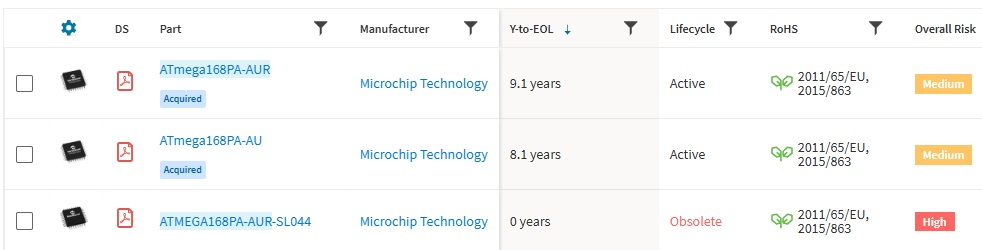
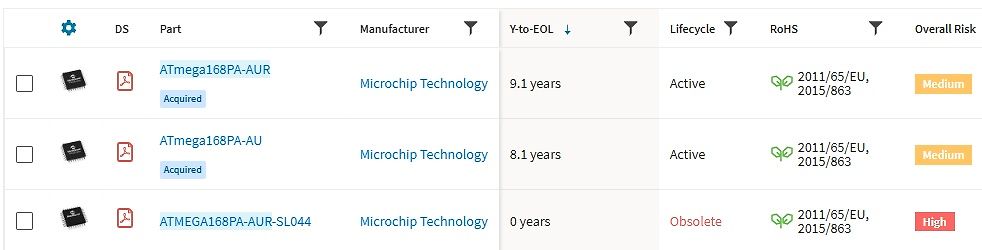
Tabelle mit Mikrocontroller-Informationen
DS Part Manufacturer Y-to-EOL Lifecycle RoHS Overall Risk ATmega168PA-AUR Acquired Microchip Technology 9.1 years Active 2011/65/EU, 2015/863 Medium ATmega168PA-AU Acquired Microchip Technology 8.1 years Active 2011/65/EU, 2015/863 Medium ATMEGA168PA-AUR-SL044 Microchip
in „Unterschied ATMEGA168PA-AUR vs ATMEGA168PA-AUR SL044“ · Mikrocontroller und Digitale Elektronik · · Screenshots
-
PDF
Tutorial_Teil_8_Prg_Multitasking.pdf
Menge der sogenannten Bits, die für die Anzahl der Speicherstellen stehen. Wir haben in unserem ATmega 128 8- und 16- Bit Timer. Timer mit 8 Bit – gehen von 0 bis 255 ( 256) Timer mit 16 Bit – gehen von 0 bis 65535 (65536) Programmierung Nibo 2 – Teil 8 - Multitasking 8 Nibo 2 – Programmierung -
in „Tutorial Programmierung Nibo2“ · Mikrocontroller und Digitale Elektronik ·
-
Datei
spi.h
resetet //Math. Funktion Basis^Hochzahl //============================== float Hoch(int16_t basis,int8_t hochzahl) { float erg = 1; if(hochzahl>=0) { for(int8_t i=0;i<=hochzahl;i++) { erg*=basis; } } if(hochzahl<0) { for(int8_t i=0;i>=hochzahl;i--) { erg/=basis; } } return erg; } void ad5932_init(void
in „Probleme bei der Stueuerung über Taster!“ · Mikrocontroller und Digitale Elektronik ·
-
Datei
tm16xx_demo.c
TM16xx mit 4 stelliger 7-Segmentanzeige MCU : alle AVR ( getestet ATtiny85, ATtiny2313, ATtiny44, ATmega8, ATmega328p ) F_CPU : 8 MHz intern Pinbelegung Controller TM16xx --------------------------- PB1 CLK PB0 DIO PB0 und PB1 sind mit jeweils 2,2 kOhm Pop-Up Wider- staenden nach +5V zu versehen 10.1.2019
in „Siebensegment und Tasten ansteuern mit TM1651 \ TM1637“ · Projekte & Code ·
-
Datei
read_it_first.txt
erfolgt im vorliegenden Fall in 1 Grad-Schritten ueber einen AT mega32 unter Verwendung serieller 8-Bit-Schiebe-Register, 4 Stück an der Zahl (foto 5). Die Position des Rotors wird bei jeder Umdrehung über einen Hall-Sen- sor (rechts im foto 6) und einen starr montierten Permanentmagneten (foto 8)
in „Rotor-Display oder Propeller-Clock“ · Mikrocontroller und Digitale Elektronik ·
-
 Bild
Bild
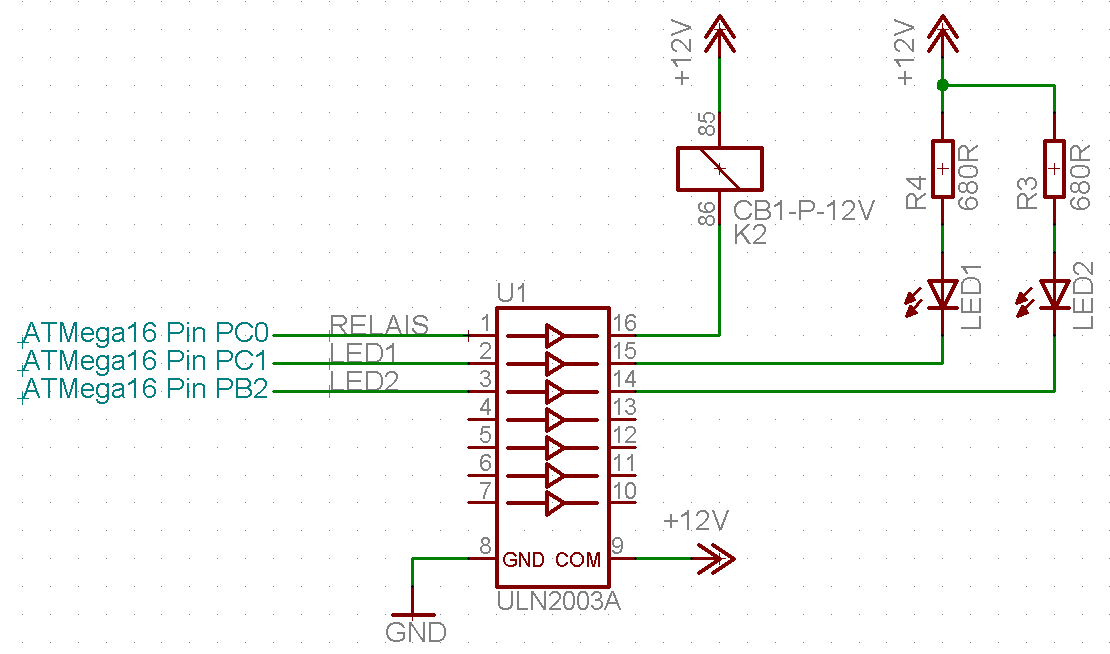
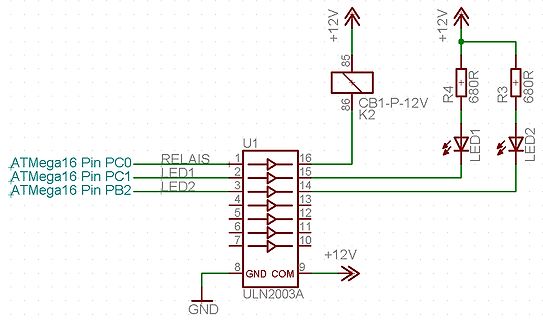
Schaltplan mit ULN2003A, Relais und LEDs
+12V, 85, 86, CB1-P-12V, K2, R4, 680R, LED1, R3, 680R, LED2, ATmega16 Pin PC0, ATmega16 Pin PC1, ATmega16 Pin PB2, U1, 16, 15, 14, 13, 12, 11, 10, 9, 8, 7, 6, 5, 4, 3, 2, 1, RELAIS, LED1, LED2, GND, COM, ULN2003A, +12V, GND
in „Pinzustand während/nach Programmierung ATmega16“ · Mikrocontroller und Digitale Elektronik · · Schaltpläne
-
PDF
UNO_Rev3e_Schaltplan.pdf
INT1)PD1 7 TX (INT1)PD3 5 IO3 5 P 3 O I e c h 1 L TP_UGND C8 2 1 33 PAD (OC0B/INT0)PD0 6 YELLOWTP_RXL (INT0)PD2 4 IO2 4 4 2 P R , n r n i L B 1u (TXD)PD1 3 IO1 3 3 P T T h h u GND GROUND ATMEGA16U2-MU(R) RN2B 2 IO0 2 2 T _ E C r o n r GND 7 2 (RXD)PD0 1 1 _ T D k n t r ATMEGA328P-PU 0 T s O a c e m h 1K IOL i R y e o RX 1K7RN4B2 e a s r i d YELLOW M8RXD N t c GND_TP GND_TP1 1K RN4A c D S h r u O M8TXD 8 1 n R o f o I r A i e U E ORIGIN e E r l e h R E R R A r t T A GND
in „OPV Unterschiede Empfindlichkeit?“ · Analoge Elektronik und Schaltungstechnik ·
-
PDF
UNO_Rev3e_sch.pdf
INT1)PD1 7 TX (INT1)PD3 5 IO3 5 P 3 O I e c h 1 L TP_UGND C8 2 1 33 PAD (OC0B/INT0)PD0 6 YELLOWTP_RXL (INT0)PD2 4 IO2 4 4 2 P R , n r n i L B 1u (TXD)PD1 3 IO1 3 3 P T T h h u GND GROUND ATMEGA16U2-MU(R) RN2B 2 IO0 2 2 T _ E C r o n r GND 7 2 (RXD)PD0 1 1 _ T D k n t r ATMEGA328P-PU 0 T s O a c e m h 1K IOL i R y e o RX 1K7RN4B2 e a s r i d YELLOW M8RXD N t c GND_TP GND_TP1 1K RN4A c D S h r u O M8TXD 8 1 n R o f o I r A i e U E ORIGIN e E r l e h R E R R A r t T A GND
in „Wie funktioniert das? DTR Signal > µC Reset“ · Mikrocontroller und Digitale Elektronik ·
-
PDF
fuseedit.pdf
Fusebits, sowie die Belegung selbiger in den einzelnen Funktionsgruppen, hier am Beispiel für den Mega8: <AVR name="m8" caption="ATmega8"> <Fuse name="RSTDISBL" bit="7" fuseByte="hfuse" default="1" desc="Select if PC6 is I/O pin or RESET pin" mode="expert"/> <Fuse name="WDTON" bit="6" fuseByte="hfuse"
in „Fuseeditor, grafische Benutzeroberfläche für AVRdude“ · Projekte & Code ·
-
PDF
fjrx85Doc.pdf
gerätespezifischen Korrekturfaktor (im Abgleichmenü) die Entfernung geschätzt werden. Der Prozessor ATmega168 steuert neben dem Empfänger auch noch das Benutzer-Interface. Dazu sind ein LCD-Display mit 2*8 Zeichen, ein Drehgeber mit zusätzlichem Druckkontakt, und der Schalter ‚Abschwächer- Peilen-Menü‘
-
Datei
reichelt.htm
value="6"/></td> </tr> <!-- Artikel ENDE --> <!-- Artikel START --> <tr> <td>IC1</td> <td>ATMEL AVR ATmega 8 (DIP)</td> <td><input type="text" name="Input_Unknown[3]" value="ATMEGA 8-16 DIP" class="artnr"/></td> <td><input type="text" id="item[3]" name="Anzahl_Unknown[3]" maxlength
in „Netzteil, LM317, Strombegrenzung und Anzeige!“ · Projekte & Code ·
-
PDF
LCD.pdf
PC7 = E PC6 = RS PC5 = R/W PC04 bist PC7 = DB4 bis DB7 ,QLWLDOLVLHUXQJ Zuerst muss das Display vom Atmega 32 initialisiert werden. Der Displaycontroller kennt eine Power-on-Reset-Funktion. Diese läuft beim Anlegen der Betriebsspannung automatisch ab und bringt das Display in folgenden Zustand: - 8-bit-Interface
-
Datei
build_failed.txt
funsigned-char -funsigned-bitfields -O0 -fpack-struct -fshort-enums -g2 -Wall -c -std=gnu99 -mmcu=atmega32 -MD -MP -MF"GLCD_KS0108.d" -MT"GLCD_KS0108.d" -o"GLCD_KS0108.o" ".././GLCD_KS0108.c" .././GLCD_KS0108.c: In function 'main': C:\temp\GLCD_KS0108\GLCD_KS0108\GLCD_KS0108.c(28,2): pointer targets in
in „GLCD KS0108 und apetech lib aus dem Wiki“ · Mikrocontroller und Digitale Elektronik ·
-
 Bild
Bild
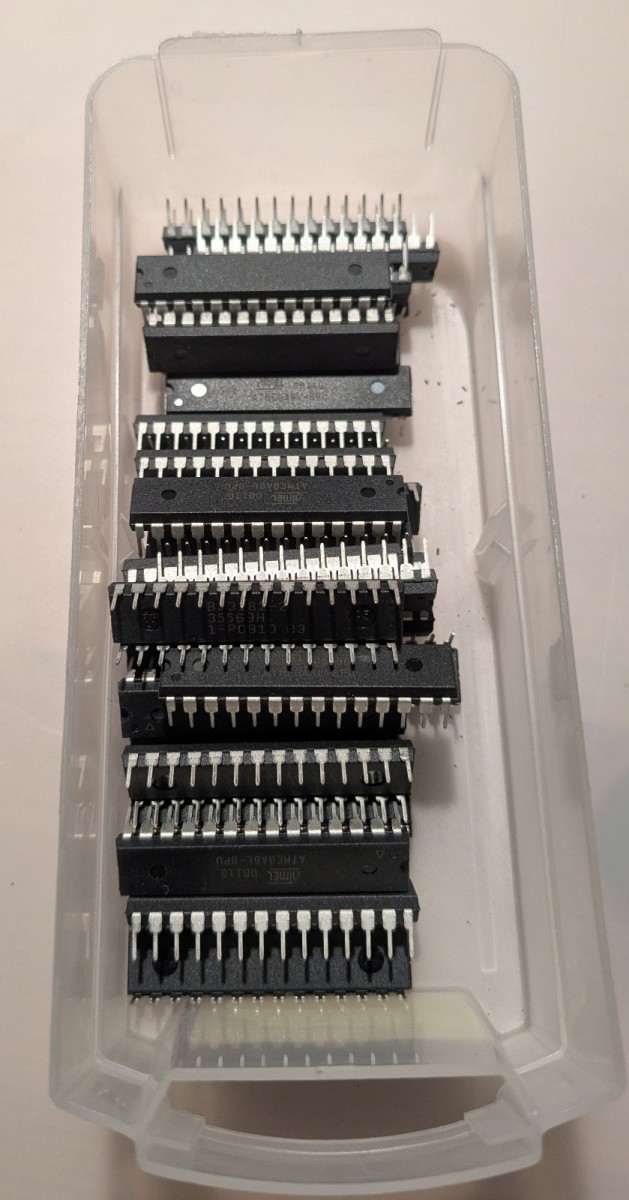
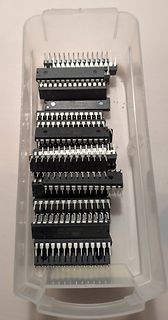
Diverse Mikrocontroller in einer Kunststoffbox
ATMEGA8, ATMEGA8L-CPU
in „[V] Diverses: Displays, AtMega, IC-Sockel, PT100, Quarze, DDR3“ · Markt · · Fotos
-
Datei
lcd.c
#define DDR(x) (*(&x - 1)) /* address of data direction register of port x */ #if defined(__AVR_ATmega64__) || defined(__AVR_ATmega128__) /* on ATmega64/128 PINF is on port 0x00 and not 0x60 */ #define PIN(x) ( &PORTF==&(x) ? _SFR_IO8(0x00) : (*(&x - 2)) ) #else #define PIN(x) (*(&x - 2)) /* address
in „Heizungssteuerung mit ATMEGA 32“ · Mikrocontroller und Digitale Elektronik ·
-
Datei
TWI_all_6.asm
Headerdatei ;HHHHHHHHHHHHHHHHHHHHHHHHHHHHHHHHHHHHHHHHHHHHHHHHHHHHHHHHHHHHHHHHHHHHHHHHHHHHHHH ;Der ATmega8L laeuft mit einem 1,8432 MHz Quarz und wird an 3,3V betrieben. ; ;FUSES $ D1 DD ; ;Ich verstehe nicht, warum in Hterm der twi_schritt 14 ( $E0 ) angezeigt wird ;und der X-Zeiger die Adresse $0042
in „AVR8ASM TWI Interrupt“ · Mikrocontroller und Digitale Elektronik ·
-
Datei
matrix_1.c
/**************************************************************************** LCD mit ATMEGA48 Andreas Weschenfelder 22.07.06 Ansteuerung der 8x8 Matrix ueber SPI CS-Ansteuerung mit MAX7219 nicht moeglich Taktfrequenz 12Mhz ******************************************************************
-
PDF
Quad_Schaltplan.pdf
RESET (PCINT2/ADC2)PA2 35 INT 18 INT GPIN7 1 GND C1 1 (PCINT1/ADC1)PA1 36 +3V3 C18 12 RES GOUT0 4 D Q 8 XTAL2 (PCINT0/ADC0)PA0 37 PD7 16 GPX GOUT1 6 N XTAL1 3 R1 2.2K 15 MOSI GOUT2 7 G 16 MHz 29 (PCINT15/SCK)PB7 2 SCK MOSI 13 MISO GOUT3 8 C2 27 AREF (PCINT14/MISO)PB6 1 MOSI SCKO 14 SCK GOUT4 9 22pF AVCC
-
Datei
lcd.c
#define DDR(x) (*(&x - 1)) /* address of data direction register of port x */ #if defined(__AVR_ATmega64__) || defined(__AVR_ATmega128__) /* on ATmega64/128 PINF is on port 0x00 and not 0x60 */ #define PIN(x) ( &PORTF==&(x) ? _SFR_IO8(0x00) : (*(&x - 2)) ) #else #define PIN(x) (*(&x - 2)) /* address
in „Keine Warnung wenn Prog. Speicher voll?“ · Mikrocontroller und Digitale Elektronik ·
-
Datei
lcd.c
#define DDR(x) (*(&x - 1)) /* address of data direction register of port x */ #if defined(__AVR_ATmega64__) || defined(__AVR_ATmega128__) /* on ATmega64/128 PINF is on port 0x00 and not 0x60 */ #define PIN(x) ( &PORTF==&(x) ? _SFR_IO8(0x00) : (*(&x - 2)) ) #else #define PIN(x) (*(&x - 2)) /* address
in „[Atmega8]LCD-Display+UART“ · Mikrocontroller und Digitale Elektronik ·
-
Datei
lcd_new.c
#define DDR(x) (*(&x - 1)) /* address of data direction register of port x */ #if defined(__AVR_ATmega64__) || defined(__AVR_ATmega128__) /* on ATmega64/128 PINF is on port 0x00 and not 0x60 */ #define PIN(x) ( &PORTF==&(x) ? _SFR_IO8(0x00) : (*(&x - 2)) ) #else #define PIN(x) (*(&x - 2)) /* address
in „mal wieder ein LCD am Atmega8“ · Mikrocontroller und Digitale Elektronik ·
-
Datei
lcd_new.c
#define DDR(x) (*(&x - 1)) /* address of data direction register of port x */ #if defined(__AVR_ATmega64__) || defined(__AVR_ATmega128__) /* on ATmega64/128 PINF is on port 0x00 and not 0x60 */ #define PIN(x) ( &PORTF==&(x) ? _SFR_IO8(0x00) : (*(&x - 2)) ) #else #define PIN(x) (*(&x - 2)) /* address
in „mal wieder ein LCD am Atmega8“ · Mikrocontroller und Digitale Elektronik ·
-
Datei
lcd.c
#define DDR(x) (*(&x - 1)) /* address of data direction register of port x */ #if defined(__AVR_ATmega64__) || defined(__AVR_ATmega128__) /* on ATmega64/128 PINF is on port 0x00 and not 0x60 */ #define PIN(x) ( &PORTF==&(x) ? _SFR_IO8(0x00) : (*(&x - 2)) ) #else #define PIN(x) (*(&x - 2)) /* address
in „LCD zeigt nur die Hälfte an“ · Mikrocontroller und Digitale Elektronik ·
-
Datei
lcd.c
#define DDR(x) (*(&x - 1)) /* address of data direction register of port x */ #if defined(__AVR_ATmega64__) || defined(__AVR_ATmega128__) /* on ATmega64/128 PINF is on port 0x00 and not 0x60 */ #define PIN(x) ( &PORTF==&(x) ? _SFR_IO8(0x00) : (*(&x - 2)) ) #else #define PIN(x) (*(&x - 2)) /* address
in „Grafikfähiger LCD Controller für 320x240 LCD mit 4 Graustufen“ · Projekte & Code ·
-
Datei
lcd.c
#define DDR(x) (*(&x - 1)) /* address of data direction register of port x */ #if defined(__AVR_ATmega64__) || defined(__AVR_ATmega128__) /* on ATmega64/128 PINF is on port 0x00 and not 0x60 */ #define PIN(x) ( &PORTF==&(x) ? _SFR_IO8(0x00) : (*(&x - 2)) ) #else #define PIN(x) (*(&x - 2)) /* address
in „Kompilieren von C Dateien in Kubuntu“ · Mikrocontroller und Digitale Elektronik ·
-
Datei
lcd.c
#define DDR(x) (*(&x - 1)) /* address of data direction register of port x */ #if defined(__AVR_ATmega64__) || defined(__AVR_ATmega128__) /* on ATmega64/128 PINF is on port 0x00 and not 0x60 */ #define PIN(x) ( &PORTF==&(x) ? _SFR_IO8(0x00) : (*(&x - 2)) ) #else #define PIN(x) (*(&x - 2)) /* address
in „Kompilieren von C Dateien in Kubuntu“ · Mikrocontroller und Digitale Elektronik ·
-
Datei
lcd.c
#define DDR(x) (*(&x - 1)) /* address of data direction register of port x */ #if defined(__AVR_ATmega64__) || defined(__AVR_ATmega128__) /* on ATmega64/128 PINF is on port 0x00 and not 0x60 */ #define PIN(x) ( &PORTF==&(x) ? _SFR_IO8(0x00) : (*(&x - 2)) ) #else #define PIN(x) (*(&x - 2)) /* address
in „[AVR] Lcd Init funktioniert aber der Rest nicht“ · Mikrocontroller und Digitale Elektronik ·
-
Datei
lcd.c
#define DDR(x) (*(&x - 1)) /* address of data direction register of port x */ #if defined(__AVR_ATmega64__) || defined(__AVR_ATmega128__) /* on ATmega64/128 PINF is on port 0x00 and not 0x60 */ #define PIN(x) ( &PORTF==&(x) ? _SFR_IO8(0x00) : (*(&x - 2)) ) #else #define PIN(x) (*(&x - 2)) /* address
in „LCD ES DIP204“ · Mikrocontroller und Digitale Elektronik ·
-
Datei
lcd.c
#define DDR(x) (*(&x - 1)) /* address of data direction register of port x */ #if defined(__AVR_ATmega64__) || defined(__AVR_ATmega128__) /* on ATmega64/128 PINF is on port 0x00 and not 0x60 */ #define PIN(x) ( &PORTF==&(x) ? _SFR_IO8(0x00) : (*(&x - 2)) ) #else #define PIN(x) (*(&x - 2)) /* address
in „LCD-Display zeigt merkwürdige Zeichen an“ · Mikrocontroller und Digitale Elektronik ·
-
Datei
lcd.c
#define DDR(x) (*(&x - 1)) /* address of data direction register of port x */ #if defined(__AVR_ATmega64__) || defined(__AVR_ATmega128__) /* on ATmega64/128 PINF is on port 0x00 and not 0x60 */ #define PIN(x) ( &PORTF==&(x) ? _SFR_IO8(0x00) : (*(&x - 2)) ) #else #define PIN(x) (*(&x - 2)) /* address
in „Frequenzmessung und Optimierung -Os“ · Mikrocontroller und Digitale Elektronik ·
-
Datei
lcd.c
#define DDR(x) (*(&x - 1)) /* address of data direction register of port x */ #if defined(__AVR_ATmega64__) || defined(__AVR_ATmega128__) /* on ATmega64/128 PINF is on port 0x00 and not 0x60 */ #define PIN(x) ( &PORTF==&(x) ? _SFR_IO8(0x00) : (*(&x - 2)) ) #else #define PIN(x) (*(&x - 2)) /* address
in „LCD Atmega8535 fehler beim Programm erstellen mit AVR-Studio“ · Mikrocontroller und Digitale Elektronik ·
-
Datei
lcd.c
#define DDR(x) (*(&x - 1)) /* address of data direction register of port x */ #if defined(__AVR_ATmega64__) || defined(__AVR_ATmega128__) /* on ATmega64/128 PINF is on port 0x00 and not 0x60 */ #define PIN(x) ( &PORTF==&(x) ? _SFR_IO8(0x00) : (*(&x - 2)) ) #else #define PIN(x) (*(&x - 2)) /* address
in „LCD Programmierproblem“ · Mikrocontroller und Digitale Elektronik ·
-
Datei
lcd.c
#define DDR(x) (*(&x - 1)) /* address of data direction register of port x */ #if defined(__AVR_ATmega64__) || defined(__AVR_ATmega128__) /* on ATmega64/128 PINF is on port 0x00 and not 0x60 */ #define PIN(x) ( &PORTF==&(x) ? _SFR_IO8(0x00) : (*(&x - 2)) ) #else #define PIN(x) (*(&x - 2)) /* address
in „LCD Routine Peter Fleury“ · Mikrocontroller und Digitale Elektronik ·
-
Datei
lcd.c
#define DDR(x) (*(&x - 1)) /* address of data direction register of port x */ #if defined(__AVR_ATmega64__) || defined(__AVR_ATmega128__) /* on ATmega64/128 PINF is on port 0x00 and not 0x60 */ #define PIN(x) ( &PORTF==&(x) ? _SFR_IO8(0x00) : (*(&x - 2)) ) #else #define PIN(x) (*(&x - 2)) /* address
in „Attiny2313 mit HD44780 LCD“ · Mikrocontroller und Digitale Elektronik ·
-
Datei
lcd.c
#define DDR(x) (*(&x - 1)) /* address of data direction register of port x */ #if defined(__AVR_ATmega64__) || defined(__AVR_ATmega128__) /* on ATmega64/128 PINF is on port 0x00 and not 0x60 */ #define PIN(x) ( &PORTF==&(x) ? _SFR_IO8(0x00) : (*(&x - 2)) ) #else #define PIN(x) (*(&x - 2)) /* address
in „Attiny2313 mit HD44780 LCD“ · Mikrocontroller und Digitale Elektronik ·
-
Datei
lcd.c
#define DDR(x) (*(&x - 1)) /* address of data direction register of port x */ #if defined(__AVR_ATmega64__) || defined(__AVR_ATmega128__) /* on ATmega64/128 PINF is on port 0x00 and not 0x60 */ #define PIN(x) ( &PORTF==&(x) ? _SFR_IO8(0x00) : (*(&x - 2)) ) #else #define PIN(x) (*(&x - 2)) /* address
in „Attiny2313 mit HD44780 LCD“ · Mikrocontroller und Digitale Elektronik ·
-
Datei
lcd.c
#define DDR(x) (*(&x - 1)) /* address of data direction register of port x */ #if defined(__AVR_ATmega64__) || defined(__AVR_ATmega128__) /* on ATmega64/128 PINF is on port 0x00 and not 0x60 */ #define PIN(x) ( &PORTF==&(x) ? _SFR_IO8(0x00) : (*(&x - 2)) ) #else #define PIN(x) (*(&x - 2)) /* address
in „LCD zu wenig Spannung“ · Mikrocontroller und Digitale Elektronik ·
-
Datei
lcd.c
#define DDR(x) (*(&x - 1)) /* address of data direction register of port x */ #if defined(__AVR_ATmega64__) || defined(__AVR_ATmega128__) /* on ATmega64/128 PINF is on port 0x00 and not 0x60 */ #define PIN(x) ( &PORTF==&(x) ? _SFR_IO8(0x00) : (*(&x - 2)) ) #else #define PIN(x) (*(&x - 2)) /* address
in „LCD funktioniert nicht“ · Mikrocontroller und Digitale Elektronik ·
-
Datei
lcd.c
*/ #define DDR(x) (*(&x - 1)) // address of data direction register of port x #if defined(__AVR_ATmega64__) || defined(__AVR_ATmega128__) // on ATmega64/128 PINF is on port 0x00 and not 0x60 #define PIN(x) ( &PORTF==&(x) ? _SFR_IO8(0x00) : (*(&x - 2)) ) #else #define PIN(x) (*(&x - 2)) // address of
in „Displaytech 162 und 162A geht nicht“ · Mikrocontroller und Digitale Elektronik ·
-
Datei
lcd.c
#define DDR(x) (*(&x - 1)) /* address of data direction register of port x */ #if defined(__AVR_ATmega64__) || defined(__AVR_ATmega128__) /* on ATmega64/128 PINF is on port 0x00 and not 0x60 */ #define PIN(x) ( &PORTF==&(x) ? _SFR_IO8(0x00) : (*(&x - 2)) ) #else #define PIN(x) (*(&x - 2)) /* address
in „Komisches Verhalten mit lcd_puts“ · Mikrocontroller und Digitale Elektronik ·
-
Datei
lcd.c
#define DDR(x) (*(&x - 1)) /* address of data direction register of port x */ #if defined(__AVR_ATmega64__) || defined(__AVR_ATmega128__) /* on ATmega64/128 PINF is on port 0x00 and not 0x60 */ #define PIN(x) ( &PORTF==&(x) ? _SFR_IO8(0x00) : (*(&x - 2)) ) #else #define PIN(x) (*(&x - 2)) /* address
in „20x4 lcd zeigt immer das gleiche an“ · Mikrocontroller und Digitale Elektronik ·
-
Datei
lcd.c
#define DDR(x) (*(&x - 1)) /* address of data direction register of port x */ #if defined(__AVR_ATmega64__) || defined(__AVR_ATmega128__) /* on ATmega64/128 PINF is on port 0x00 and not 0x60 */ #define PIN(x) ( &PORTF==&(x) ? _SFR_IO8(0x00) : (*(&x - 2)) ) #else #define PIN(x) (*(&x - 2)) /* address
in „DCF auf INT0“ · Mikrocontroller und Digitale Elektronik ·
-
Datei
mw_lcd.c
#define DDR(x) (*(&x - 1)) /* address of data direction register of port x */ #if defined(__AVR_ATmega64__) || defined(__AVR_ATmega128__) /* on ATmega64/128 PINF is on port 0x00 and not 0x60 */ #define PIN(x) ( &PORTF==&(x) ? _SFR_IO8(0x00) : (*(&x - 2)) ) #else #define PIN(x) (*(&x - 2)) /* address
in „DCF auf INT0“ · Mikrocontroller und Digitale Elektronik ·
-
Datei
lcd.c
#define DDR(x) (*(&x - 1)) /* address of data direction register of port x */ #if defined(__AVR_ATmega64__) || defined(__AVR_ATmega128__) /* on ATmega64/128 PINF is on port 0x00 and not 0x60 */ #define PIN(x) ( &PORTF==&(x) ? _SFR_IO8(0x00) : (*(&x - 2)) ) #else #define PIN(x) (*(&x - 2)) /* address
in „avr dude Programm zu groß? Eclipse GCC“ · Mikrocontroller und Digitale Elektronik ·
-
Datei
lcd.c
#define DDR(x) (*(&x - 1)) /* address of data direction register of port x */ #if defined(__AVR_ATmega64__) || defined(__AVR_ATmega128__) /* on ATmega64/128 PINF is on port 0x00 and not 0x60 */ #define PIN(x) ( &PORTF==&(x) ? _SFR_IO8(0x00) : (*(&x - 2)) ) #else #define PIN(x) (*(&x - 2)) /* address
in „Probleme mit LCD-Display und SPI Übertragung“ · Mikrocontroller und Digitale Elektronik ·
-
Datei
lcd.c
#define DDR(x) (*(&x - 1)) /* address of data direction register of port x */ #if defined(__AVR_ATmega64__) || defined(__AVR_ATmega128__) /* on ATmega64/128 PINF is on port 0x00 and not 0x60 */ #define PIN(x) ( &PORTF==&(x) ? _SFR_IO8(0x00) : (*(&x - 2)) ) #else #define PIN(x) (*(&x - 2)) /* address
in „LCD-Display Problem“ · Mikrocontroller und Digitale Elektronik ·
-
Datei
lcd.c
#define DDR(x) (*(&x - 1)) /* address of data direction register of port x */ #if defined(__AVR_ATmega64__) || defined(__AVR_ATmega128__) /* on ATmega64/128 PINF is on port 0x00 and not 0x60 */ #define PIN(x) ( &PORTF==&(x) ? _SFR_IO8(0x00) : (*(&x - 2)) ) #else #define PIN(x) (*(&x - 2)) /* address
in „Initialisierung 204b LCD mit ST7066U“ · Mikrocontroller und Digitale Elektronik ·