1 | #include "irmp.h"
|
2 | #define F_CPU 8000000UL
|
3 | #ifndef F_CPU
|
4 | #error F_CPU unkown
|
5 | #endif
|
6 |
|
7 | /*---------------------------------------------------------------------------------------------------------------------------------------------------
|
8 | * ATMEL AVR part:
|
9 | *---------------------------------------------------------------------------------------------------------------------------------------------------
|
10 | */
|
11 | #if defined (ATMEL_AVR)
|
12 |
|
13 | #define LED_PORT PORTD // LED at PD6
|
14 | #define LED_DDR DDRD
|
15 | #define LED_PIN 6
|
16 |
|
17 |
|
18 | #include "irmp.h"
|
19 | #define BAUD 9600L
|
20 | #include <util/setbaud.h>
|
21 |
|
22 | #ifdef UBRR0H
|
23 |
|
24 | #define UART0_UBRRH UBRR0H
|
25 | #define UART0_UBRRL UBRR0L
|
26 | #define UART0_UCSRA UCSR0A
|
27 | #define UART0_UCSRB UCSR0B
|
28 | #define UART0_UCSRC UCSR0C
|
29 | #define UART0_UDRE_BIT_VALUE (1<<UDRE0)
|
30 | #define UART0_UCSZ1_BIT_VALUE (1<<UCSZ01)
|
31 | #define UART0_UCSZ0_BIT_VALUE (1<<UCSZ00)
|
32 | #ifdef URSEL0
|
33 | #define UART0_URSEL_BIT_VALUE (1<<URSEL0)
|
34 | #else
|
35 | #define UART0_URSEL_BIT_VALUE (0)
|
36 | #endif
|
37 | #define UART0_TXEN_BIT_VALUE (1<<TXEN0)
|
38 | #define UART0_UDR UDR0
|
39 | #define UART0_U2X U2X0
|
40 |
|
41 | #else
|
42 |
|
43 | #define UART0_UBRRH UBRRH
|
44 | #define UART0_UBRRL UBRRL
|
45 | #define UART0_UCSRA UCSRA
|
46 | #define UART0_UCSRB UCSRB
|
47 | #define UART0_UCSRC UCSRC
|
48 | #define UART0_UDRE_BIT_VALUE (1<<UDRE)
|
49 | #define UART0_UCSZ1_BIT_VALUE (1<<UCSZ1)
|
50 | #define UART0_UCSZ0_BIT_VALUE (1<<UCSZ0)
|
51 | #ifdef URSEL
|
52 | #define UART0_URSEL_BIT_VALUE (1<<URSEL)
|
53 | #else
|
54 | #define UART0_URSEL_BIT_VALUE (0)
|
55 | #endif
|
56 | #define UART0_TXEN_BIT_VALUE (1<<TXEN)
|
57 | #define UART0_UDR UDR
|
58 | #define UART0_U2X U2X
|
59 |
|
60 | #endif //UBRR0H
|
61 |
|
62 | static void
|
63 | uart_init (void)
|
64 | {
|
65 | UART0_UBRRH = UBRRH_VALUE; // set baud rate
|
66 | UART0_UBRRL = UBRRL_VALUE;
|
67 |
|
68 | #if USE_2X
|
69 | UART0_UCSRA |= (1<<UART0_U2X);
|
70 | #else
|
71 | UART0_UCSRA &= ~(1<<UART0_U2X);
|
72 | #endif
|
73 |
|
74 | UART0_UCSRC = UART0_UCSZ1_BIT_VALUE | UART0_UCSZ0_BIT_VALUE | UART0_URSEL_BIT_VALUE;
|
75 | UART0_UCSRB |= UART0_TXEN_BIT_VALUE; // enable UART TX
|
76 | }
|
77 |
|
78 | static void
|
79 | uart_putc (unsigned char ch)
|
80 | {
|
81 | while (!(UART0_UCSRA & UART0_UDRE_BIT_VALUE))
|
82 | {
|
83 | ;
|
84 | }
|
85 |
|
86 | UART0_UDR = ch;
|
87 | }
|
88 |
|
89 | static void
|
90 | uart_puts (char * s)
|
91 | {
|
92 | while (*s)
|
93 | {
|
94 | uart_putc (*s);
|
95 | s++;
|
96 | }
|
97 | }
|
98 |
|
99 | static void
|
100 | uart_puts_P (PGM_P s)
|
101 | {
|
102 | uint8_t ch;
|
103 |
|
104 | while ((ch = pgm_read_byte(s)) != '\0')
|
105 | {
|
106 | uart_putc (ch);
|
107 | s++;
|
108 | }
|
109 | }
|
110 |
|
111 | static uint8_t
|
112 | itox (uint8_t val)
|
113 | {
|
114 | uint8_t rtc;
|
115 |
|
116 | val &= 0x0F;
|
117 |
|
118 | if (val <= 9)
|
119 | {
|
120 | rtc = val + '0';
|
121 | }
|
122 | else
|
123 | {
|
124 | rtc = val - 10 + 'A';
|
125 | }
|
126 | return (rtc);
|
127 | }
|
128 |
|
129 | static void
|
130 | itoxx (char * xx, unsigned char i)
|
131 | {
|
132 | *xx++ = itox (i >> 4);
|
133 | *xx++ = itox (i & 0x0F);
|
134 | *xx = '\0';
|
135 | }
|
136 |
|
137 | static void
|
138 | timer1_init (void)
|
139 | {
|
140 | #if defined (__AVR_ATtiny45__) || defined (__AVR_ATtiny85__) // ATtiny45 / ATtiny85:
|
141 |
|
142 | #if F_CPU >= 16000000L
|
143 | OCR1C = (F_CPU / F_INTERRUPTS / 8) - 1; // compare value: 1/15000 of CPU frequency, presc = 8
|
144 | TCCR1 = (1 << CTC1) | (1 << CS12); // switch CTC Mode on, set prescaler to 8
|
145 | #else
|
146 | OCR1C = (F_CPU / F_INTERRUPTS / 4) - 1; // compare value: 1/15000 of CPU frequency, presc = 4
|
147 | TCCR1 = (1 << CTC1) | (1 << CS11) | (1 << CS10); // switch CTC Mode on, set prescaler to 4
|
148 | #endif
|
149 |
|
150 | #else // ATmegaXX:
|
151 | OCR1A = (F_CPU / F_INTERRUPTS) - 1; // compare value: 1/15000 of CPU frequency
|
152 | TCCR1B = (1 << WGM12) | (1 << CS10); // switch CTC Mode on, set prescaler to 1
|
153 | #endif
|
154 |
|
155 | #ifdef TIMSK1
|
156 | TIMSK1 = 1 << OCIE1A; // OCIE1A: Interrupt by timer compare
|
157 | #else
|
158 | TIMSK = 1 << OCIE1A; // OCIE1A: Interrupt by timer compare
|
159 | #endif
|
160 | }
|
161 |
|
162 | #ifdef TIM1_COMPA_vect // ATtiny84
|
163 | #define COMPA_VECT TIM1_COMPA_vect
|
164 | #else
|
165 | #define COMPA_VECT TIMER1_COMPA_vect // ATmega
|
166 | #endif
|
167 |
|
168 | ISR(COMPA_VECT) // Timer1 output compare A interrupt service routine, called every 1/15000 sec
|
169 | {
|
170 | (void) irmp_ISR(); // call irmp ISR
|
171 | // call other timer interrupt routines...
|
172 | }
|
173 |
|
174 |
|
175 | /*-----------------------------------------------------------------------------------------------------------------------
|
176 | * Called (back) from IRMP module
|
177 | * This example switches a LED (which is connected to Vcc)
|
178 | *-----------------------------------------------------------------------------------------------------------------------
|
179 | */
|
180 | void
|
181 | led_callback (uint8_t on)
|
182 | {
|
183 | if (on)
|
184 | {
|
185 | LED_PORT &= ~ (1 << LED_PIN);
|
186 | }
|
187 | else
|
188 | {
|
189 |
|
190 | LED_PORT |=(1 << LED_PIN);
|
191 | }
|
192 | }
|
193 | /*-----------------------------------------------------------------------------------------------------------------------*/
|
194 |
|
195 | int main (void)
|
196 | {
|
197 |
|
198 |
|
199 | IRMP_DATA irmp_data;
|
200 | char buf[3];
|
201 |
|
202 | if (irmp_get_data (&irmp_data))
|
203 | {
|
204 | if (irmp_data.protocol == IRMP_NEC_PROTOCOL ||IRMP_NEC42_PROTOCOL || IRMP_NEC16_PROTOCOL) // NEC-Protokoll && Adresse 0x1234
|
205 | {
|
206 |
|
207 | DDRD=0xFF;
|
208 |
|
209 | PORTD=0b10000000; //Blinke, wenn du was erkennst...
|
210 | _delay_ms(1000);
|
211 | PORTD=0b00000000;
|
212 | _delay_ms(1000);
|
213 |
|
214 |
|
215 | // switch (irmp_data.command)
|
216 | // {
|
217 | // case 0x0001: key1_pressed(); break; // Taste 1
|
218 | // case 0x0002: key2_pressed(); break; // Taste 2
|
219 | // ...
|
220 | // case 0x0009: key9_pressed(); break; // Taste 9
|
221 | // }
|
222 | }
|
223 | }
|
224 |
|
225 | irmp_init(); // initialize irmp
|
226 |
|
227 | LED_DDR |= (1 << LED_PIN); // LED pin to output
|
228 | LED_PORT |= (1 << LED_PIN); // switch LED off (active low)
|
229 | irmp_set_callback_ptr (led_callback);
|
230 |
|
231 | timer1_init(); // initialize timer1
|
232 | uart_init(); // initialize uart
|
233 |
|
234 | sei (); // enable interrupts
|
235 |
|
236 | for (;;)
|
237 | {
|
238 | if (irmp_get_data (&irmp_data))
|
239 | {
|
240 | uart_puts_P (PSTR("protocol: 0x"));
|
241 | itoxx (buf, irmp_data.protocol);
|
242 | uart_puts (buf);
|
243 |
|
244 | #if IRMP_PROTOCOL_NAMES == 1
|
245 | uart_puts_P (PSTR(" "));
|
246 | uart_puts_P (pgm_read_word (&(irmp_protocol_names[irmp_data.protocol])));
|
247 | #endif
|
248 |
|
249 | uart_puts_P (PSTR(" address: 0x"));
|
250 | itoxx (buf, irmp_data.address >> 8);
|
251 | uart_puts (buf);
|
252 | itoxx (buf, irmp_data.address & 0xFF);
|
253 | uart_puts (buf);
|
254 |
|
255 | uart_puts_P (PSTR(" command: 0x"));
|
256 | itoxx (buf, irmp_data.command >> 8);
|
257 | uart_puts (buf);
|
258 | itoxx (buf, irmp_data.command & 0xFF);
|
259 | uart_puts (buf);
|
260 |
|
261 | uart_puts_P (PSTR(" flags: 0x"));
|
262 | itoxx (buf, irmp_data.flags);
|
263 | uart_puts (buf);
|
264 |
|
265 | uart_puts_P (PSTR("\r\n"));
|
266 | }
|
267 | }
|
268 | }
|
269 |
|
270 | /*---------------------------------------------------------------------------------------------------------------------------------------------------
|
271 | * LM4F120 Launchpad (ARM Cortex M4):
|
272 | *---------------------------------------------------------------------------------------------------------------------------------------------------
|
273 | */
|
274 | #elif defined(STELLARIS_ARM_CORTEX_M4)
|
275 |
|
276 | void
|
277 | timer1_init (void)
|
278 | {
|
279 | SysCtlPeripheralEnable(SYSCTL_PERIPH_TIMER1);
|
280 | TimerConfigure(TIMER1_BASE, TIMER_CFG_32_BIT_PER);
|
281 |
|
282 | TimerLoadSet(TIMER1_BASE, TIMER_A, (F_CPU / F_INTERRUPTS) -1);
|
283 | IntEnable(INT_TIMER1A);
|
284 | TimerIntEnable(TIMER1_BASE, TIMER_TIMA_TIMEOUT);
|
285 | TimerEnable(TIMER1_BASE, TIMER_A);
|
286 | // Important: Timer1IntHandler has to be configured in startup_ccs.c !
|
287 | }
|
288 |
|
289 | void
|
290 | Timer1IntHandler(void) // Timer1 Interrupt Handler
|
291 | {
|
292 | (void) irmp_ISR(); // call irmp ISR
|
293 | // call other timer interrupt routines...
|
294 | }
|
295 |
|
296 | int
|
297 | main (void)
|
298 | {
|
299 | IRMP_DATA irmp_data;
|
300 |
|
301 | ROM_FPUEnable();
|
302 | ROM_FPUStackingEnable();
|
303 | ROM_SysCtlClockSet(SYSCTL_SYSDIV_5|SYSCTL_USE_PLL|SYSCTL_XTAL_16MHZ|SYSCTL_OSC_MAIN);
|
304 |
|
305 | irmp_init(); // initialize irmp
|
306 | timer1_init(); // initialize timer1
|
307 | sei (); // enable interrupts
|
308 |
|
309 | for (;;)
|
310 | {
|
311 | if (irmp_get_data (&irmp_data))
|
312 | {
|
313 | // ir signal decoded, do something here...
|
314 | // irmp_data.protocol is the protocol, see irmp.h
|
315 | // irmp_data.address is the address/manufacturer code of ir sender
|
316 | // irmp_data.command is the command code
|
317 | // irmp_protocol_names[irmp_data.protocol] is the protocol name (if enabled, see irmpconfig.h)
|
318 | }
|
319 | }
|
320 | }
|
321 |
|
322 | /*---------------------------------------------------------------------------------------------------------------------------------------------------
|
323 | * PIC18F4520 with XC8 compiler:
|
324 | *---------------------------------------------------------------------------------------------------------------------------------------------------
|
325 | */
|
326 | #elif defined (__XC8)
|
327 |
|
328 | #define _XTAL_FREQ 32000000UL // 32MHz clock
|
329 | #define FOSC _XTAL_FREQ
|
330 | #define FCY FOSC / 4UL // --> 8MHz
|
331 |
|
332 | #define BAUDRATE 19200UL
|
333 | #define BRG (( FCY 16 BAUDRATE ) -1UL)
|
334 |
|
335 | #include <stdio.h>
|
336 | #include <stdlib.h>
|
337 |
|
338 | int
|
339 | main (void)
|
340 | {
|
341 | IRMP_DATA irmp_data;
|
342 |
|
343 | irmp_init(); // initialize irmp
|
344 |
|
345 | // infinite loop, interrupts will blink PORTD pins and handle UART communications.
|
346 | while (1)
|
347 | {
|
348 | LATBbits.LATB0 = ~LATBbits.LATB0;
|
349 |
|
350 | if (irmp_get_data (&irmp_data))
|
351 | {
|
352 | // ir signal decoded, do something here...
|
353 | // irmp_data.protocol is the protocol, see irmp.h
|
354 | // irmp_data.address is the address/manufacturer code of ir sender
|
355 | // irmp_data.command is the command code
|
356 | // irmp_protocol_names[irmp_data.protocol] is the protocol name (if enabled, see irmpconfig.h)
|
357 | printf("proto %d addr %d cmd %d\n", irmp_data.protocol, irmp_data.address, irmp_data.command );
|
358 | }
|
359 | }
|
360 | }
|
361 |
|
362 | void interrupt high_priority high_isr(void)
|
363 | {
|
364 | if (TMR2IF)
|
365 | {
|
366 | TMR2IF = 0; // clear Timer 0 interrupt flag
|
367 | irmp_ISR();
|
368 | }
|
369 | }
|
370 |
|
371 | /*---------------------------------------------------------------------------------------------------------------------------------------------------
|
372 | * STM32:
|
373 | *---------------------------------------------------------------------------------------------------------------------------------------------------
|
374 | */
|
375 | #elif defined(ARM_STM32)
|
376 |
|
377 | uint32_t
|
378 | SysCtlClockGet(void)
|
379 | {
|
380 | RCC_ClocksTypeDef RCC_ClocksStatus;
|
381 | RCC_GetClocksFreq(&RCC_ClocksStatus);
|
382 | return RCC_ClocksStatus.SYSCLK_Frequency;
|
383 | }
|
384 |
|
385 | void
|
386 | timer2_init (void)
|
387 | {
|
388 | TIM_TimeBaseInitTypeDef TIM_TimeBaseStructure;
|
389 | NVIC_InitTypeDef NVIC_InitStructure;
|
390 | RCC_APB1PeriphClockCmd(RCC_APB1Periph_TIM2, ENABLE);
|
391 |
|
392 | TIM_TimeBaseStructure.TIM_ClockDivision = TIM_CKD_DIV1;
|
393 | TIM_TimeBaseStructure.TIM_CounterMode = TIM_CounterMode_Up;
|
394 | TIM_TimeBaseStructure.TIM_Period = 7;
|
395 | TIM_TimeBaseStructure.TIM_Prescaler = ((F_CPU / F_INTERRUPTS)/8) - 1;
|
396 | TIM_TimeBaseInit(TIM2, &TIM_TimeBaseStructure);
|
397 |
|
398 | TIM_ITConfig(TIM2, TIM_IT_Update, ENABLE);
|
399 |
|
400 | NVIC_InitStructure.NVIC_IRQChannel = TIM2_IRQn;
|
401 | NVIC_InitStructure.NVIC_IRQChannelCmd = ENABLE;
|
402 | NVIC_InitStructure.NVIC_IRQChannelPreemptionPriority = 0x0F;
|
403 | NVIC_InitStructure.NVIC_IRQChannelSubPriority = 0x0F;
|
404 | NVIC_Init(&NVIC_InitStructure);
|
405 |
|
406 | TIM_Cmd(TIM2, ENABLE);
|
407 | }
|
408 |
|
409 | void
|
410 | TIM2_IRQHandler(void) // Timer2 Interrupt Handler
|
411 | {
|
412 | TIM_ClearITPendingBit(TIM2, TIM_IT_Update);
|
413 | (void) irmp_ISR(); // call irmp ISR
|
414 | // call other timer interrupt routines...
|
415 | }
|
416 |
|
417 | int
|
418 | main (void)
|
419 | {
|
420 | IRMP_DATA irmp_data;
|
421 |
|
422 | irmp_init(); // initialize irmp
|
423 | timer2_init(); // initialize timer2
|
424 |
|
425 | for (;;)
|
426 | {
|
427 | if (irmp_get_data (&irmp_data))
|
428 | {
|
429 | // ir signal decoded, do something here...
|
430 | // irmp_data.protocol is the protocol, see irmp.h
|
431 | // irmp_data.address is the address/manufacturer code of ir sender
|
432 | // irmp_data.command is the command code
|
433 | // irmp_protocol_names[irmp_data.protocol] is the protocol name (if enabled, see irmpconfig.h)
|
434 | }
|
435 | }
|
436 | }
|
437 | #endif
|

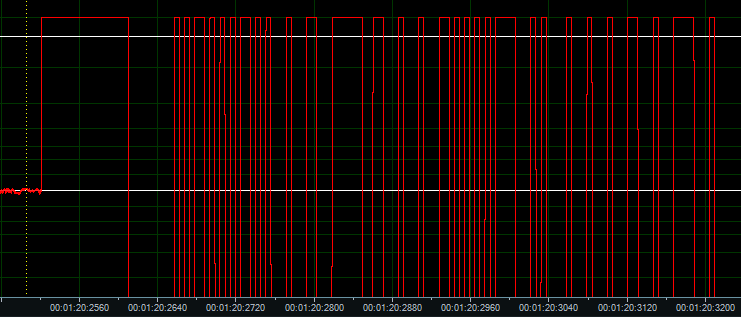
 Call_Back_Signal.png
(2,6 KB)
Call_Back_Signal.png
(2,6 KB)
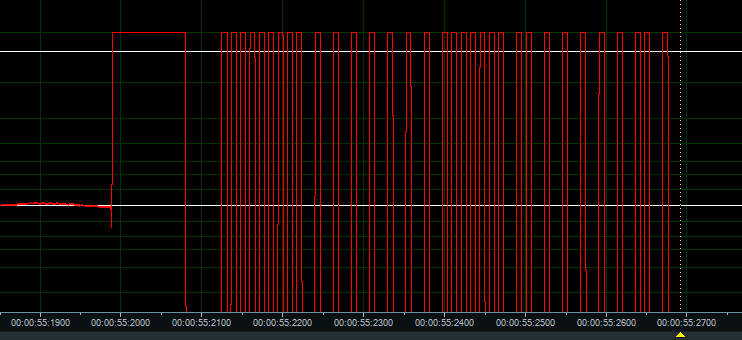
 Orignial_Signal.png
(2,5 KB)
Orignial_Signal.png
(2,5 KB)