in CAMD’s PACSZ1284 has a RC low pass filter network Figure 4. Early solutions to interference problems, integrated with the termination components to mitigate EMI/RFI radiation. therefore, are usually best and least expensive. Low Pass RC Filter Low pass filtering is effective for EMI/RFI filtering when the noise components to be rejected occur at frequen- cies higher than the signal frequency to be passed.The sources of noise could either be intrinsic
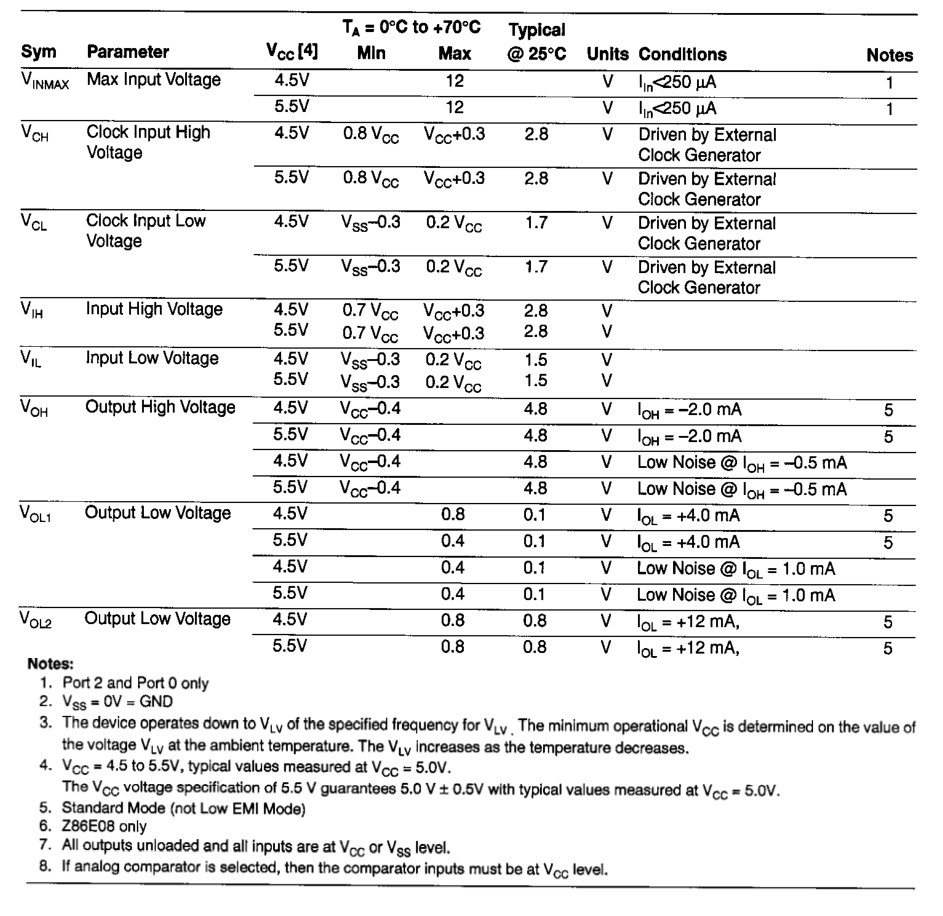
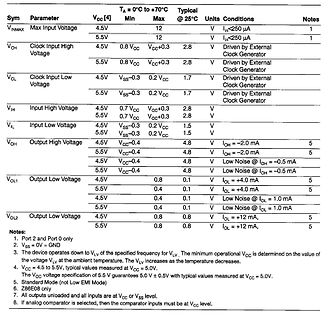
Conditions Notes VINMAX Max Input Voltage 4.5 12 V Iin<250 uA 1 5.5 12 V Iin<250 uA 1 VCH Clock Input High Voltage 4.5 0.8 VCC VCC+0.3 2.8 V Driven by External Clock Generator 5.5 0.8 VCC VCC+0.3 2.8 V Driven by External Clock Generator VCL Clock Input Low Voltage 4.5 Vss-0.3 0.2 VCC 1.7 V Driven by External
Preview auf den morgen ablaufenden Tech Deep Dive betonte man, dass die Erzeugung von GUIs auch auch Low-End-MCUs (18KB RAM, 128KB Flash) möglich sein soll. Dies ist unter Anderem deshalb interessant, weil Systeme auf diese Art und Weise vom immer volatilen Speichermarkt abgekoppelt sein können. In
raue Einsatzumgebungen. Eine solche anspruchsvolle Umgebung stellen niedrige Erdumlaufbahnen (Low Earth Orbit, LEO) mit ihrem hohen Strahlungsaufkommen dar. SpaceX hat den STM32V8 für seine Starlink-Konstellation ausgewählt, wo er in einem Mini-Lasersystem zur Vernetzung der Satelliten zum Einsatz
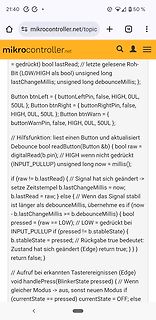
bekommen (eher aus Mangel an Erfahrung) mit dem LA sehe ich, dass bei dem Nano, er irgendwann ouput High zieht und die Daten schickt. Hier funktioniert auch die Kamera. Beim Mini Pro ist die Lanc-Leitung identisch vom Signal seitens der Kamera, aber der output des MCU bleibt immer LOW. Prinzipiell scheint die Hardware den Pin schon auf HIgh ziehen zu können, wenn ich das in den Code manuell umstelle. Er scheint hier im Code nicht hinter die Zeile 40 zu kommen. https://github.com/Julusian/arduino-lanc/blob/master/output/output.ino
SMD markings“ führen zu einem plausiblen Ergebnis. Mit „9K“ kommt man zum PLVA2653A von Nexperia: Low-voltage avalanche regulator double diodes. Hier würde sogar "p9K" passen, mit "p" als Produktionsland. Ich glaube aber nicht an Dioden (siehe unten). Zu „3D“ gibt es zahlreiche Treffer für Dioden und
Kollektor eines anderen Transistors. Das würde zu einem NPN-Transistor passen, also z.B. zum MMBTA44 high voltage transistor. Warum high voltage? Der Schaltungsteil hängt sehr nah an der Netzspannung. Hat jemand eine Idee, welches Bauteil das sein könnte? Kann jemand diese Markierung auflösen? Besten
eines uC ist, dann Du jeden Pin dieser 5 Anschlüsse wahlweise zwischen einem ADC Eingang, einem GPIO Low, einem GPIO High oder einem GPIO Input Floating schalten kannst. Es macht aber eventuell Sinn, eine der Leitungen fest mit VRef des ADC zu beschalten und alle Spannungen gegen diese Leitung zu messen
) - Alle internen Quellen deaktivieren - Über die 100-kΩ-Pull-ups nacheinander jede Leitung auf High ziehen und den Pegel der anderen drei messen: - Isolierte, korrekt verdrahtete Sensoren zeigen keine Kopplung - **Kurzschluss zwischen zwei Adern** → beide Pegel identisch → Fehler lokalisiert
data output of UART1 (On by default) Restore factory settings, chip power-on detection, active at low 59 RESET Input level UART configuration mode set pin, built in pull-. If low level 60 CFG0 Input is detected, enter UART configuration mode. Exit the mode if high level is detected 5. Function 5.1.
Hast du übersehen, das der 6N137 negierten Ausgang hat? In Ruhe ist der Ausgang high und bei aktiver LED ist er low. Je nach Beschaltung ist das auch bei 'normalen' Optokopplern der Fall.
die Frequenz in weiten Grenzen egal. Steuergröße für klassische Modellbauservos ist die Dauer des High-Pulses. Jens M. schrieb im Beitrag #7977990: > Finn schrieb: >> beeinflusst die Erdung des Osziloskops meine >> Messung? > > Normal nicht. Fehlendes Bezugspotential aber schon. Das kommt
transmitter device as shown in Figure 4. Figure 4. Logical level compatibility Output Input VDDIO VDDIO High level = 1 High level = 1 VOHmin Noise margin V IHmin Intermediate region Intermediate region VILmax Noise margin VOLmax Low level = 0 Low level = 0 0 V 0 V MSv46875V2 For the CMOS technology, the input
STM32MP21 – preisgünstige MPU, (auch) für Computer Vision-Anwendungen In Sachen MPU gibt es bei ST low-endingen Zuwachs: die Neulinge bringen zwar verschiedene MIPI-Interfaces mit, sind in Sachen Rechenleistung aber mit nur je einem Arm Cortex®-A35 und einem Arm Cortex®-M33-Kern schwächer aufgestellt
unter https://community.st.com/t5/developer-news/scaling-stm32-microprocessors-for-cost-efficient-low-power-and/ba-p/868331 über spezielle SKUs für vierlagige Platinen berichtet: [c] STM32MP21 package options include 8mm x 8mm 225-pin and 10mm x 10mm 361-pin VFBGAs suited to 6-layer high-density interconnect
in dem Schaltplan so aus. Im DaBla wird ein 25- oder 27-MHz-Quarz (!) verlangt. "Operates from a low-cost, fixed frequency crystal: 25 or 27 MHz" Nebenbei: lt. Hans Rosenberg ist es prinzipiell besser, mehrere 100nF-Cs parallel zu schalten als unterschiedlich große parallele Abblock-Cs zu verwenden
unmerklich in die "Höhe" und haben dann keinen Kontakt mehr. Ansonsten sollten für die alle USB high-speed dioden passen (also 480mbit). Eine SRV05-4 hätte z.B 4 Kanäle und sollte mit <4pF noch verträglich sein. Einzeldioden bekommst recht leicht mit <1pF. Übrigens ist so ein -6dB Dämpfer am
über I2C-Adresse und nicht per erstem übertragenen Byte, wie übliche Konvention * OQ0070 verträgt low-gezogenes SCL-Signal # Doku OQ0070-select-Trick * Start-condition: SDA fallende Flanke, während SCL high. * Stop-condition: SDA steigende Flane, während SCL high. * Select-Umschaltung: während SDA high, ändert SCL den Pegel. OQ0070 erkennen keine conditions. mfg mf
relay coil or in parallel with the switch used to control light welds made during the "make" of a high current resistive load (orone the relay. It is normally preferred to have the suppression parallel to the with a high in-rush current). It is the velocity of the armature that is most coil since it
— 120 µs Data transmission rate F MAX Duty ratio50% 400 —— —— Kbps Input capcity CI —— —— —— 15 pF Low Speed mode time T0H 0 code,high voltage time 0.5 µs ±150ns T1H 1 code,high voltage time 1.2 µs ±150ns T0L 0 code,low voltage time 2.0 µs ±150ns T1L 1 code,low voltage time 1.3 µs ±150ns RES low voltage time Above 50µs Note: It is one half of the time when high speed mode(reset time unchanged) http://www.world-semi.com WS2811 Signal line 256 Gray level 3 channal Constant current LED drive IC Sequence chart: D1 D2 D3 D4 T0L DIN DO DIN DO DIN DO 0 code T0H IC
2i2 4th Generation # https://www.thomann.de/de/focusrite_scarlett_2i2_4th_generation.htm c) High-End - MOTU M2 # https://www.thomann.de/de/motu_m2.htm # https://motu.com/en-us/products/m-series/m2/ // Davon nutze ich selber das a) das Behringer UMC404HD mit 4x XLR Mic Eingängen für Podcasts
heute in meiner Wohnung aufgebaut: a) AKG C 1000 S MKIV mit 2x 1,5 V neuen Bat, 0 dB (Pad) und LowPass Filter aktiv. Mit standart Nieren Charakteristik b) Triton Audio FetHead - direkt am AKG C 1000 S angeschlossen c) König & Meyer 260/1 Mikrofonstativ mit the t.bone SSM 6 Spinne - zur Aufstellung
, and high capacitive load drive are required. Features ▪ Excellent THD+N 100dB ▪ Excellent SNR 110dB ▪ Rail-to-rail input and output ▪ Low input offset voltage: ±0.5mV typ ▪ Unity-gain bandwidth: 25MHz ▪ Low quiescent current: 800µA typ ▪ Operational at supply voltages as low as 1.5V ▪ Easier to stabilize with higher capacitive load due to resistive open-loop output impedance Applications ▪ Infotainment system ▪ HVAC: heating, ventilating, and air conditioning ▪ Motor control
> > Law enforcement organisation Danke für die Aufklärung, im technischen denkt man eher an: "low Earth orbit, englisch für niedrige Erdumlaufbahn"
regulatory agency, wenn es Englisch sein muss. LEO versteht kein Mensch (Hier steht es allenfalls für Low earth orbit). Es sind auch keine "Law enforcement officers" welche Störquellen aufsuchen.
Volker S. schrieb im Beitrag #8000526: > Das beim Q1 ist eine Low-Side-Schaltung mit einem NPN, > weil ich ja den GND mit dem TFT-Display teile. Ich glaub der ist > korrekt? Zeichnung sagt "schaltet 3,3V". Dann ist der Transistor falschrum. Volker S. schrieb
Volker S. schrieb im Beitrag #8000526: > Das beim Q1 ist eine Low-Side-Schaltung mit einem NPN, > weil ich ja den GND mit dem TFT-Display teile. Das ist nun überhaupt nicht zu erkennen. Gezeichnet ist kein NPN BJT. Der Q1 im Schaltplan ist ein P-Kanal MOSFET in
B=0, halte Out Ich habe erkannt, dass ich das Signal in 3 Pegel aufteilen muss. Also einmal High von der Referenzspannung & Low damit ich weiss ob der Hänger dran ist und ein separates 24V High Pegel von der Bremse. Wenn dieses High ist, soll die Schaltung nichts am Ausgang ändern. Ich muss
mount contact The AMP family of Low The low profile housing is M Profile Plastic Leaded Chip only 4.6 [.181] high, maxi- Top contact slots allow test Carrier (PLCC) Sockets for mum* allowing high density 7 probing with PLCC device in
Einen wakeup-Puls (200 µs low) hast Du vor der Abfrage gesendet? Die Dinger sind darauf trainiert, sich energiesparend zu verhalten. Daher kann es gut sein, dass sie jeden anderen Traffic auf dem Bus erstmal ignorieren.
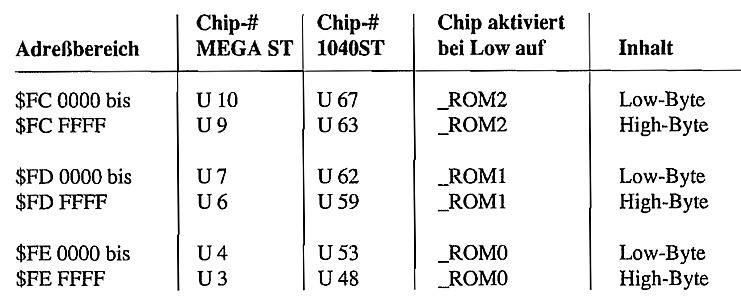
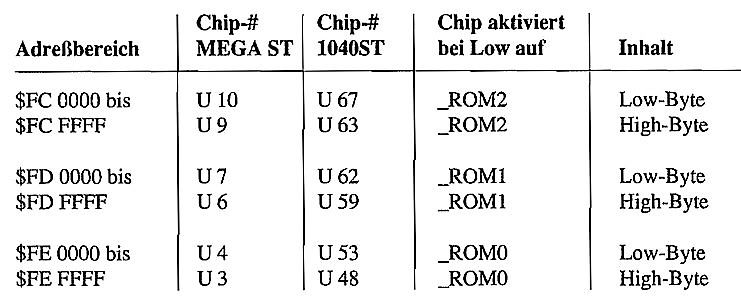
Adreßbereich Chip-# MEGA ST Chip-# 1040ST Chip aktiviert bei Low auf Inhalt
$FC 0 bis $FC FFFF U 10 U 67 _ROM2 Low-Byte U 9 U 63 _ROM2 High-Byte
$FD 0 bis $FD FFFF U 7 U 62 _ROM1 Low-Byte U 6 U 59 _ROM1 High-Byte
$FE 0 bis $FE FFFF U 4 U 53 _ROM0 Low-Byte U 3 U 48 _ROM0 High-Byte
absolute encoders; multiple encoders can be connected to a single drive with SM option modules Ratings High-Resolution Analog Input Input Voltage 16-bit, 250µsec interface for high-performance applications; Continuous Peak two additional 10-bit analog inputs for lower level controls Extensive Fieldbus Connectivity
ADDR pin high oder low? 0x2B versucht? Manche verstehen den RW bit auch inklusive adresse manche nicht. Mal versuchen 0x2A oder 0x2B durch 2 teilen. Schematic posten wird auch helfen.
; //SOSCDIV1 = 1, SOSCDIV2 = 1 SCG->SOSCCFG = SCG_SOSCCFG_RANGE(3) | SCG_SOSCCFG_EREFS(1); //High frequency range external crystal while(SCG->SOSCCSR & SCG_SOSCCSR_LK_MASK); //Ensure SOSCCSR is unlocked SCG->SOSCCSR = SCG_SOSCCSR_SOSCEN(1); //Enable oscillator while(!(SCG->SOSCCSR
not limited the signal transmission, but only depends on the speed of signal transmission. LED with low driving voltage, environmental protection and energy saving, high brightness, scattering angle is large, good consistency, low power, long life and other advantages. The control chip integrated in LED
Converters (DACs) LE, LoRa®and others using external modules. ■■ Up to eight high-speed comparators Hardware Limit Timers (HLTs) ■■ eXtreme Low Power (XLP) technology ■■ Up to four Programmable Ramp Generators (PRG) The HLTs can detect faults in motor, power supplies and ■■ EUSART
der speziell für Hi-Fi-Anwendungen entwickelt wurde. Er ist bekannt für seine geringen Verzerrungen (low distortion) und das niedrige Rauschen, was ihn zu einer beliebten Wahl für hochwertige Audioverstärker macht. -------------------------- Linearität bei niedrigen Frequenzen: Der TA2024 (speziell
z.b. mit Programmen wie REW mal einen LS oder Chassis zu messen. Ich habe keinen Anspruch auf High End oder Profi Level. https://www.roomeqwizard.com/ Bisher war es dieser kleine Kerl: https://www.amazon.de/Dayton-Audio-DTA-1-Battery-Amplifier/dp/B001PNOH2I Bzw. dessen Vorgänger, der
and provided that the VM pin voltage is not lower than the charger detection voltage (V CHA), the S-8242A Series releases the overdischarge status when the battery voltage reaches overdischarge detection voltage n (V ) or higher. DUn 5. Overcurrent
circuitry requires an input clock frequency between 50kHz and 200kHz to get maximum resolution. If a lower resolution than 10 bits is needed, the input clock frequency to the ADC can be higher than 200kHz to get a higher sample rate.“ Und in den Maximum ratings wird ein Genauigkeitswert für 1Mhz ADC-Frequenz
Motor control driver chip L9110 Features: Low quiescent current; Wide supply voltage range: 2.5V-12V; 800mA continuous current output capability per channel; Lower saturation voltage; TTL / CMOS output level compatible, and can be DP Suffix plastic
temperature of Tk=125°C. This makes them easier to use in demanding thermal environments, such as high-density mounting and areas around heat-generating components, helping reduce the thermal design burden. In addition, these products achieve a TCR of ±100ppm/°C for 10Ω ≤ R ≤ 2.2MΩ. By suppressing
and dual transformers within a compact 15 mm × 15 mm × 4.4 mm BGA package. The device features a high-performance 8/16-bit parallel host interface providing rapid access to shared memory, reducing system latency and lowering CPU utilization for demanding avionics and mission-critical applications. Two
21 ― −15 dBm Peak Emission Wavelength λp ― 660 ― nm Current Consumption ICC R = 8.2 k Ω ― 15 25 mA High Level Input Voltage V IH 2.0 ― ― V Low Level Input Voltage VIL ― ― 0.8 V High Level Input Current IH ― ― 20 µA Low Level Input Current IL ― ― −0.4 mA Note 2: For data rate > 3 Mb / s, the duty factor must be such as kept 25 to 75%. LED is on when input signal is high level, it is off when it is low level. Note 3: All Plastic Fiber (980 / 1000 µm) Note 4: Between input of TOTX193 and output of a fiber optic receiving module TORX193. Note 5: Measure with a standard
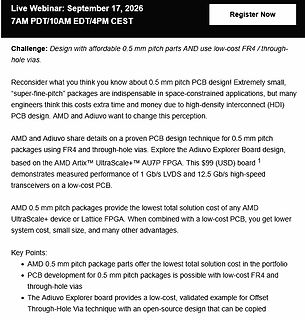
UltraScale+™ FPGA. This $9 (USD) board 1 demonstrates measured performance of 1 Gb/s LVDS and 12.5 Gb/s high-speed transceivers on a low-cost PCB.
AMD 0.5 mm pitch packages provide the lowest total solution cost of any AMD UltraScale+ device or Lattice FPGA. When combined with a low-cost PCB, you get lower
UltraScale+™ FPGA. This $9 (USD) board 1 demonstrates measured performance of 1 Gb/s LVDS and 12.5 Gb/s high-speed transceivers on a low-cost PCB.
AMD 0.5 mm pitch packages provide the lowest total solution cost of any AMD UltraScale+ device or Lattice FPGA. When combined with a low-cost PCB, you get lower
verspricht Seeed folgendes: [c] A highly integrated, card-sized form factor optimized around a high-capacity 1100mAh battery, delivering up to 5 days of runtime while remaining compact and portable for outdoor carry and off-grid communication. [/c] ### Starterkit für NoteCard Skylo verfügbar
, image processing, and scientific computing, and is combined with fast, multi-channel memory and high-speed connections (PCIe and AXI, the same kind of high-bandwidth links used to connect components inside servers and data centers). [/c] ### RISC/V zur Zweiten – DGEMM in Optimiert Der Kampf
Kommunikationsfehlern. Auch wenn bei der Datenübertragung primär die Spannungsdifferenz zwischen den Leitungen (CAN High und CAN Low) genutzt wird, dient die Masse als Referenzpunkt für die Spannungen. "
drivers are active in either case, with readings result. each digit lasting 200 counts with Pin 2 high (2 / digit) and 1 20 counts for Pin 2 low (32 digit). 8 ICL8052A/ICL71C03, ICL8068A/ICL71C03 RUN/HOLD (PIN 4) BUSY (PIN 28) When high (or open) the A/D will free-run with equally BUSY goes high at the

 Bild
Bild
 Bild
Bild
 Bild
Bild
 Bild
Bild
 Bild
Bild