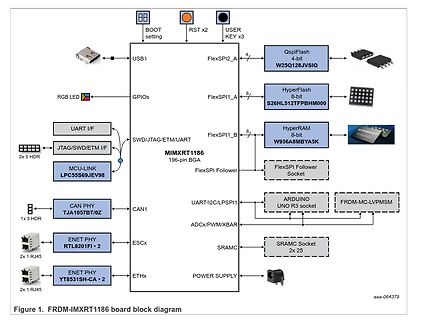
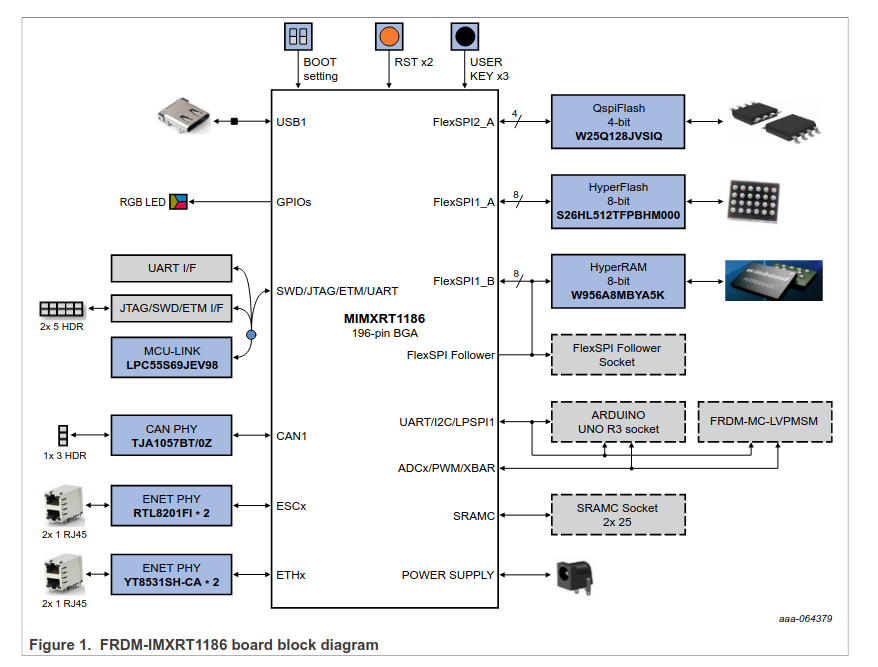
Johannes R. schrieb im Beitrag #7406413: > dass man den Flash einfach tauschen könnte Ja! z.B.: W25Q128F Zumindest bei den schwarzen Boards. Die blauen haben einen kleineren Fußabdruck für das Flash
uppercase M */ 78, /* 78 N uppercase N */ 79, /* 79 O uppercase O */ 80, /* 80 P uppercase P */ 81, /* 81 Q uppercase Q */ 82, /* 82 R uppercase R */ 83, /* 83 S uppercase S */ 84, /* 84 T uppercase T */ 85, /* 85 U uppercase U */ 86, /* 86 V uppercase V */ 87, /* 87 W uppercase W */ 88, /* 88 X uppercase
der SW-AKM220 wird dann direkt als Sensor r r g g E E R R e e u Protector K Schaltrelais SW-AKM220 u Q Q Bild 24: Anschluss der Digitalstrom-AKM-Klemmen an eine Wetter- Bild 25: Rauchmelderanschluss – der Stecker rechts dient zur station Verbindung 16 de – das elektrohandwerk Gelernt ist Gelernt r t g l E E R R e e u e Q Q Bild 26: Die Einheit aus Bild 25 mit auf gesetztem Rauchmelder an Bild 27: Geöffneter Präsenzmelder mit eingebauter einer Leuchte SW-AKM220 für einen Bewegungsmelder konfiguriert. Wie Sie bereits wissen
FieldCHINC CHINC CHINC CHINC CHINC CHINC CHINC CHINC Channel Interrupt Clear Register 7 6 5 4 3 2 1 0 Type w w w w w w w w CC H ADC_CHINSR Reset: 0H Bit Field CHINS CHINS CHINS CHINS CHINS CHINS CHINS CHINS Channel Interrupt Set Register 7 6 5 4 3 2 1 0 Type w w w w w w w w CD H ADC_CHINPR Reset: 0H Bit Field
@W.S.: Viele deiner technischen Argumente sind leider falsch, allein die 1W sind Werte von Dekoderchips aus dem Jahr 2000. Aber lassen wir das... @BerndW: Du darfst kaufen oder nicht was du willst
damals mal gesehen. Hier übrigens eine Fernsehsendung zu dem Thema: http://www.youtube.com/watch?v=q1QUHXhfmqQ#t=370s Auch schön das schicke Kofferraumgerät. :)
2. GD32F350xx pin definitions Pins ( e e e Pin Name 6 4 3 2 y L Functions description F F N N T ( Q Q F F i / L L Q Q P I VBAT 1 1 - - P Default:BAT PC13- Default: PC13 TAMPER- 2 2 - - I/O Additional: RTC_TAMP0, RTC_TS, RTC_OUT, WKUP1 RTC PC14- Default: PC14 3 3 - - I/O OSC32IN Additional: OSC32IN
2. GD32F350xx pin definitions Pins ( e e e Pin Name 6 4 3 2 y L Functions description F F N N T ( Q Q F F i / L L Q Q P I VBAT 1 1 - - P Default:BAT PC13- Default: PC13 TAMPER- 2 2 - - I/O Additional: RTC_TAMP0, RTC_TS, RTC_OUT, WKUP1 RTC PC14- Default: PC14 3 3 - - I/O OSC32IN Additional: OSC32IN
mA CM peak collector current − 200 mA BM peak base current − 200 mA P total power dissipation T ≤ 25 °C − 200 mW tot amb Tstg storage temperature −65 +150 °C Tj junction temperature − 150 °C Tamb operating ambient temperature −65 +150 °C Per device Ptot total power dissipation Tamb≤ 25 °C; note 1 −
P P P P P P P P S D S P X P T T E P P P P P P P P 5 6 7 7 6 5 4 C 1 0 K V V E D S E X T 3 2 1 0 O W Q Q A A A W W W W A I I C R V V W W W W G R I I / / / K K K K O / / E / / / / / X R R R S B D S K I O B D D D L O O S S O I T A A A X M M M M L Signals shown in Bold are not available on all the 80 pin
adjusted amplitier with an expensive transistor and is about 10align it,knows the danger of a sudden 1W staqe: 0 = 25 rnA 10 W stage: 0 = 100 mA setl-destruction 01 the rransisior The actual danger are parasiuc osc.nauons which cause a 100 W stage: 0 = 400 mA sleep Increase 01current. The resuhi n9 exeedmq
PDBIN Power down pin, active high Figure 1. Top view. 16 SDIO Serial data (input and output) . z 0 W A Y d 9.10 PIN 1 - (0.039) (0.358) (0.878) (0.125) c (0.203) LEAD WIDTH 0.50 1.42 0.25 (0.020) y (0.056) (0.010) LEAD OFFSET (0.050) KAPTON TAPE 6.17YP. LEAD PITCH (0.100) . 12.34 (0.243) (0.486) (0.237
Over detection Extensive self diagnostics features Suspension control Size 7.6 x 3.3 x 8.6 mm (w x h x l) Inclinometers Qualified according to AEC-Q100 standard Motion and position measurements Package, pin-out and SPI protocol compatible with Murata digital accelerometer product family
(4) 0.15 Ω, 50 W −V1 1.8 k 10 k CONSTANT 1.2 k + 0.1 μF, 200 V TYP V CURRENT 2 W 50,000 STANCOR 1/2 W 1 k 330 CIRCUIT 47 0.1 μF P6337 20,000 + 1 W 2N6042 2 W μF 25 V μF 25 V −5 V − 10 V 1N + 10 V Q4 MJ 10 V 914 510 k
ATmega8515 m8535 ATmega8535 m88 ATmega88 t12 ATtiny12 t13 ATtiny13 t15 ATtiny15 t2313 ATtiny2313 t25 ATtiny25 t26 ATtiny26 t45 ATtiny45 t85 ATtiny85 (*) The AT90S2323 and ATtiny22 use the same algorithm. (**) Flash addressing above 128 KB is not supported by all programming hard- ware. Known to work
es heute mit Sone ausgedrückt. Nach Zwicker und Sone suchen. https://www.startpage.com/do/dsearch?q=sone++zwicker&cat=web&language=deutsch https://de.wikipedia.org/wiki/Lautheit https://de.wikipedia.org/wiki/Sone Ich sehe gerade, während ich noch geschrieben habe, hat laberkopp schon links auf
Dergute W. schrieb im Beitrag #7772381: > Sowas? Oder ganz was anderes? Das ist quasi schon die Lösung mit Schleifchen. Aber wow, geht genau in die Richtung, ja, und ob ich da noch nen ATTiny verbaue, tut
Seite 122 und S.128 im Datenblatt. Mal zwei Frage am Rande: 1. Druckt ihr euch die Datenblätter aus? (ich lese eigentlich lieber vom Papier als vom Bildschirm) 2. Die Verbindung Platine-Steckbrett mache ich jetzt
oder gibt es fertige Steckerchen? http://www.google.de/products/catalog?hl=de&biw=1899&bih=934&q=stiftleiste&um=1&ie=UTF-8&tbm=shop&cid=6393991971796126514&sa=X&ei=m4oeTuvYG9CYOqyUkK0D&ved=0CDcQ8wIwAg#
keinen direkten Einfluss. doch, man hat direkten Einfluß über I(out), T(amb) und Layout - die 2,2W sind gerechnet mit Tj (MAX)=150°C, T(amb)=25°C und θJA = 55K/W; (siehe Fußnote 3): The maximum allowable power dissipation is a function of the maximum junction temperature TJ (MAX), the junction-to
eingespeist - fast 100mA Ruhestrom. Die ganze FritzBox verbraucht bei mir etwa 7 Watt. Wenn der W-Lan Ausgangstreiber 0,33W verbraucht, dann ist das eigentlich nicht viel. Probiere es einfach mal aus ob das Ding startet und ob es dann ein aktives W-Lan hat in welches du dich anmelden kannst.
$ % & ' ( ) * + , - . / 3x 0 1 2 3 4 5 6 7 8 9 : ; < = > ? 4x @ A B C D E F G H I J K L M N O 5x P Q R S T U V W X Y Z [ \ ] ^ _ 6x ` a b c d e f g h i j k l m n o 7x p q r s t u v w x y z { | } ~ DEL Die ersten beiden Zeilen enthalten die Codes für einige Steuerzeichen, ihre vollständige Beschreibung
Display Area 123 mm min. x 68 mm min. (4) Dot Size 0.48(W)min. x 0.48(H)min. (5) Dot Pitch 0.50(W)mm x 0.50(H)mm (6) Dot Number (Resolution) 240 (W) x 128 (H) (7) Duty Ratio 1/128 (8) LCD Type Transmissive type F-STN With anti-glare type upper polarizer (9)
der AVR macht bei 16 MHz 16MIPS, hat eine Befehlszykluszeit von 65nS, da ist z.B 68302 selbst mit 25MHz noch um Längen davon weg. Natülich kann man diese beiden Architekturen nicht vergleichen, je nach Einsatzfall bist du mit einem 68k oder dem AVR besser bedient. Sieh dass mal so: Mit deinem
68000 lief dort mit 8MHz und ist eine CISC-CPU. Die kleinste Ausführungszeit eines Befehls wie add.w d0,d1 betrug 2 Takte also max. 4MIPS. Ein AVR als RISC-CPU und auch mit 8MHz hat eine Ausführungszeit für einen Befehl von mindestens 1 Takt. Für eine Word-Addition benötigt der 2 Befehle wie z. B.
................Continuous Power Dissipation (T= +70°C) 7 BATT+ to BATT- Plastic DIP (derate 10.53mW/°C above +70°C............842mW X Power Not Applied............................................................±20V8.70mW/°C above +70°C .............696mW With Power Applied.........................
................Continuous Power Dissipation (T= +70°C) 7 BATT+ to BATT- Plastic DIP (derate 10.53mW/°C above +70°C............842mW X Power Not Applied............................................................±20V8.70mW/°C above +70°C .............696mW With Power Applied.........................
www.mikrocontroller.net/topic/228997 QWave: https://github.com/josko7452/qwave-project MHZ100Q: http://mhz100q.sourceforge.net/ LDSO: www.dsoworld.co.uk Die ersten zwei haben ein brauchbares (bis gutes) frontend, die ersten drei kann man leicht modifizieren für mehr als 100MS/s. Entweder
> > Du bist aber in einem komplett anderen FILM !!! Sogar ganz anderes Genre und nur 16fps S/W Stummfilm statt 48fps 3D HFR + 128 Kanal Dolby ;-P ;-)
data rate offset 2 (10) ±6.25% data rate offset 3 (11) ±12.5% data rate offset SWRS038C Page 77 of 96 CC1100 0x1B: AGCCTRL2 – AGC Control Bit Field Name Reset R/W Description 7:6 MAX_DVGA_GAIN[1:0] 0 (00) R/W Reduces the maximum
Marci W. schrieb im Beitrag #8006508: > Ich wünschte mir eine technokratisch angehauchte Technokratisch hieße doch stark KI-befürwortend. Marci W. schrieb im Beitrag #8006508: > Patriotismus geprägte
footprint, parity checking, and full BCD decoding. That's something to be proud of! I hope the Pico W picks up a clean signal and you see that first >>> Zeit : 14:25 MESZ on the console soon. Good luck, and feel free to come back anytime! 🎉 Also "freundlich" kann die Kiste auch ;)
[7:0] XX 1 q 1 XX ID3 [7:0] XX 0 1 q XX 0 0 0 0 1 0 0 1 09h 1 q 1 XX X X X X X X X X XX 1 q 1 XX D [31:25] X 00 Read Display Status 1 q 1 XX X D [22:20] D [19:16] 61 1 q 1 XX X X X X X D [10:8] 00 1 q 1 XX D [7:5
18Fh W 25 19 190h to 19Fh W 26 1A 1A0h to 1AFh W 27 1B 1B0h to 1BFh W 28 1C 1C0h to 1CFh W 29 1D 1D0h to 1DFh W 30 1E 1E0h to 1EFh W 31 1F 1F0h to 1FFh W MFRC530 All information provided in this document is
Zitat Veranstalter: > Die Flugzeit beträgt 25 Minuten Blocktime Uhh! Blockzeit! Wenn das ein "normales" Angebot wäre, würden Verbraucherschutzorganisationen den Anbieter abmahnen. Finger weg!
Anlanden des Geräts sein, sonst passiert dann sowas... http://www.youtube.com/watch?v=YL1FblthxQ0
9,5/19 und 38cm/s. Dabei sind die 3,81cm/s kein Druckfehler. Das ist sehr universell und schafft m.W. keine Heimmaschine.
Teil ist eine Profi-Maschine mit 16 Spuren und wiegt 30Kg. Heutzutage reicht ein Laptop <3kg für 128 Spuren. Das 30kg Monster hat natürlich einen Vorteil, es klaut Dir niemand.

 Bild