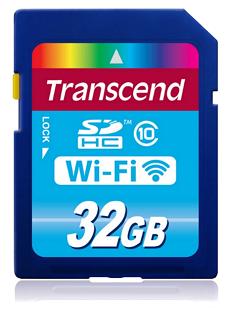
mich würde das stark interessieren wie das angefangen

http://www.toshiba.co.jp/about/press/2011_09/pr0101.htm

hat und was dabei raus kam:
http://www.dailywireless.org/2012/01/20/wifi-sd-cards-battle-over-patents/

gabs da mal zoff?
http://toshiba.semicon-storage.com/eu/product/memory/wlan-sdhc.html

hintergrund:
http://www.brighthand.com/news/pda-news-sd-wifi-cards-socket-patents-sony-price-cut/

[i]
Socket has gotten a U.S. patent for combining memory and communication
connectivity on one card. From the press release:

[Socket] today announced the  award of a second U.S. Patent, 6,559,147,
covering Socket’s design for combination connectivity and  removable
memory expansion solutions. The Company was awarded U.S. patent
6,353,870 in March 2002. The  patents are applicable to mobile devices
that combine removable memory in a removable input/output device
including plug-in cards, plug-on modules, sleeves and jackets for
handheld computers and other mobile  devices. Socket has already
implemented this technology in a proprietary CompactFlash and PC Card
interface  ASIC chip, which is available for sale. Socket also plans to
license this technology.

In other words, if you want to put memory on a communication card,
Socket is now the 800-pound gorilla and you must buy technology from
them. I’m not sure, since it’s hard to read past the PR-speak, but this
may apply to only Socket’s method, or to all combination cards. If it’s
the latter, this is probably bad for us in the sense that now anyone who
wants to build a combo card has to pay whatever Socket wants as a
license fee. Thus, fewer manufacturers offering combo cards, less
competition, higher prices, and less choice.

[/i]

was wurde aus dem opensrc Projekt dazu?

lg rudi ;-)

 wifiSDx.JPG
(14 KB)
wifiSDx.JPG
(14 KB)