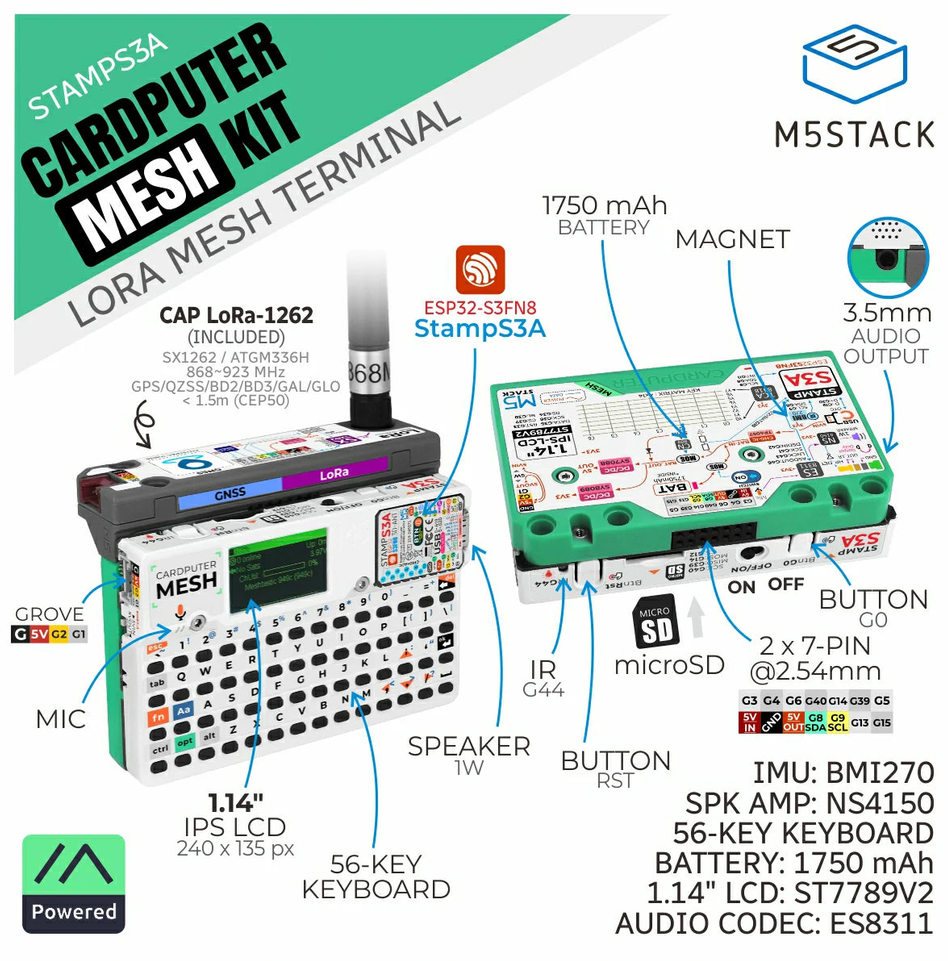
_DRIVER //#define ST7789_DRIVER // For M5Stack ESP32 module with integrated display ONLY, remove // in line below //#define M5STACK // For ST7735 and ILI9163 ONLY, define the pixel width and height in portrait orientation
Sensoren Auslese und diese Via SPI auf einem Bildschirm ausgebe. Bei Bedarf wird ein DC Motor über 24V und PWM angesteuert uC ist noch unklar sollte aber ein 5V Modell werden. Nun muss der ganze Spaß jedoch auf eine Platine. Ich bekomme an aus Signale von einer SPS mit 24V. Folgendes habe ich
kleinen TFT-Displays? https://www.buydisplay.com/3-2-inch-tft-lcd-display-capacitive-touchscreen-st7789v-spi-240x320 (oder sowas ähnliches in der Art) Grundsätzlich sind sowohl SPI als auch I2C nicht dafür gedacht, außerhalb einer Leiterplatte verwendet zu werden und dabei nennenswerte Entfernungen
framework that works with MikroGraphics New ME007YS ultrasonic distance sensor driver Fixed ST7789 display support for 320x240 displays Fixed GC9A01 display reset bug Bug fix in MicroGraphics vertical alignment Meadow.Cloud View device logs and events. The following filters are
Neuerungen findet sich – wie immer – unter der URL http://developer.wildernesslabs.co/Meadow/Release_Notes/v1/. ### Mehr Samples für Meadow Desktop Die unter https://www.mikrocontroller.net/topic/555646 im Detail vorgestellte Umgebung Meadow Desktop erlaubt das Ansteuern von Hardware von Windows aus –
3&LA=446&ARTICLE=144719&artnr=RASP+C-BERRY+28&SEARCH=c-berry28 Es hat 2,8" und einen Controller ST7789. Der ist nahezu mit einem ILI9341 kompatible. Der Preis für ein solches Display ist in Ordnung. Code gibt es hier: http://basteln-mit-avr.de/index.html Gruß G.G.
Lösungen für sowas findest Du aber auch hier, für den ILI9327 https://www.youtube.com/watch?v=7pFui4tvjBE
Unit Display area (AA) 30.60(H)*40.80(V) mm Driver element TFT active matrix - Display colors 65K/262K colors Number of pixels 240(RGB)*320 dots Pixel pitch 0.1275(H)*0.1275(V) mm View angle direction 6:00 O’Clock Controller IC ST7789V - Temperature
Vermutung den Raum: Wahrscheinlich ist eines der #defines nicht aktiv [code] #if (defined(CH32V20x) || defined(CH32V30x) || defined(CH32V30x_C) || defined(CH32V10x) || defined(CH32L10x) || defined(CH32VM00X) ) [/code]
, eigene Klasse, ein bereits initialisierter I2C Bus wird vorrausgesetzt). - SPI-tftdisplay mit st7735 oder st7789 grafikcontroller, Displays von 160x80 bis 320x240 Pixel (eigene Klasse) - tm16xx (7-Segment Anzeigetreiber, eigene Klasse) - ws2812 (eigene Klasse) Demos für LM75 I2C-Temperatursensor
NV3052C. Ich finde aber auch zu denen kein Datenblatt. Ein anderes ähnliches Display nutzt einen ST7789V. Dort finden sich dann die IM0 und IM1 Pins und nach dem ist das plausibel, dass die Pins High sind. Was mir aber gerade so auffällt, DISP mit RESET zu koppeln könnte das Problem sein. Pack
-----------------------------------------------------------------Verbose mode can be enabled via `-v, --verbose` option CONFIGURATION: https://docs.platformio.org/page/boards/ststm32/nucleo_f446re.html PLATFORM: ST STM32 (14.0.0) > ST Nucleo F446RE HARDWARE: STM32F446RET6 180MHz, 128KB RAM, 512KB
modified. OPTION LCDPANEL ST7789_320, OR, DC, RESET, CS Initialises a IPS display using the 7789 controller. This type supports the 320 * 240 resolution display from Waveshare ( https://www.waveshare.com/wiki/Pico-ResTouch-LCD-2.8
modified. OPTION LCDPANEL ST7789_320, OR, DC, RESET, CS Initialises a IPS display using the 7789 controller. This type supports the 320 * 240 resolution display from Waveshare ( https://www.waveshare.com/wiki/Pico-ResTouch-LCD-2.8
rkleine Ausgabe"); textsize= 1; my_printf("\n\rGross"); textsize= 0; my_printf("\n\rwieder klein"); 38 st77xx_display_v2.h / st77xx_display_v2.c Die Sourcedateien von st77xx_display_v2 beinhalten Funktionen, die den Betrieb von farbigen LC-Displays mit SPI-Interface am Controller ermöglichen. Grundsätzlich
rkleine Ausgabe"); textsize= 1; my_printf("\n\rGross"); textsize= 0; my_printf("\n\rwieder klein"); 38 st77xx_display_v2.h / st77xx_display_v2.c Die Sourcedateien von st77xx_display_v2 beinhalten Funktionen, die den Betrieb von farbigen LC-Displays mit SPI-Interface am Controller ermöglichen. Grundsätzlich
500°C. * 22 : 100k (hotend) with 4.7k pullup to 3.3V and 220R to analog input (as in GTM32 Pro vB) * 23 : 100k (bed) with 4.7k pullup to 3.3v and 220R to analog input (as in GTM32 Pro vB) * 30 : Kis3d Silicone heating mat 200W/300W with 6mm precision cast
sensor 147, 110, or 21. * 21 : Pt100 with circuit in the Ultimainboard V2.x with 3.3v ADC reference voltage (STM32, LPC176x....) and 5V INA826 amplifier board supply. * NOTE: ADC pins are not 5V tolerant. Not recommended because it's possible to damage the CPU by going over
not set # CONFIG_ARCH_ZX is not set # CONFIG_ARCH_ZYNQ is not set # # Processor Type # CONFIG_CPU_V7=y CONFIG_CPU_THUMB_CAPABLE=y CONFIG_CPU_32v6K=y CONFIG_CPU_32v7=y CONFIG_CPU_ABRT_EV7=y CONFIG_CPU_PABRT_V7=y CONFIG_CPU_CACHE_V7=y CONFIG_CPU_CACHE_VIPT=y CONFIG_CPU_COPY_V6=y CONFIG_CPU_TLB_V7=y CONFIG_CPU_HAS_ASID
2.9 to 12 V V LCD2 VLCD2: 3.8 to 12 V - 2 —V LVD1 = 0 to 1 V (V —V ) = 0.5 V but for V : 10 to 11 V: LCD2 LCD1 max LCD2 2003 Feb 14 58 Philips Semiconductors Objective specification STN RGB - 132 × 132 × 3 driver
T_CR EQU T_LAST+6 917: 0249 AA DB T_CR 918: 024A 43 52 DB 'CR' 919: ; 920: 024C AB DB T_CR+1 ASEM-51 V1.3 Copyright (c) 2002 by W.W. Heinz PAGE 18 Line I Addr Code Source 921: 024D 49 44 4C 45 DB 'IDLE' 922: ; 923: 0251 AC DB T_CR+2 924: 0252 53 54 40 DB 'ST@' 925: ; 926: 0255 AD DB T_CR+3 927: 0256 4C

 Bild
Bild
 Bild
Bild
 Bild
Bild