der Breitbandversorgung hinkt ganz grausam, denn die Steigerung der Bitraten von ehemals 9600 Bit/s auf VDSL100 mit 100 MBit/s (also um den eindrucksvollen Faktor 10400) wurde ja gerade OHNE den Austausch aller Anschlussleitungen erreicht. Und bis ADSL16000 mit 16 MBit/s (immer noch eindrucksvoll:
der Breitbandversorgung hinkt > ganz grausam, denn die Steigerung der Bitraten von ehemals 9600 Bit/s > auf VDSL100 mit 100 MBit/s (also um den eindrucksvollen Faktor 10400) > wurde ja gerade OHNE den Austausch aller Anschlussleitungen erreicht. > Und bis ADSL16000 mit 16 MBit/s (immer noch eindrucksvoll
T HUB3V3A PR11 PI0 49.9 1% R8 PR1 PI0 49.9 1% P212 PI2 B 49.9 1% B P212 PI3 49.9 1% CR4 HUB3V3A PR02 PI4 U RJHSE-538G R R R N T T T J1 4k7 1206 _ D -TC+DC - T+D eh P1P PP PJP P P P0 d PJ0S PIJ0S P0CO P 2 22nF 0,1 Ohm P U 1P1 109 U S S C e e C GND GND d d GND HUB3V3 0R2 PR2 0 330 1206 3 P N P H H P EE
Igoe */ // include the SD library: #include <SPI.h> #include <SD.h> String Version = "V 2018-02-10"; // set up variables using the SD utility library functions: Sd2Card card; SdVolume volume; SdFile root; const int chipSelect = 2; // 31.12.2015 File myFile; void setup() { pinMode
; if (myFile) { Serial.println(F("read test.txt")); // read from the file until there's nothing else in it: while (myFile.available()) { Serial.write(myFile.read()); } myFile.close(); } else { // if the file didn't open, print an error: Serial.println(
POP G1 : DBY(40H)=G1 : POP G1 : DBY(41H)=G1 : PRINT 100 INPUT "Starting Data Address - ",S : IF S<512.OR.S>0FFFFH THEN 100 110 PRINT : INPUT "Ending Data Address - ",E 120 IF E<S.OR.E>0FFFFH THEN 110 130 PRINT : INPUT "PROM Address - ",P : IF P<8000H.OR.P>0FFFFH THEN 130
routines calculate the address of the source and 290 REM EPROM location that failed to program 300 S1=DBY(25)+256*DBY(27) : S1=S1-1 : D1=DBY(24)+256*DBY(26) 310 PH0. "The value ",XBY(S1), : PH1. " was read at location ",S1 : PRINT 320 PH0. "The EPROM read ",XBY(D1), : PH1. " at location
Richard S. schrieb im Beitrag #7214241: > Ausschnitt auf dem 18F4550 > ... Soory, nach der 5ten Seite habe ich aufgehört zu lesen, war mir zu dumm mit der Scrollerei. Wichtige Regeln - erst lesen, dann
Richard S. schrieb im Beitrag #7214681: > Vorallem möchte ich auch irgendwann RS485 nutzen Der BMP280 kann I2C und SPI. Mit RS485 weiß der nichts anzufangen.
Entsprechnung in Unicode Dec Hex Dec Hex HTML Z Dec Hex UTF-8 Name 136 0x88 ˆ ˆ ˆ ˆ 0710 0x02c6 cb 86 MODIFIER LETTER CIRCUMFLEX ACCENT 137 0x89 ‰ ‰ ‰ ‰ 8240 0x2030 e2 80 b0 PER MILLE SIGN 138 0x8a Š Š Š Š 0352 0x0160 c5 a0 LATIN CAPITAL LETTER S WITH CARON 139
RESPONSE Small Signal Bandwidth –3dB 1 MHz Full Power Bandwidth V = 20Vp-p 30 50 kHz O Slew Rate 2 3 V/ s Settling Time: 0.1% VO= 10V Step 4 s 0.01% V = 10V Step 5 s O 0.01% VCM = 10V Step, DIFF 0V 1.5 s POWER SUPPLY Rated ±15 V Voltage Range Derated Performance ±5 ±18 V Quiescent Current V = 0V ±1.5 ±2
Massentauglich ist es eben nicht Und auch in Firmen kann es im Büro erhebliche Probleme geben @ S. R. (svenska) 02.03.2020 09:54 lol..ja genau so..ich nutze das für mich beste Programm ob Freeware, oder Kaufversion..damit wo ich glücklich bin, das nutze ich.. Wo siehst du da jetzt ein Problem
Gottfried S. schrieb im Beitrag #6197623: > Und wie kann man einen Bootloader reparieren, wenn man nicht ins System > kommt? Mit jedem beliebigen Live-System. Knoppix gab’s schon, als Ubuntu aus den Löchern
equan to ref +/- 2% points t plausibility check example: 28.11.2013 np= 4 plausability 4 out of 6 02.vsd n = 6 Figure 7: Plausibility check window n This plausibility test delays the response to the PWM value. In case of low PWM frequency this can add a delay: e. g. at 50 Hz 0.22 s (in case 4 out of
and lowminals: Finish – NiPdAu Over Copper Lead Frame, Solderable profile is desired. per MIL-STD-202, Method 2084 Polarity: See Diagram Weight: 0.02 grams (Approximate) 1 4 2 3 Top View Pin Configuration **Do Not Connect the DNC Pad** Ordering Information (Note 4) Part Number Case Packaging SBR05M60BLP
W.S. schrieb im Beitrag #2715512: > In ein paar Jahren dürft iht dann noch 600..700 Euro / Monat für's > Studium des Nachwuchses einrechnen und diejenigen, die ein Haus gebaut > und endlich abgezahlt
kleinste Wert der > sich für die Zeit einstellen lässt sind 250ms. Ich habe mal mein UNI-T UDP3305S-E dazu befragt (preislich ca 2,5x KKG), das lässt sich lokal per Menü programmieren, schafft aber auch nur 0.1s, ein Test mit einem Lastwiderstand ergab Anstiegszeit von ca 4ms, Abfall ca 5 ms, und Ecke-Ecke
Wert der >> sich für die Zeit einstellen lässt sind 250ms. > > Ich habe mal mein UNI-T UDP3305S-E dazu befragt (preislich ca 2,5x KKG), > das lässt sich lokal per Menü programmieren, schafft aber auch nur 0.1s, > ein Test mit einem Lastwiderstand ergab Anstiegszeit von ca 4ms, Abfall > ca 5
Klaus S. schrieb im Beitrag #7295730: > P.S. Beitrag darf gern nach Weihnachten gelöscht werden. Wozu löschen? Klaus S. schrieb im Beitrag #7295730: > Habe zur Zeit keinen Wunsch parat, aber das Bedürfnis
Abbildung 8 ) mit einem provisorischen Testaufbau, bestehend aus einem ATMega8, Solid-State-Relais S202 S12, PT1000 + Verstärkerschaltung und einigem Vogelfutter. Dabei wurde sowohl die Temperaturmessung an sich, als auch die Wärmeverteilung und der Temperaturanstieg gemessen. Gut zu erkennen ist eines
fahren kann. Die verwendete Schaltung ist in Abbildung 47 dargestellt. Datenblatt Solid-State-Relais S202 S02 Datenblatt L293 Software. Die Software bildet neben der Hardware, die 2te wichtige Säule für die zuverlässige Funktion des Ofens. Die wichtigsten Aufgaben der Software sind: Temperaturmessung
1.3 A A s 1.2 ( 1.2 I 1.1 I 1.1 n n e 1.0 e 1.0 u 0.9 u t t 0.9 e 0.8 n 0.8 s c i 0.7 i 0.7 u 0.6 u 0.6 Q Q 0.5 0.5 3 4 5 6 7 8 9 10 5 6 7 8 9 10 Input Voltage IN(V) Input Voltage IN(V) R 5RL50A Topt=25˚C 2.0 1.9 ) 1.8 µ s 1.7 I 1.6 n r 1.5 u 1.4 t e 1.3 s 1.2 i Q 1.1 1.0 4 5 6 7 8 9 10 Input Voltage VI(V) 6) Quiescent Current vs. Temperature R 5RL30A V I=5.0V R 5RL40A V I=6.0V 1.5 2.0 1.4 1.9 ) 1.3 1.8 A A s 1.2 ( 1.7
16MHz Resonator, programmiert mit bewährtem Script für AVR-Dude. LED, serielle Verbindung über Max202 an PC, alles funzt. Nun will ich mit einem Gyro per I2C sprechen und mein erster Gehversuch mit I2C geht voll daneben. Der Gyro ist ein Modul MinIMU-9 (L3G4200D and LSM303DLH Carrier) von Pololu.
Norbert S. schrieb im Beitrag #2449311: > Config Scl = Portb.4 'AtMega8 PDip Pin27 > Config Sda = Portb.5 'AtMega8 PDip Pin28
Capacitor Characteristics Value C N 500µF+10% U N DC 450V W 50 Ws N Imax 120A L 30nH self -4 tanδ 2* 10 R S 1 mΩ Maximum ratings u S 600 V î 2 kA IS 8 kA (du/dt)max 4 V/µs (du/dt)S 16 V/µs Application Note 7 V1.1, 2009-02 Driver board for HybridPack2™ Design features Figure 3 DC-Link Capacitor for HybridPack1
G G G G G G G G G G G G G Y Y Y T N S 8 22R K001 21 GES E E E E E E E E E E E E K K K B T DNG E 9 12R K001 25 11 GES S S S S S S S S S S S S D D D DDV 23 D R 9 0 01 02R K001 35 01 GES A A A EC 13 D T C 1 2 11 91R K001 45 9 GES I D 03 K1
seh grad, es ist wohl besser (spart paar befehle), wenn dus so machst: [c] ... // -- local var's --------------- uint8_t high; low, result; // -- Großbuchstaben & Offset ------------ high = ( data[0] &= ~(0x20) ) - 0x30; result = ( pgm_read_byte ( &tabelle[ data[ high ] )
scheinbar :( Du hast nur keinen Beweis für die Länge des Assemblercodes geliefert. Ich denke darum ging's ja hier
Ambient temperature: 25°C 0.6 0.08 ) ( ) 10- n t 0.06 ) r 0.4 e ( C r 0.04 n C r 0. AQW 212EH c 10- 0.02 g k - . - . 0 -6 -4 -2 0 l 0 0. 1. 0 2 4 6 t Voltage (V) Voltage (V) t - .02 s 10- - . O AQW 214EH - .04 AQW 210 EH - .4 - .06 10-12 - .6 - .08 0 20 40 60 80 100 Load voltage (V) Panasonic Industry Co
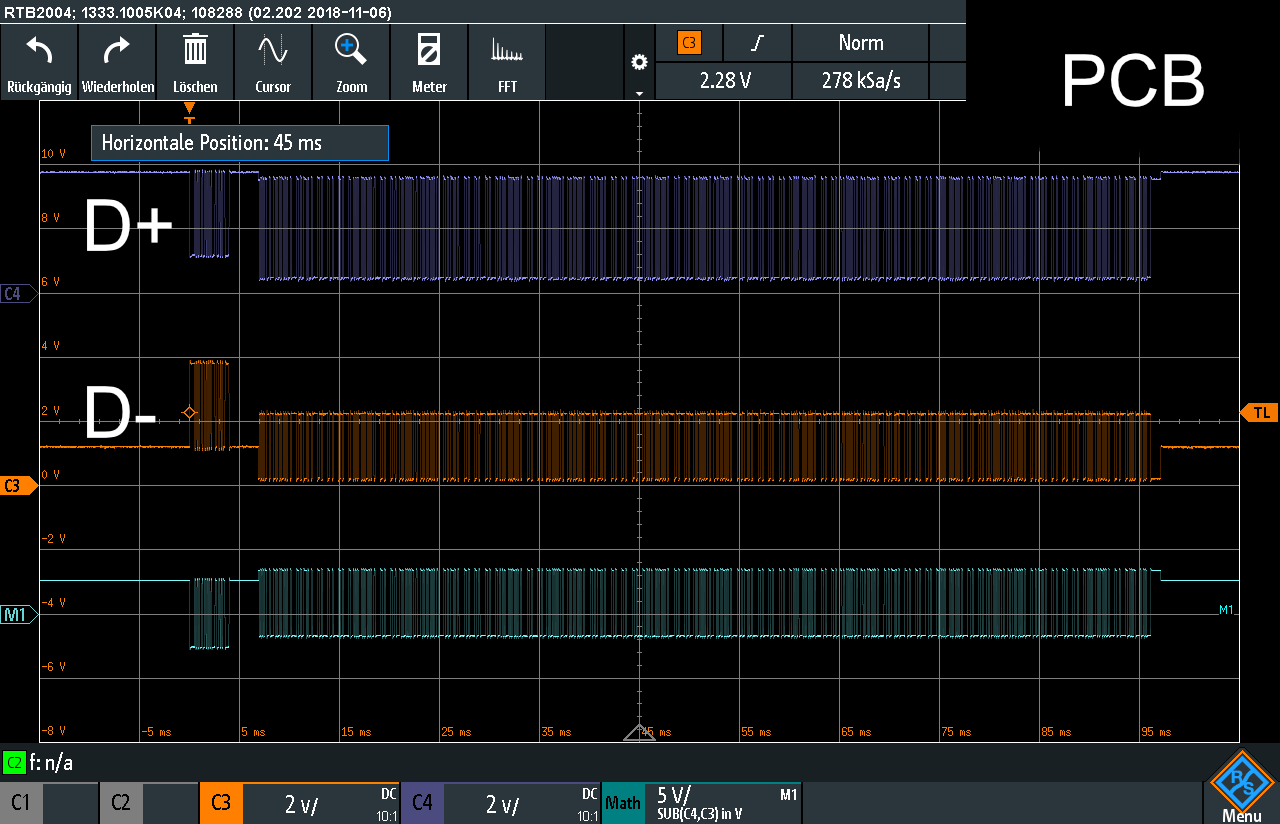
RTB2004: 1333.1005K04; 106288 (02.202 2018-11-06) PCB Norm 2.28 V 278 kSa/s Horizontale Position: 45 ms 10 V D+ C4 8 V 6 V 4 V 2 V D- TL C3 0 V -2 V -4 V M1 -6 V -8 V 5 ms 15 ms 25 ms 35 ms 45 ms 55 ms 65 ms 75 ms 85 ms 95 ms C1 C2 C3
6800 Instruction Set n l r t I a y t t h e s r C c n t x n e g t g d o c s A D B O H M E R B l A M C D 0 00000000 000 00 ! 1 00000001 001 01 NOP 1 2 No Operation 2 00000010 002 02 ! 3 00000011 003 03 ! 4 00000100 004 04 ! 5 00000101 005 05 ! 6
auf's Smartphone schaut - einen großen Unterschied macht das nicht, oder?
geht evtl. mal der Deckel ab und der Akku fällt raus. Beides wieder zusammengesteckt und schon geht's weiter. Ich nutze es nur wegen der Erreichbarkeit, die sein muss und auch nur für's telefonieren (werde meist angerufen) oder mal schnell Foto's für einen Kunden machen, die dann im Büro per Mail gesendet
capabilities can be found in datasheets or application notes on the Vishay website. The hold up capacitor(s) is needed in converters for controlling the output ripple and transients. Output ripple can be controlled by the capacitor. Key considerations for ripple control are the capacitor’s equivalent series
dir auch einfach nur darum, schon am Sonntag eine heftige Freitgasdiskussion auszulösen): Sei S die Menge aller Sprachen und F(s) die Menge aller Features der Sprache s ∈ S. Die Gesamtheit aller überhaupt jemals implementierten Sprachfeatures ist damit [math] G=\bigcup_{s\in S}F(s) [/math
Naja, in C# .Net geht das eh nicht ohne (ptr != null). Jein; kommt auf den Kontext an. string s = null; if (s?.Length == 3) { ... entspricht if (s != null && s.Length == 3) { ...
Date Rev. No. Changes/Reason of changes Signature 2018-07-13 01 Initial Document KEVIN ZHU 2018-10-30 02 Modification of packing information KEVIN ZHU 2018-12-13 03 Modification of PCB pad KEVIN ZHU 2019-01-18 04 Revision of Specification Format KEVIN ZHU 2019-02-20 05 Updating PCB Recommended Pad Size

 Bild
Bild