-
Thread
CH32V003, float wirklich langsam?
bench.c siehe Anhang.. Zeiten in Sekunden. [pre] Options: -Os -DF_CPU=16000000 Version | int8 | int16 | int32 | float avr-gcc 4.8.1 | 2.943 | 4.528 | 5.273 | 4.892 avr-gcc 4.9.2 | 2.950 | 4.528 | 5.273 | 5.130 avr-gcc 5.4.0 | 2.850 | 4.478 | 5.273 | 5.130 avr-gcc 7.3.0 | 3.150 | 4.628
| 4.731 | 5.435 | 5.164 [/pre] [pre] Options: -O2 -DF_CPU=16000000 Version | int8 | int16 | int32 | float avr-gcc 4.8.1 | 2.943 | 3.231 | 4.973 | 4.961 avr-gcc 4.9.2 | 3.043 | 3.234 | 4.973 | 5.200 avr-gcc 5.4.0 | 2.850 | 3.281 | 4.973
-
Thread
Umschalterkennung 3.3V <-> 5V
+Q7ODI50FuBiVDBwrMUeYJCi2BU+VDU8ljYNbE0tbRAdsEosAE6lwoOVZX7eVH1wLADuq57eBt5bUCwA5kejVSC82B4dy5zE3tihr96jO-CQV197txTvdHu0DkcUHwjsVngAlGGEARlaLCDpA6jo4IvLi1USKXgidG7f4AZRABKJIEShL4xJAdkcAGc6GIUC8yGd-CDzrVFHsVn0BkMhXynsg9tdRUDfqIHuL-gjpWAMN5lTF2hikFjoAgIdK6cNwKqLthFG5iB5zpzjm1ahCQR8Tm9JP0LodHW6ef5
-QSCFkxVJXIi1MhhBhYdAh6tiF+OBSnTZVD4A7Kit8g5ihro0m6dtRA+19o2QrnFOQ4QsVnOal7eafxZJbwFddcO383j2whfs5WhzOV8GqcPZR6yQV9XUcshIGKDD7VohijI10QHLMohkFUmBcCUBSA8OKNjrURLtdXR1Zp4XcyNcg01Nk4Y3UBZrXyASKFbMNiyzoGTVQkD+srPQyEUjcvmqQPKOAob9EWr+E5RjxVI2gGm66v0s0xH
-
Thread
avrgcc: verteilte Array-Initialisierung
48a4: 3f 93 push r19 48a6: 2f 93 push r18 48a8: 23 e0 ldi r18, 0x03 ; 3 48aa: 3e e0 ldi r19, 0x0E ; 14 48ac: 3f 93 push r19 48ae: 2f 93 push r18 48b0: 9f 93 push r25 48b2: 8f 93 push r24 48b4: 0e 94 1f 45 call 0x8a3e ; 0x8a3e <sscanf_P> [/c]
-
Thread
EmbeddedWorld, Round-Up – vom Funkmodul, Feldbus, Batterie und RTOS
introduce the EG950A-ENL LTE Cat 4 module to support large-scale smart meter deployments with cost-eNective LTE 450 and LTE 410 connectivity,” [/c] Zu guter Letzt steht ein neues Modul ante portas, mit dem man im Garten von Espressif zu wildern sucht: [c] Utilizing the 2.4GHz and 5GHz Wi-Fi frequency
FCM363X boasts a high-performance ARM Cotex-M33 processor clocked up to 260MHz and features built-in 1.2MB SDRAM and 8MB flash memory. PSRAM is also supported with an optional expansion to enable more complex applications. [/c] ### CAVLI – neue Smart Modules CAVLI ist normalerweise für seine mit einem
-
Thread
EmbeddedWorld 2025, Tag 2 – Messtechnik und mehr
Anschließen von Hardware an den Haupt-FPGA des Messgeräts ermöglichen sollen.  Neben allgemeinen Verbesserungen (Stichworte Crosstalk bzw Noise) gibt es fortan die Möglichkeit, den Red Pitaya von seinem eMMC-Speicher aus booten zu lassen – dies erleichtert die Nutzung als
verstecktes Giveaway findet sich am Stand 3A.528 – Farnell verteilt ein Evaluationsboard auf Basis des RA6E2 von Renesas.  ### Mehr Freibier Die OEMSecrets hielt den Biervertrieb auch heute on-line. Wer ein kostenloses Bier zu trinken gedenkt, ist in Halle 3A immer
-
 Bild
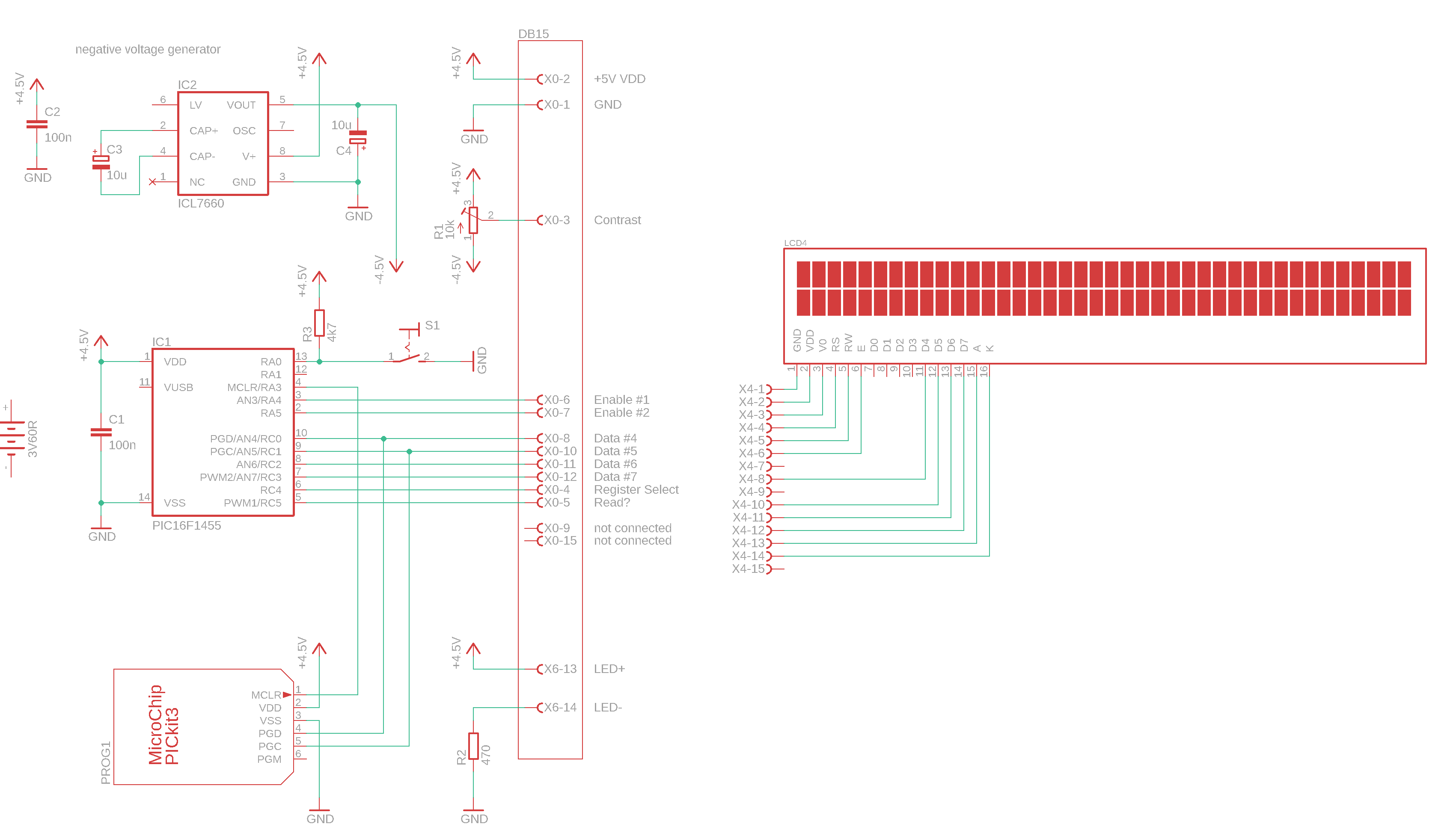
Schaltplan mit PIC16F1455 und LCD-Display
-7, Enable #2, CX0-8, Data #4, CX0-10, Data #5, CX0-11, Data #6, CX0-12, Data #7, CX0-4, Register Select, Read#, CX0-5, CX0-9, not connected, CX0-15, not connected, CX0-13, LED+, CX0-14, LED-, IC1, VDD, MCLR/RA5, RA4, AN3/RC0, PGD/AN4/RC2, PGC/AN5/RC1, AN6/RC3, PWM2/AN7/RC5, RC4, VSS, PIC16F1455, PROGI, MCLR, VDD, VSS, PGD, PGC, PGM, C1, 100n, 3V0B, R2, 470
-
Thread
Veranstaltungstipp: München Sa/So 08/09.03.2025 Amateurfunktagung
Bradward B. schrieb im Beitrag #7838250: > * So, 10:00 MeshCom, LoRa Gibt's vor Ort LoRaWAN-Versorgung? 📡😉
Richtung der Oberleitung schützen soll: * https://www.muenchen.de/sites/default/files/styles/3_2_w1216/public/2022-06/20201124hackerbruecke-4-3.jpg.webp * https://youtu.be/8hf7PkmQxeE?t=1370
-
 Bild
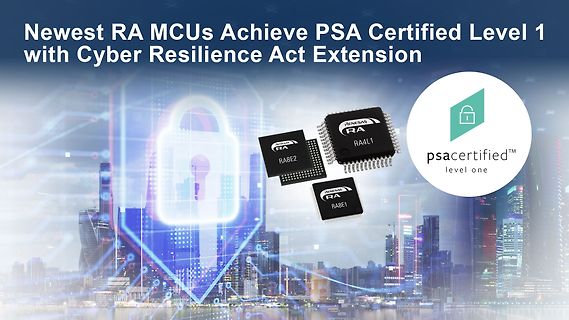
Werbebanner für Renesas RA MCUs PSA Zertifizierung
Newest RA MCUs Achieve PSA Certified Level 1 with Cyber Resilience Act Extension RENESAS RA RA8E2 RENESAS RA RA4L1 psacertified level one RENESAS RA RA8E1
-
Thread
ARM-AI-Assistent final, RP2040 mit 200 MHz Maximaltakt uvm
LoRa ICs and 6.9M gateways with LoRa ICs deployed worldwide as of May 2024. Our member companies’ growth supports this, for example: . . . • The Things Industries connects 2.7 million devices and is
1.30 V 101/4/1 vco:1212 MHz 304.0 MHz 304.0 MHz 1.30 V 76/3/1 vco: 912 MHz 304.8 MHz 304.8 MHz 1.30 V 127/5/1 vco:1524 MHz 306.0 MHz 306.0 MHz 1.30 V 102/4/1 vco:1224 MHz 307.2 MHz 307.2 MHz 1.30 V 128/5/1 vco:1536 MHz [/pre] Wenn man nur mit variierter
-
 Bild
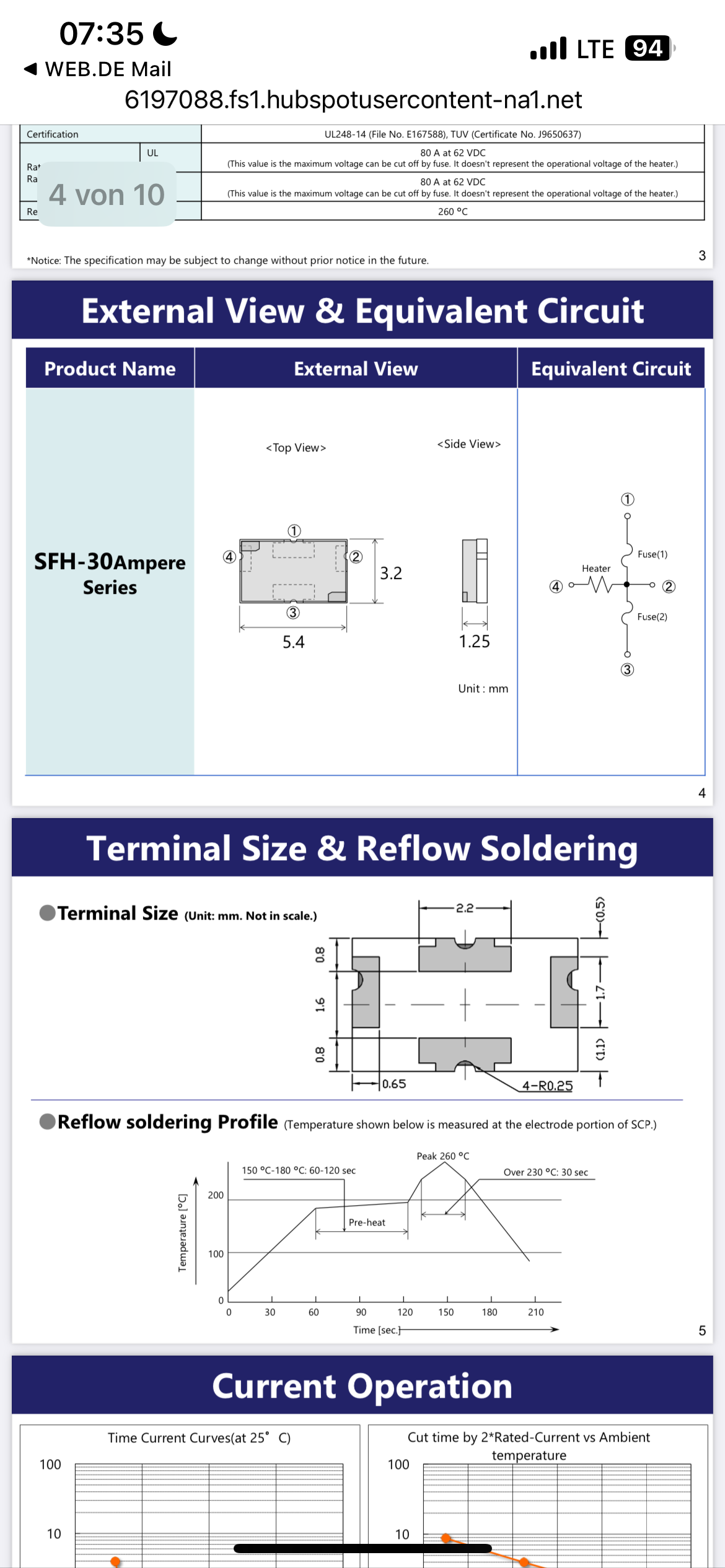
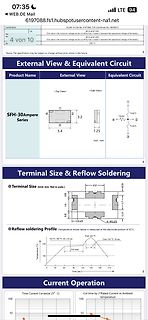
Datenblatt Ausschnitt SFH-30Ampere Series
07:35 WEB.DE 6197088.fs1.hubspotusercontent.na1.net Certification UL248-14 (File No. E16758), TUV (Certificate No. 9650637) Ra Ra UL 80 A at 62 VDC (This value is the maximum voltage it can be cut off by. It doesn't represent the operational voltage of the heater.) 4 von 10 Ra 80 at 62
-
Thread
KiCAD 9.0, Renesas RA4L1, AI-Assistent für Microchip und neue STM32C0-SKUs
Flash, 64 KB SRAM, 8 KB Dataflash Peripherals: Segment LCD, Capacitive Touch, USB-FS, CAN FD, Low Power UART, SCI, SPI, QSPI, I2C, I3C, SSI, ADC, DAC, Comparator, Low Power Timer, Real-Time Clock Packages:
Mikrocontroller werden bereits produziert. Die Preise beginnen bei -,426 US-Dollar für den STM32C051F8P6, -,682 US-Dollar für den STM32C091FCP6 und -,733 US-Dollar für den STM32C092FCP6 mit CAN FD (jeweils (ab 1.000 Stück). Kostenlose Samples sind im ST eStore verfügbar. [/c] Zum Zeitpunkt der Abfassung
-
 Bild
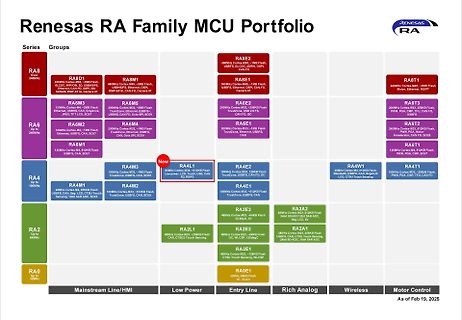
Renesas RA Family MCU Portfolio Übersicht
Renesas RA Family MCU Portfolio Series Groups RA8 RA8D1 RA8M1 RA8E2 RA8T1 RA6 RA6M3 RA6M5 RA6E2 RA6T2 RA6M1 RA6M2 RA6E1 RA6T1 RA4 RA4M3 RA4L1 RA4E2 RA4W1 RA2 RA2M1 RA2L1 RA2E3 RA2E2 RA2A2 RA2E1 RA0 RA0E1 Mainstream
-
Thread
gcc array an mehrdimensionales array zuweisen
Lösung: [c] #include <stdint.h> typedef uint8_t u8; u8 wr_bat_volt[] = { 0x00, 0x03, 0x02, 0x4B, 0x00, 0x01, 0xf4, 0x75 }; u8 wr_bat_pow[] = { 0x00, 0x03, 0x02, 0x4E, 0x00, 0x01, 0xe4, 0x74 }; u8 wr_soc[] = { 0x00, 0x03, 0x00, 0xD6, 0x00, 0x01
das erste Element, sondern auch noch das letzte (achte Element) ignoriert. Korrekt wäre also bei 8 Elementen: [c] for (int i=0; i<8; i++) // 0,1,2,3,4,5,6,7 [/c]
-
 Bild
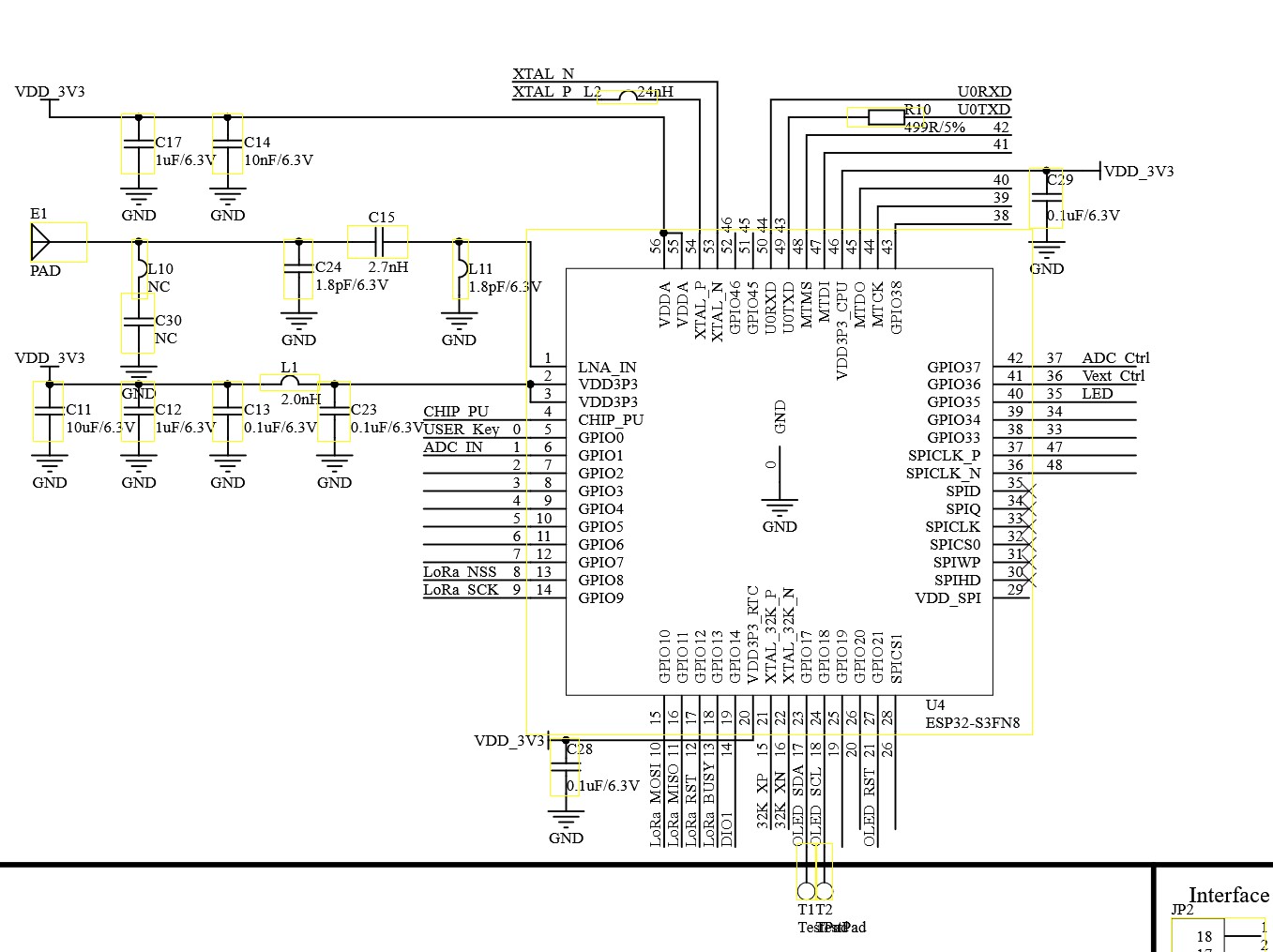
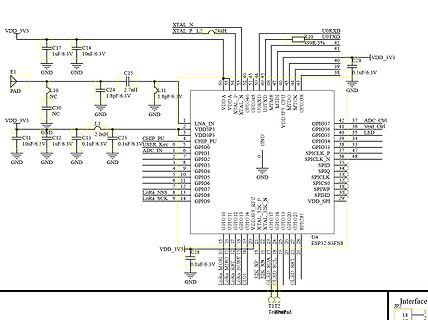
Schaltplan eines ESP32-S3N8 Mikrocontrollers
VDD_3V3, C17, 1uF/6.3V, C14, 10nF/6.3V, XTAL N, XTAL P, L2, 24nH, U0RXD, R10, 499R/5%, U0TXD, C29, 0.1uF/6.3V, GND, E1, PAD, L10, NC, C24, 2.7nH, L11, 1.8pF/6.3V, C30, NC, VDD_3V3, GND, L1, 2.0nH, C23, 0.1uF/6.3V, CHIP_PU, USER Key, ADC 1, LoRa NSS, LoRa SCK
-
Thread
Unglaubliche Anekdote - 2 Tage Fehlersuche Gesperrt
bei 2-seitigen PCB eine Seite mit horizontaler und eine mit vertikaler Vorzugsrichtung.
Kontaktstellen nicht leiden. Weißt du wieviel Pads so eine 16x10 cm Platine hat, bei einem Padabstand von 2,54 mm? 54 x 34 Pads = 1836 Pads. Ein Pad kann mit 8 Nachbarpads verbunden sein. Wenn ich nur eine Verbindung finde würde, würde ich die Platine wegen Qualitätsmangel aussortieren aufgrund meiner Erfahrung
-
Thread
PV-Zwangsabschaltung bei zu viel Sonne - solte man sich dagegen rüsten?
https://www.youtube.com/shorts/TdfwWRMkc2E ist wie eine kleine Lotterie könnte jeden Treffen. Da sind mir die Solaranlagen auf dem Dach schon lieber. Aber das ist ja nicht das Thema es geht darum, das produzierende Firmen mit Flatterstrom
hersteller ja nur 50kW und größer, vom Preis ganz zu schweigen. Ich hätte gern eine DC-Säule mit 2-8kw, die würde dann das Leistungs-Spektrum der typischen Dachanlage abdecken. Technisch wäre das dann ein DC-DC der von 200-700V (je nach Anzahl Panels) auf die um 400V fürs Auto umsetzt. Hat eigentlich
-
Thread
Heltec LoRa32 Evaluationboard
/heltec.org/project/wifi-lora-32-v3/ Version v3.1: https://resource.heltec .cn/download/WiFi_LoRa_32_V3/HTIT-WB32LA(F)_V3.1_Schematic_Diagram.pdf Version v3.2: https://resource.heltec .cn/download/WiFi_LoRa_32_V3/WiFi_LoRa_32_V3.2_Schematic_Diagram.pdf (Leerzeichen vor .cn entfernen wegen
jetzt explizit angibst, sind identisch zum Default: https://github.com/jgromes/RadioLib/blob/977b2c28c8989167719e9f0df8ee69b67b3feddb/src/BuildOpt.h#L166 Zo R. schrieb im Beitrag #7828864: > Nachdem ich das Radio Modul so konfiguriert habe hat es funktioniert. Du hast SX1278 durch SX1262 ersetzt
-
Thread
16f18313 mit k150 progrmieren
"=3F8F LIST5 FUSE1 "FEXTOSC" "ECH"=3FFF "ECM"=3FFE "ECL"=3FFB "OFF"=3FFC "HS"=3FFA "XT"=3FF9 "LP"=3FF8 LIST6 FUSE2 "/DEBUG" "Disabled"=3FFF "Enabled"=1FFF LIST7 FUSE2 "STVREN" "Disabled"=3FFF "Enabled"
LIST5 FUSE1 "Brownout Voltage" "2.0V"=3FFF "2.7V"=3F7F "4.2V"=3EFF "4.5V"=3E7F LIST6 FUSE1 "CCP2 Mux" "RC1"=3FFF "RB3"=2FFF LIST7 FUSE1 "Code Protect" "Disabled"=3FFF "Enabled"=1FFF LIST8 FUSE1 "Oscillator" "EXTRC_CLKOUT"=3FFF "EXTRC_IO
-
Thread
Bauteile: PocketBeagle, smart aufgebaute LEDs, ESP32 mit STM32 uvam
insbesondere dann, wenn die vorliegende Aufgabe harte Echtzeitkriterien stellt.  Bildquelle: https://www.oemsecrets.com/compare/102110780%20 ### M5Stack U184 – LoRAWAN-Modem auf Basis von STM32-Technologie Im Hause Espressif bietet man bisher keine LoRA-Lösung an. Espressif
Signalverlust nach folgendem Schema weiter hohe Stabilität offeriert: [c] ▪ Frequency Accuracy ±1E-12 when locked ▪ Holdover: ±1.5μs/24h @ ±2°C ▪ Frequency Stability over Temperature: ±0.2 ppb [/c] ### ams OSRAM Mira016 – nahinfrarotfähiger Global Shutter-CCD Mit der Mira016-Serie schickt
-
Thread
AVR64DD32, UART-Ausgabe bleibt hängen, Assembler
, 0x0136 ; 0x800136 <x+0x2> 14a: 90 91 37 01 lds r25, 0x0137 ; 0x800137 <x+0x3> 14e: 9b 01 movw r18, r22 150: ac 01 movw r20, r24 152: 0e 94 21 02 call 0x442 ; 0x442 <__mulsi3> 156: 60
pop r27 16a: af 91 pop r26 16c: 9f 91 pop r25 16e: 8f 91 pop r24 170: 7f 91 pop r23 172: 6f 91 pop r22 174: 5f 91 pop r21 176: 4f 91 pop r20 178: 3f 91 pop r19 17a: 2f 91
-
Thread
SIM Karte für IoT?
Bei mir läuft der kleinste "Congstar wie ich will", aktuell 2 Euro für 4 Wochen.
loszuwerden. Es gibt auch nicht viel Grund Karten zu lagern, man kann sie auch direkt kündigen und nach 2 Jahren eine neue kaufen. Heutzutage besser als eSIM, verbraucht dann auch kein Material.
-
Thread
Pegelstandsmessung Abwassergrube
de.pricereviews.com/product/epttech-tlc2206-tuya-smart-life-mobile/B0CDPDPRJH/?gad_source=1&gclid=Cj0KCQiAhbi8BhDIARIsAJLOlucQp0dHeLWUy1zGitURdCKTJZ1NuK_oKbCH6QogLgRLdJiVNNk2XYIaArcGEALw_wcB
E-litro von Tecson. Einperlsensor mit Auswertung. Verbauen Wir für Öl, Wasser, Kacke. Funktioniert immer. Jörg
-
Thread
Basteln: USB via dünnes HDMI-Kabel
https://www.engineeringtoolbox.com/wire-gauges-d_419.html * https://www.reddit.com/media?url=https%3A%2F%2Fpreview.redd.it%2Fw3qjrdkqgyt41.jpg%3Fauto%3Dwebp%26s%3D19145420067964fd61a748097132d534e9f613bb
Sinnvoll wäre eventuell auch die Servosignale zu digitalisieren und über eine einzige Ader (oder 2 wenn differenziell) per UART nach unten zu schicken. 8 Adern sind in Ethernetkabeln massenhaft zu finden und würden dann reichen. Im U-Boot würden dann aus UART wieder Servosignale entstehen. Hat auch
-
Thread
Raspberry Pi mit 16 GB, Arduino Cloud mit S3
 Bildquelle: https://www.cnx-software.com/2025/01/04/radxa-cubie-a5e-allwinner-a527-t527-sbc-with-hdmi-2-0-dual-gbe-wifi-6-bluetooth-5-4/ Interessant ist an diesem System, das derzeit noch nicht auf der Radxa-Webseite sichtbar ist, vor allem die Nutzung von Allwinner-Technologie
commercial) • CPU ◦ Octa-core Arm Cortex-A55 processor with four cores @ 1.80 GHz (T527) or 2.0 GHz (A527) and four cores @ 1.42GHz ◦ XuanTie E906 RISC-V core up to 200 MHz [/c] ### Qualcomm: Neue Prozessorvariante mit Zielpreis um 600 US-Dollar. Die Aktivitäten im
-
Thread
Mikrocontroller mit 5V
Manfred P. schrieb im Beitrag #7804927: > Feste Richtung und Automotive-tauglich. Ich habe TXS0108E im > Bastellager, die spielen sowohl am I2C als auch mit SPI (SD-Karte) > problemlos. Und wo haben die eine feste Richtung? Die arbeiten bidirektional. Sonst hättest du bei I2C ein "kleines" Problem
Beitrag #7804942: > Manfred P. schrieb: >> Feste Richtung und Automotive-tauglich. Ich habe TXS0108E im >> Bastellager, die spielen sowohl am I2C als auch mit SPI (SD-Karte) >> problemlos. > > Und wo haben die eine feste Richtung? > Die arbeiten bidirektional. Sonst hättest du bei I2C ein "kleines
-
Thread
[V] Evalboards, passive Bauteile, Netzteile, Relais,.
1x SX1276, Paradisetronic: LoRa Breakout -> 3,00€ 1x GP2Y0A21YK0F-K, Sharp: Distanzsensor 10-80cm analog -> 2,00€ 1x LB070WV8, LG: TFT 800x480 LVDS -> 10,00€ 1x CYKN8-02CL0, ChenYang
0507-E-25-W25.000MHz-T, TJE: 25MHz, 25ppm -> 0,05€/Stk. 200x ECS-200-8-30Q-VY, ECS: 20MHz, 8pF, 20ppm -> 0,05€/Stk. 100x ABM7-12.000MHZ-D2Y-T, Abracon: 32.768KHz 18pF, 30ppm -> 0,05€/Stk