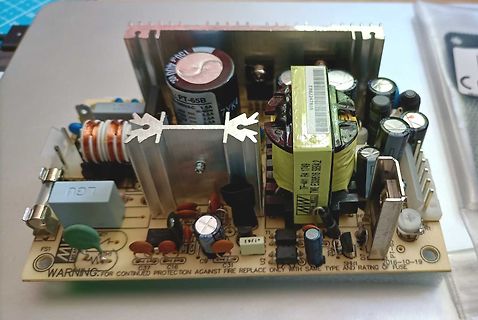
](/attachment/707579/2.png) Bildquelle: https://www.cnx-software.com/2026/10/23/lilygo-t-halow-p4-a-m-2-2280-board-with-esp32-p4-wifi-halow-and-esp32-c6/ Im Bereich der Rechenleistung setzt man auf die bekannte Kombination aus ESP32-P4 und ESP32-C6. Hervorzuheben ist, dass außerdem auch ein Wi-Fi-HaLow-Modul
then rewritten into idiomatic C. Each one is run in an emulator beside the ROM's own copy, from the same starting state, and has to leave the same results, memory, registers, and device and kernel calls in the same order. All agree except six that differ for documented reasons -- mostly the firmware's
Characteristics if operated under different conditions. TYPICAL CHARACTERISTICS 30 30 ) 25 ) 25 ( ( n t 20 e 20 e u TJ= 25°C r T J 100°C C C o 15 d 15 c TJ= 100°C a l 10 r 10 o o , , T J 25°C IC 5 I 5 0 0 0.0 0.5 1.0 1.5 2.0 2.5 3.0 3.5 4.0 0.0 0.5 1.0 1.5 2.0 2.5 3.0 3.5 4.0 VCE, Collector−Emitter Voltage
pF \ 8-470KO __ 9 Bild 20: Blockschaltung des Signalquellenschalters TDA 1029 mit 8-0.22u Schalter- 16 =r -^a externer Beschaltung Steuerung 4 e1n aut i ◄Bild 19: Applikation der elektronischen Signalquellenschalter für Monitor 2x5 Eingänge und Monitor sieren, während die anderen Vorverstär quelle des
WELLNESS Heruntergeladen von manualslib.de Handbücher-Suchmachiene Montage- und Gebrauchsanweisung S. 1/4 Abbildungen: 1bb. 1: 2bb. 2: 7mm 1 Detail 1 SAUNA VENT K CLIMCLIMA 2 J 3 I 4 5 5 2 H 6 G 7 3 F 8 4 E 9 D A B C D 3bb. 3: 4bb. 4: i i w w A s s 9 SAUNA 1 e e 8 VENT r w w r CLIMCLIMA 7 2 3 3 1 6 2 4 3 5 4 6 5 WORLD OF WELLNESS Heruntergeladen von manualslib.de Handbücher-Suchmachiene Montage- und Gebrauchsanweisung S. 2/4 5 i i 6 Abb. 5: h h Abb. 6: / / s s i i e e w w 15 cm 1 1 2 Ø3 cm 2 3 c g tt bwr
XXH DD H P8 XXH BS XXH DE CTRELL 00 H reserved XX H H BFH reserved H DF H CTRELH 0H C0H IRCON0 1) 0H E0H ACC 1) 0H C1 CCEN 00 E1 CTCON 0X00 0000 H H H B C2H CCL1 0H E2H CML3 XXH C3H CCH1 00H E3H CMH3 0H C4 CCL2 0H E4 CML4 00 H 00 H H C5H CCH2 H E5H CMH4 0H C6H CCL3 0H E6H CML5 0H C7H CCH3 0H E7H CMH5
AMD PLD PAL16R4-4 NONE No Need WPLD1 V5.10 AMD PLD PAL16R4-5 NONE No Need WPLD1 V5.10 AMD PLD PAL16R4-7 NONE No Need WPLD1 V5.10 AMD PLD PAL16R4D/2 NONE No Need WPLD1 V5.10 AMD PLD PAL16R4H-10 NONE No Need WPLD1 V5.10
are shown in Fig. 16. Data is stored in a 480-bit RAM (30 words x 16 bits). The 30 words are sequentially addressed 4 times to generate the 4 output samples. When a new word is moved from the interpolation RAM to the filter
ARDUINOISP_PIN_MISO 12 #define ARDUINOISP_PIN_SCK 13 #endif // HOODLOADER2 means running sketches on the ATmega16U2 serial converter chips // on Uno or Mega boards. We must use pins that are broken out: #else #define RESET 4 #define LED_HB 7 #define LED_ERR 6 #define LED_PMODE 5 #endif // By default, use hardware
vermeldet man unter der URL https://www.raspberrypi.com/news/price-increases-for-2gb-raspberry-pi-4-and-raspberry-pi-5/ die folgenden Preisanpassungen: [c] from today we are increasing the price of the 2GB variants by $12.50, to $67.50 for Raspberry Pi 4 and $77.50 for Raspberry Pi 5. Prices for other products, including the 1GB variants of Raspberry Pi 4 and Raspberry Pi 5 and the 2GB variants of Compute Module 4 and Compute Module 5, remain unchanged. [/c] Interessant ist außerdem, dass während der Speicherkrise Reseller versucht haben, „selbst“
two sample projects in the source tree. One for an 8-bit Atmel ATmega103 (but any AVR/ATmega with 4 KB RAM or more will do) and one for the 32-bit Atmel AT91SAM7S64 running on the AT91SAM7S-EK evaluation board. (GPL Lizenz) Openeye. OpenEye ist eine Kombination aus PC-Programm (Windows, Delphi) und
Intel XScale und Nvidia Tegra Linux4SAM Informationen, Anleitungen und Code zur Anwendung von Linux auf AT91SAM9xxx NicheTask (URL ist www.freertos.com aber hat nichts mit FreeRTOS(.org) zu tun) Nut/OS Echtzeitbetriebssystem für Mikrocontroller
folgendes: [c] Long-term support releases of Zephyr will come out every two years, following the same timing as Ubuntu and giving certainty to developers with up to 15 years of support. As with Ubuntu, interim releases will be published every 6 months for developers needing cutting edge features, with
die LSM6DSK320X und das Adapterboard STEVAL-MKI258KA für die ISM6HGK256X werden bis November 2026 im eSTore und über Distributoren verfügbar sein. Die LSM6DSK320X für Consumer-Anwendungen arbeitet über einen breiten Temperaturbereich von -40 °C bis +85 °C. Die industrietaugliche ISM6HGK256X beherrscht
[pre] 24. Register Summary Address Name Bit 7 Bit 6 Bit 5 Bit 4 Bit 3 Bit 2 Bit 1 Bit 0 Page 0x3F (0x5F) SREG I T H S V N Z C 9 0x3E (0x5E) Reserved – – – – – – – – 0x3D (0x5D) SPL SP7 SP6 SP5 SP4 SP3 SP2 SP1 SP0 12 [/pre] Ist ja wohl eindeutig, dass er kein
warum Du ausgerechnet die verwendest. Ist ja nicht so, dass man die letzte Version von AVR Studio 4 nicht mehr bekommen würde: https://www.microchip.com/en-us/tools-resources/archives/avr-sam-mcus#AVR%20Studio Karl B. schrieb im Beitrag #8098362: > Bei der Version 4.19 "löschte" sich das geflashte
assembly (power supply, leads or tank) before having switched off. 3. Never manipulate with wet hands. 4. Do not ground any of the outputs or the buffer in the tank. 5. Connect the outlets only to an insulated electrophoresis tank with safety cover. 6. Never make any other connections, such as e.g. putting
PDIP) Spannungsbereich normal 2 ... 3,3 V (manche ab 1,65 V) Temperaturbereich bis 125 °C Flash-ROM: 16 KB ... 4 MB SRAM: 4 KB ... 4,2 MB EEPROM 512 B ... 16 KB (nur STM32L0 und STM32L1) SDRAM-Controller (z.B. bei den STM32F42xxx und STM32F43xxx bis 512 MByte externer SDRAM addressierbar) 512 one-time
0,85 EUR (Stand 2010) Allerdings gibts den LPC1100 mit Cortex-M0 schon ab 0,65 $! Vorteile gegenüber SAM3/4: Fast alle Pins sind 5-Volt tolerant. Vorteile gegenüber anderen "Kleinen" wie z.B. PIC, Atmel usw. nahezu gleicher Preis bei Hobby Anwendungen 32 Bit ohne Umwege in Assembler rechenbar Schnelle
steht nun eine Variante zur Verfügung, die den Raspberry Pi 5 unterstützt. 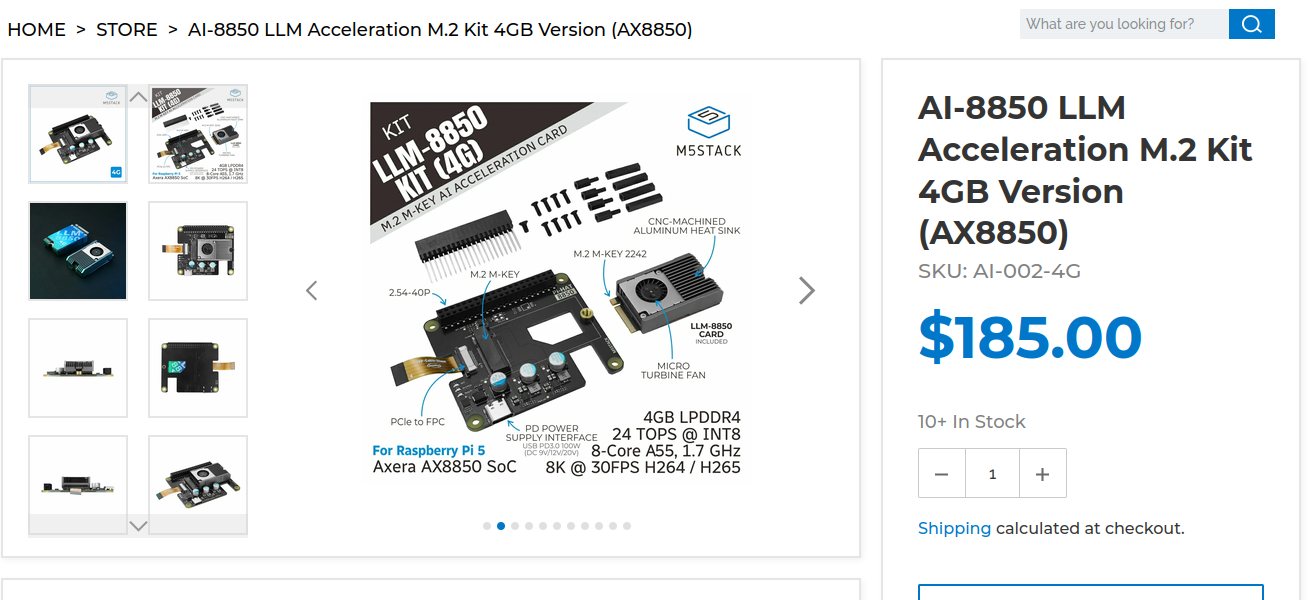 Bildquelle: https://shop.m5stack.com/products/ai-8850-llm-acceleration-m-2-kit-4gb-version-ax8850 ### Teltonika PR328 – preiswerter Power-over-Ethernet-Injektor. Power over Ethernet ist
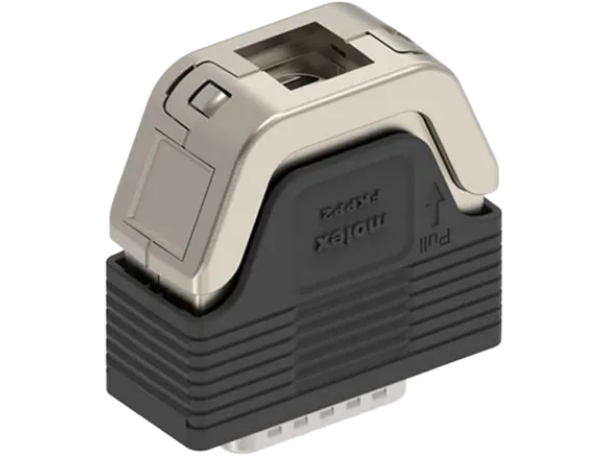 Bildquelle: Molex. ### M5Stack AddOn Display Out Module for PoE-P4 – MIPI-zu-HDMI-Adapter. Auf verschiedensten Prozessrechnern finden sich MIPI-DSI-Steckverbinder. Espressifs Modulbauer bietet nun ein „neues“ AddOn Display Out Module for PoE-P4 an, das – auf einen
OUTPUT LOAD CURRENT REFERENCE VOLTAGE vs. TEMPERATURE 9 2.5 O 1.190 O 1.22 O 7 V+ = 5V - SINK 1 - 4 ( 4 1.21 4 1 9 E 1.185 9 9 2.0 M A M V EXTENDED TEMP RANGE M – T1.180 E1.20 V+ = 3V O SOURCE G M ) 1.5 V T1.19 COMMERCIAL ( U 1.175 O TEMP RANGE A L T V1.18 VO U C 1.0 E1.170 E X C E1.17 E 1.165 E 9 E R1.16 0.5 E V+ = 5V 7 R1.160 OR 1.15 V+ = 3V 4 0 1.155 1.14 / 0 4 8 12 16 20 0 5 10 15 20 25 30 -60 -40 -20 0 20 40 60 80 100 120 140 M LOAD CURRENT (mA) OUTPUT LOAD CURRENT (µA) TEMPERATURE (°C) A MAX9
meldet man Folgendes: [c] The board supports LPDDR5/LPDDR4X/LPDDR4 memory (up to 16GB). The board comes with onboard eMMC storage (up to 32GB) or UFS storage (up to 128GB), along with a Gigabit Ethernet port and Wi-Fi 6 + BT 5.4. For video output, it provides Mini HDMI 2.0 (4K@60fps) and a Type-C @DP1.4 interface (with built-in DP output) for connecting to high-definition displays. In terms of interfaces, the Zero 4 offers dual MIPI CSI camera interfaces, a 16Pin FPC (
2 x 32-bit 800048c: str.w r4, [r1, #416] @ entry 2 TxOffset|TxCount as one 32-bit word 8000492: str.w r4, [r1, #420] @ entry 2 RxOffset|RxCount as one 32-bit word 8000498: str.w r4, [r1, #424] @ entry 3 ... 800049e: str.w r4, [r1, #428] ``` ## Root cause The descriptor struct is declared with **plain (non-`volatile`) `uint16_t` fields**. Because the fields are not volatile, the compiler may reorder and merge the
schrieb: >>> Rubycon ZLH >> >> Viel zu teuer! **;-)** <------ > > 2000 Stk ZLH 1000uF/10V (8x16) kosten bei Mouser 0,12€ - devolo zahlt > vielleicht 0,06€ > der kleine 470u/6,3V die Hälfte (Mouser 0,065€) > das gibt sich nicht so viel gg. SamXon - (bei TME 8x16 SamXon 0,085$); > ->lohnt mMn
Entscheidungsregeln Bedingung nach Schritt 1 Fehlercode Nächste Aktion 2× LOW auf F+–S+ und F−–S−, 4× PT OK Kelvin auf Soll-Klemmen 2× LOW auf F+–S− und S+–F−, 4× PT POLARITY Sense tauschen oder Betrag 2× LOW auf F+–F− und S+–S−, 4× PT FORCE_SAME_SIDE Mux: Strom F+→S+, Sense F−/S− 3× OPEN, gemeinsamer
MDS MD0 Input MD1 H H L L H H L L H H L L H H L L MD1 MD0 H L H L H L H L H L H L H L H L LINES 2 4 6 8 10 12 14 16 4 8 12 16 20 24 28 32 V−DOTS 16 32 48 64 80 96 112 128 32 64 96 128 160 192 224 256 1 SCREEN 2 SCREENS MD2 H L H L MD2 Input Pins for selection of number of columns MD3 H H L L MD3 Columns
PT-65B 1.5A 2.5A 2.5A 2.5A
E983247816
MW
TF-4H 1749
E08615 58A2
FS1
C37 C16 C9 C31
WARNING: FOR CONTINUED PROTECTION AGAINST FIRE REPLACE ONLY WITH SAME TYPE AND RATING OF FUSE
2016-10-19
wdt_reset(); } sht_cmd(0x05); /* Measure Humidity */ s2 = (int16_t)sht_read16(); so = (float)((s2 + s1 + s0) / 3); s0 = s1; s1 = s2; rh = -4.0f + 0.0405f * so - 2.8e-6f * so * so + 2.5f; i = (int16_t)rh; if (i
); } } static uint8_t rh_from_raw(int16_t so_int) { float so; float rh; int16_t i; so = (float)so_int; rh = -4.0f + 0.0405f * so - 2.8e-6f * so * so + 2.5f; i = (int16_t)rh; if (i > RH_MAX) i
minimal enger gesetzt ist aber mehr Abstand zum Zeichen davor hat (die Punkte rücken zusammen und ab), 4 werden wieder zurück gewandelt in 4 Punkte, danach bleibts so. Test1. Test2.. Test3... Test4.... Test5..... Sowohl im Editor als auch im Post. Sehen kann ich aber alle. Edit: Warum
Sehr lange Threads en bloc darzustellen, belastet(e) die Webpräsenz vmtl nicht unerheblich.
codes 1 2 3 4 5 6 7 8 9 10 11 12 13 14 15 16 * * * E R R * X Y Z * * * * CR LF X = one-place error code: *, 0,1, 2 Y Z = two-place error index code * = space 4–5 Data Output with ID Code When data with an ID code
/Weighting Filter Charge Pump Polarity Normal Inverted Operation (same as 0 0 1 0b mode 4), but Transient Output Inhibit Disabled. l ApproximatelyCharacteristicofStandard Normal Inverted Operation (same as i –4 IndependentFilterinconformitywithCCIRRec.567 e 1 0 0c mode
.........1 0 1 4 2 6 mm Achse I Schraube M 3 x 6 miii F 7 r I p R 24 100 kIl 4 Schrauhen M 3 x 16 111111 I) I - D 8 ........... L L I), rot, 501111 R 77 I MI) 5 Muttern M 3 1)91)11) 1)19 D21) DII) 1N4001 R14 2201 4 Schrauben
2 c A I e u ) ) S R 4 I 1 2 1 4 A A F 6 0 2 = 4 1 m E :P02 X K G 7 6 1 A k : b 0 N4 bk 1 2 2 N1 0 X e 0 7 . x-x22895300 o F 6 p n 3 W1 2 4 1 W4 - E R r ) (31 W1 2 1 V4 1 2 D e k F 4 4 + bk (bk)L 5 4 u 1 4 4 1
2 3 4 5 6 7 8 9 0 1 2 3 4 5 6 7 8 9 0 1 2 3 4 5 6 3 3 3 3 3 3 4 4 4 4 4 4 4 4 4 4 5 5 5 5 5 5 5 5 5 5 6 6 6 6 6 6 6 4 2 3 4 5 7 6 7 8 9 N Y R 1 S E 1 5 0 6 E 3 4 5 F 2 3 3 R 9 T D A A A A1 S A A A A E D W
- o i u P i & l t A Y C t A Y C T B T v I I L /2 g h C t r i / l i /2 v w C S & I S A /2 r t e f r e f r n t p i m & g k e & g k L i S ra & S c y T P y T P F V e V e S S T S T S 2 /2 / r p r i r i e i A V G V G i p c T A y ( r o B / 2 T t t u : : : u : : : e 4 2 1 e 4 2 1 A A 2 /2 / 2 / - f 5
vs. I Figure 3. DC Current Gain CE(sat) C 3.6 100 ) TA= 75C p 3.2 f = 10 kHz A −25C ( I = 0 A m E 2.8 E T 10 N TA= 25C N 25C T 2.4 E C R 1 A 2.0 U A C C 1.6 R T T 0.1 P 1.2 C T L U 0.8 O , C0.01 o0.4 C VO= 5 V C I 0 0.001 0 10 20 30 40 50 0 1 2 3 4 5 6 7 8 9 10 V , REVERSE VOLTAGE (V) V , INPUT
T 0 . 0 d 6 C g r a ee p o e t e [ e 1 t n p e w o h e a L 4 2 e la g i e e a i e 5 3 1 1 0 ] S P i r b s f i i 1 0 0 1 C n t t l a m r 4 . r d a i l i t [ C d l e s e r n d 3 2 3 . . 2 ] L T a m a n i e 1 1 0 0 0 0 7 d d y d i n b 0 1 a t a t d e t 0 t W g n g n l d B E . a E i s i s i g & e I 0 a V i i u i t i A R V p n n c n n o s 0 P C E e e i e s t u . O I : i i u i o o a [ T S t D D b D D C D 5 ] . h o . . . . . . 0 4 1 3 a e N 1 2 3 4 5
0 1 2 3 4 5 0 1 2 3 4 5 6 7 8 9 0 1 2 1 2 3 4 5 6 7 C C C C C C S S S S S S S O O O O O O E E E E E E E M M M M M M G G G G G G G 2 3 4 5 6 7 0 1 2 3 4 5 6 S S S S S S S S E E E E G G G G G G G G G G G G N N N
Problem und den Sinn des Themas nicht verstanden. Kann ich erklären. Wenn ein Rechner bspw. 32GB (oder 16 oder 64 - völlig egal) benötigt oder heutzutage haben sollte, dann spart man doch nichts wenn man ein 32GB Modul kauft statt 2x16GB. Also nimmt man doch immer 2x GB. Wo soll dabei der Spareffekt liegen? Wer jetzt sagt ich kaufe in Summe nur 16GB statt 32GB, der spart zwar Geld, hat damit jedoch auch seinen Rechner kastriert, was überhaupt keinen Sinn macht. Äpfel vs. Birnen. Ich halte das Thema für reine Theorie oder Augenwischwerei. https
J - 1 6 5 4 3 2 1 7 M + 5 7 5 M + 5 5 I 5 0 2 4 0 IC 8 E 2 1 0 0 E A 0 0 E B N 1 OUT1 OUT3 14 P K P K O V D R R 2 OUT2 OUT4 13 1 7 R 1 4 R 0 9 2 1 C 0 3C 1 C S 3 4 5 0 1 0 3 9 0 5 7 2 LE E 3 12 E E n 8 0 3 W 8 n
gelieferten Informationen in das Modbus-RTU-Protokoll umsetzt. ### Advantech ICR-2545 – industrieller 4G-Router mit Komfortfunktionen 4G-Netze werden aufgrund ihrer Robustheit mittlerweile auch als Kommunikationsbasis für IoT-Systeme eingesetzt. Mit dem ICR-2545 steht ein Router zur Verfügung, der seine
: TE Connectivity ### Semtech RCLAMP2891PQ – TVS-Diode mit 0.4pF Kapazität Desto geringer die Kapazität einer TVS-Diode, desto weniger Verformung erfährt das sie passierende Signal. Von Semtech gibt es nun eine Serie, die mit nur 0.4pF Kapazität beworben wird.
Ventilator_Steuerung.lss" -S "Ventilator_Steuerung.tmp" -W+ie -I"D:/Microchip Studio for AVR and SAM\7.0\Packs\Atmel\ATmega_DFP\2.4.522\avrasm\inc\" -I"D:/Microchip Studio for AVR and SAM\7.0\Packs\Atmel\ATmega_DFP\2.4.522\include\" -I"D:/Microchip Studio for AVR and SAM\7.0\Packs\Atmel\ATmega_DFP\
registers (60) dwt_ctrl (/32) (61) dwt_cyccnt (/32) (62) dwt_0_comp (/32) (63) dwt_0_mask (/4) (64) dwt_0_function (/32) (65) dwt_1_comp (/32) (66) dwt_1_mask (/4) (67) dwt_1_function (/32) ``` ### Verify the readout is stable Dump everything a second time from the exact same halted
Info struct at `0x3000`: ``` 0x3000 ff ff ff 10 struct size = 0x10 (old 16-byte format) 0x3004 51 b1 e5 db magic 0x51B1E5DB 0x3008 00 01 b0 00 SD_SIZE = 0x1B000 0x300C 00 00 00 87 FWID = 0x0087 ``` Because the struct is only 16 bytes there is no SD-ID or version
insbesondere Datenerfassungsanwendungen erleichtert. ### Cytron: Langsamere Variante des Raspberry Pi 4 Der Raspberry Pi 4 arbeitet normalerweise mit einem 1,8 GHz schnellen Prozessor aus dem Hause Broadcom. Das in Malaysia ansässige und hervorragend beleumundete Unternehmen Cytron bietet seit einiger
/p-raspberry-pi-4-model-b-4gb-ram-125ghz? ### Waveshare ESP32-C6 – XIAO-artiges Board mit 5-36V Eingangsspannung Wer ein Arduino-ähnliches Board mit besonders großem Eingangsspannungsbereich benötigt, wird von Waveshare
. The ▯rst byte of the payload acts as selector, a comprehensive description can be found in table 4. Table 3 Register values for zoom ranges Range Hex Data Range Hex Data 50 m 0xf4,0x01,0,0 2 km 0x20,0x4e,0,0 75 m 0xee,0x02,0,0 3 km 0x30,0x75,0,0 100 m 0xee,0x03,0,0 4 km 0x40,0x9c,0,0 250 m 0xc4,0x09,0,0 6 km 0x60,0xea,0,0 500 m 0x88,0x13,0,0 8 km 0x80,0x38,1,0 750 m 0x4c,0x1d,0,0 12 km 0xc0,0xd4,1,0 1 km 0x10,0x27,0,0 16 km 0x00,0x71,2,0 1.5 km 0x98,0x3a,0,0 24 km 0x80,0xa9,3,0 A Digital Interface for a Lowrance Broadband Radar 9 Table 4 Register values for ▯lters and
L9805E Super smart power motor driver with 8-Bit MCU, RAM, EEPROM, ADC, WDG, Timers, PWM and H-bridge driver Features ■ 6.4-18V supply operating range ■ 16 MHz maximum oscillator frequency ■ 8 MHz maximum internal

 Bild
Bild