VaAues are at Ts otherwise noted. B 4 Symbol Parameter Value Unit 4 3 VCEO Collector-Emitter Voltage -40 V — VCBO Collector-Base Voltage -40 V P VEBO Emitter-Base Voltage -5.0 V N IC Collector Current - Continuous -600 mA P G TJ,STG Operating and Storage Junction Temperature Range -55 to +150 °C n e Notes
A / Symbol Parameter Conditions Min. Max. Unit M M V Collector-Emitter Breakdown I = 1.0 mA, I = 0 40 V B (BR)CEO Voltage(5) C B T 4 V Collector-Base Breakdown I = 0.1 mA, I = 0 60 V 0 (BR)CBO Voltage C E 1 — V(BR)EBO Emitter-Base Breakdown Voltage IE= 0.1 mA, C = 0 6.0 V BL Base Cut-Off Current VCE
Circuit Schematics Figure 2. Dual−channel Circuit Schematics (HCPL0500, HCPL0501 (HCPL0531, HCPL0534) *Base Not Connected for HCPL0453) ABSOLUTE MAXIMUM RATINGS (TA= 25°C unless otherwise specified) Symbol Parameter Value Units TSTG Storage Temperature −40 to +125 °C TOPR Operating Temperature −40 to +85
wobei, wie schon im eingangspost beschrieben kann das eine (das des Thermal) kann ich auch in ein Bas (dh ohne colorburst) umwandeln. Dann muss man nur den colorburst aus dem anderen Signal rausfiltern, beide B/W Bas Signale mischen (Opamp?) und am Ende das Colorburst Signal der 2 Quelle wieder drüber
Originaltakt. https://www.slashcam.de/info/Wie-wichtig-ist-Genlock-404051.html der Begriff TBC = time base correction gehört auch zum Thema.
Das ist hier auch erwähnt: https://afu-base.de/radtel-rt-880/ "Vorsicht bei 6m und 4m-Betrieb: Aufgrund starker Oberwellenemissionen wird vom Betrieb in diesen Bändern abgeraten, da diese Störungen in anderen Bändern (10m, 2m, 70cm) verursachen
Beitrag #7921067: > Ich muss dabei an die "gute" alte Stabo SH7000 denken (11m Handfunke mit > 40 Kanälen). Den Backstein in der SH7700 Variante hatte ich ne Weile ausgiebig in betrieb, AM und FM, Neben der ein oder anderen Royce ect.
are the base resistance thermal noise, or Johnson noise, the base current shot noise and the collector current shot noise..." Die böse Brownsche Molekularbewegung ist also schuld. Weg damit, auf Null Kelvin
: was hilft der beste rauscharme Vorverstärker für den Plattenspieler wenn die (Vinyl-)Platte um 40db mehr rauscht als der Vorverstärker ?
mA temperature range – 0.5% 40°C to 125°C TJ= 25°C 1 (3) LM1117I-3.3 over the junction ΔV OUT Load regulation V = 4.75 V, 0 ≤ I ≤ 800 mA mV IN OUT temperature range – 15 40°C to 125°C TJ= 25°C 1 LM1117I-5.0 over the junction mV V
output current is related to the ambient temperature. The maximum continuous current of the circuit at 40°C is about 25°C less than that at 25°C. 7%ÿ Chongqing Zhongkexin Yida Electronics Co., Ltd. Shenzhen Rev1.2 2020-12-11 www.mixic.com.cn Office: Room 1408, Wanjun Economic and Trade Building, Baoxing
the retaining ring. Detach the plastic retaining case by reversing this procedure. ring from the base by disconnecting the draw cords from the hooks on the ring. Once the ring is Preparation of the 3700 Standard removed, you can lift the bottles out of the base. Base Section Always use the retaining
MAXIMUM RATINGS (Note 1) Rating Symbol Value Unit Collector−Emitter Voltage V 140 Vdc CEO Collector−Base Voltage VCB 160 Vdc Emitter−Base Voltage VEB 7.0 Vdc Collector Current− Continuous C 10 Adc − Peak 15 TO−204AA (TO−3) CASE 1−07 Base Current − Continuous B 7.0 Adc − Peak − STYLE 1 Total Device Dissipation
ich mache seit über 40 Jahren AFU (und war seit 1981 bei jedem Dortmunder AFU Markt anwesend, überwiegend mit Tisch), dass gejammert wurde, kann ich nicht wirklich bestätigen. Egal welche neuen Betriebsarten aufkamen, man
. https://www.mikrocontroller.net/topic/484171#new Wir hatten den Computer-Club im WDR und X-Base im ZDF https://de.wikipedia.org/wiki/X_Base Zu letzterem ist mir noch folgender Kommentar im Ohr: Wenn das ZDF was mit Computern für ein junges Publikum macht, dann entweder sowas durchgeknalltes
to control all I/O registers on the ALL-03 main module. Register name I/O address accesss IDPORT base address+0 Write-only DATAPORT base address+2 read+write The base address is the I/O address of the SAC-201 as defined by DIP switches 1 and 2. These switches allow a choice of 16 possible base addresses
LEAD BENT LEAD BC548 30 TAPE & REEL Collector - Base Voltage VCBO Vdc BC546 80 BC547 50 BC548 30 MARKING DIAGRAM Emitter - Base Voltage VEBO 6.0 Vdc Collector Current − Continuous C 100 mAdc BC 54xy Total Device DissipationA@ T = 25°C P D 625 mW AYWW
man auf der Autobahn eigentlich nur links fahren, denn rechts ist eine kontinuierliche Abfolge von 40-Tonnern unterwegs.
, kann man doch sicher sein, das AKWs keine Rolle mehr spielen werden, da nur noch für weniger als 40 Jahre Brennstoff vorhanden ist. Da machen 40 Jahre Laufzeit nur noch sehr begrenzt Sinn, Atombomben haben wir auch mehr als zum großflächigen Umpflügen benötigt werden, wozu also noch AKWs bauen?
kW Terra 54 Terra 94 Terra 124 Terra 184 Terra 54HV 2 EVs 1 EV 2 EVs 1 EV 60 kWh BEV 400 VDC 50 25 40 20 25 13 r 90 kWh BEV a 400 VDC 70 40 60 30 40 20 C 100 kWh BEV 80 45 65 33 45 22 800 VDC 120 kWh BEV School Bus 95 53 80 40 55 26 400 VDC k 150 kWh BEV c Delivery Van 120 65 100 50 65 33 r 800 VDC T
2. (e) Write bank 3 (write 0x0006 C060 to register 0x40). (f) Load bank-related I2C registers with appropriate values for bank 3. (g) Select automatic bank switching (write 0x0003 C060 to register 0x40). 3. When the audio media changes, the TAS5558 automatically
3015-7 25 T Storage temperature range -55 to +150 °C stg Tj Operating junction temperature range -40 to +150 °C TL Maximum lead temperature for soldering during 10 s at 5 mm 260 °C Table 2. Electrical characteristics (amb = 25 °C) Value Symbol Parameter Test conditions Unit Min. Typ. Max. IRM Leakage
Intelligenz im Sinne eines µP. Das ist eher ein GA oder was ähnliches, das durch den Datenstrom von der BaseUnit gesteuert wird. Mit zu der Erkenntnis beigetragen hat der MC145503 auf dem Board vom Hörer. Das ist ein PCM-fähiger Wandler für Sprache und kann seriell angesteuert werden. Zunächst ist der
. Interessant ist aber wieder mal der SCV38138CB05, den findet man ja auch im Hörer und in der Base-Unit. Das Tierchen ist damit der heisseste Kandidat für die Codierung und Decodierung der Daten auf dem Motorola-Bus. Ich muss mal sehen, wie man dem Ding am besten auf den Leib rückt ...
peripheral occupies a certain address space, and the actual access address of peripheral register is: base address + offset address. In the following chapters, the address of the register is described in detail. The following table shows the assignment of base address of each peripheral. Table 2-5 Peripheral base address assignment table Peripheral No. Peripheral name Peripheral base address 1 SYS (PMU/RTC/GPIO/KEY SCAN, etc.) 0x4000 1000 AUX (PLL/CMP, etc.) 2 FlashROM-Control 0x4000 1800 3 TMR 0x4000 2400 4
industrieübliche Risiken wie etwa Stromstöße und Verpolung einschließt. Das Actuator Board X-NUCLEO-DO40A1 wiederum ist mit dem industrietauglichen vierkanaligen High-Side Power Switch IPS4140HQ von ST bestückt, der Treiberströme bis zu 500 mA unterstützt und mit einem Überhitzungsschutz sowie einem kanalweisen
master-slave architecture, allowing to control >1,000 devices individually in a chain. OSP is split into a base protocol, covering the lower 3 layers of ISO/OSI, and a device specific application layer. [/c] 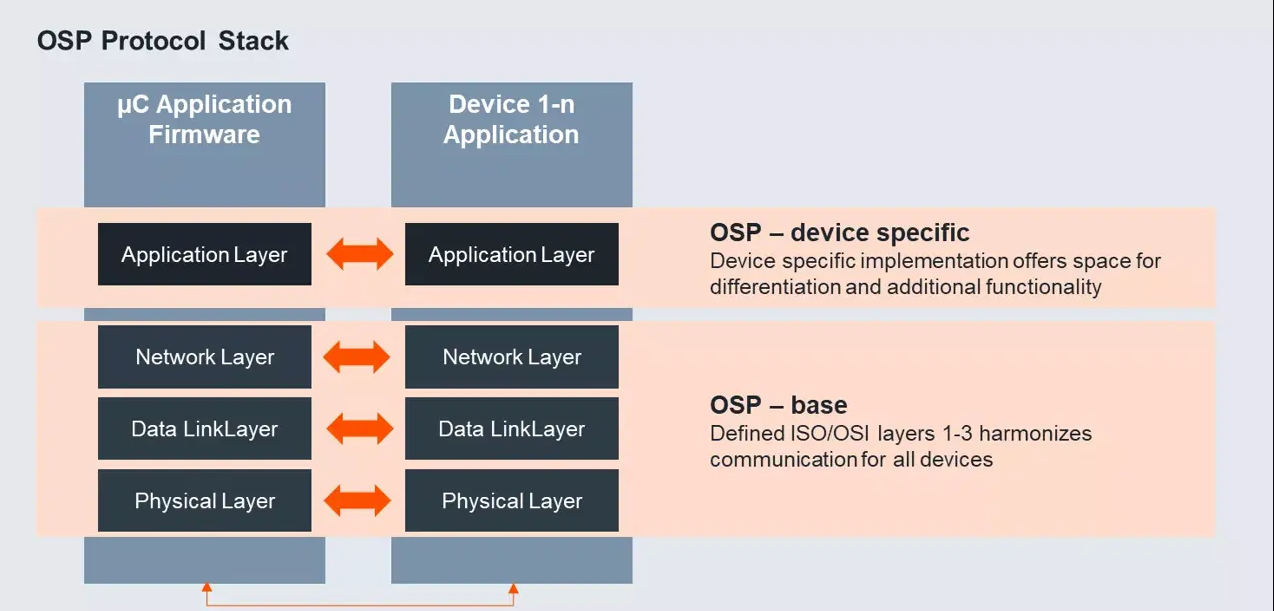 Bildquelle: https://ams-osram.com/de/innovation/technology/open-system-protocol
-260C-1 YEAR -40 to 85 PTOI TPS2113APW Active Production TSSOP (PW) | 8 150 | TUBE Yes NIPDAU Level-1-260C-UNLIM -40 to 85 2113A TPS2113APW.Z Active Production TSSOP (PW) | 8 150 | TUBE Yes NIPDAU Level-1-260C-UNLIM -40 to 85 2113A TPS2113APWR Active Production TSSOP (PW) | 8 2000 | LARGE T&R Yes NIPDAU Level-1-260C-UNLIM -40 to 85 2113A TPS2113APWR.Z Active Production TSSOP (PW) | 8 2000 | LARGE T&R Yes NIPDAU Level
VIN1> VIN2, Falling Hysteresis -40°C to 125°C 2.5 3.5 4.5 % ON-RESISTANCE (INx to OUT) 25°C 62 75 mΩ OUT = -200 mA -40°C to 85°C 90 mΩ ON-State Resistance (TPS2120) V > V PRI REF -40°C to 105°C 100 mΩ VINx≥ 5.0 V -40°C to 125°C 120 mΩ
VI(IN2) 5 V, TJ= 125°C, C L 10 μF, I =L500 mA Measure transition time as 10−90% rise time or from 40 60 40 60 μs t Transition time 3.4 V to 4.8 V on VO(OUT)(see Figure 1b). t IN2 to IN1 transition, V = 5 V, V = 3.3 V, I(IN1) I(IN2) TJ= 125°C, C L 10 μF, I =L500 mA 40 60 40 60 μs Measure transition time
Mikrocontroller benutze ich einen MSP430(G2553) und als Entwicklungsumgebung IAR Embedded Workbench (Version 6.40.1). Der Grund, meinen Probecode als Txt anzuhängen, war, dass dies einfach zu lesen ist. Ich dachte, eine Umbenennung ist nicht schwierig, sorry für die Umstände. Bezüglich deiner Anmerkung, die von
static electricity. ● Static electricity increases as humidity decreases. RelativeHumidity Event 55% 40% 10% Walking across carpet 7,500 V 15,000 V 35,000 V Walking across vinyl floor 3,000 V 5,000 V 12,000 V Motions of bench worker 400 V 800 V 6,000 V Removing DIPs from plastic tube 400 V 700 V 2,000
Kbytes of Flash memory Package T = LQFP U = QFN R = QSOP P = TSSOP M = SOP Temperature range 6 = -40℃~85℃ (industrial-grade) 7 = -40℃~105℃ (automotive-grade 2) 3 = -40℃~125℃ (automotive-grade 1) D = -40℃~150℃ (automotive-grade 0) V1.4 31 CH32V003 Datasheet https://wch-ic.com Series Product Naming Rules
Oszi an C1. Tektronix hat auch manchmal kurzlebiges Zeug eingebaut, Sprague Elko mit 4500 µF/ 40 V, Datecode 7617 und schon nach lächerlichen 49 Jahren im März 2025 defekt :-) Butzo*aussen
Ähnlich eine Kombination aus Kontakt WL zum Reinigen und Kontakt 60 oder Kontakt 61. Bezüglich WD-40. Das Original WD-40 ist wirklich keine gute Idee. Allerdings gibt es seit einiger Zeit unter der Marke WD-40 ebenfalls einen Kontaktreiniger WD-40 SPECIALIST Kontaksspray. Es ist ein bisschen ein
1/CLCL Oscillator Frequency 0 4 0 10.0 MHz tCLCL Clock Period 250.0 100.0 ns tCHCX High Time 100.0 40.0 ns tCLCX Low Time 100.0 40.0 ns tCLCH Rise Time 1.6 0.5 µs tCHCL Fall Time 1.6 0.5 µs 73 0839I–AVR–06/02 Typical The following charts show typical behavior. These figures are not tested during manu
gets into eyes, seek The use of other medical assistance. batteries may result Leaking battery fmu- 40 GB MT id may cause skin structions. Incorrect irritations or burns. charging or charg- • Do not use dam- ing outside the per- aged or altered mitted temperature batteries. Dam- range may destroy aged
mm Single Wires (FLR)/AWG 18–22 Current Carrying Capacity: Up to 7.5 A at 80 °C Temperature Range: –40 °C ... +120 °C (tin plated) –40 °C ... +130 °C (silver plated) –40 °C ... +140 °C (gold plated) Centerline: 2.54 x 2.54 mm Standard 4.0 x 4.0 mm SWS Standard 4.0 x 3.5 mm SWS Staggered Special Applications
Beispiel hier zu finden: https://www.open-std.org/jtc1/sc22/wg14/www/docs/n3193.htm >> The use of base-8 instead of base-10 by integer literals that begin >> with a zero digit is the source of frequent confusion. We propose >> marking the use of such literals as obsolete in order to encourage >> a
introduction of a new >> prefix to explicitly mark literals that are genuinely intended to >> be in base-8. und: >> We propose that a new syntax is added for explicit octal constants, >> with a new prefix 0o or an alternative spelling to mark the beginning >> of a base-8 literal. The old syntax
[116.202.240.228]) by xxx(Postfix) with ESMTPS for <yyy>; Sun, 27 Apr 2025 21:28:40 +0200 (CEST) [/pre] Das Einzige, was man ihnen heutzutage wohl übel nehmen wird ist, dass sie kein DKIM aufgesetzt haben.
Subject: =?UTF-8?B?V2lsbGtvbW1lbiBhdWYg4oCeWmVyc3BhbnVuZ3NidWRl4oCc?= Das Subject komplett als Base64 könnte Minuspunkte geben, weil das Spammer gerne verwenden, um Wortfilter zu umgehen. Thomas schrieb im Beitrag #7868392: > X-Spam-Flag: NO > UI-InboundReport: notjunk:1 Scheint sie aber nicht
Die Version von ComputerBase scheint's zu tun, auch wenn sie behauptet, meine GeForce GraKa könnte keine 3D-Beschleunigung... Die von verschiedenen Stellen angebotenen Versionen unterscheiden sich in der Größe gerne mal um
und das war Prüfungsstoff. Da gab's Rbx möglicherweise noch nicht mal als Konzept. Unsere PDP11/40e war der erste Unix-Rechner auf dieser Seite des Atlantiks. Das erste Linux des TO war Slackware aus einer Packung Disketten. Downloads mit Discovery 2400 wären unbezahlbar gewesen. Und VMware

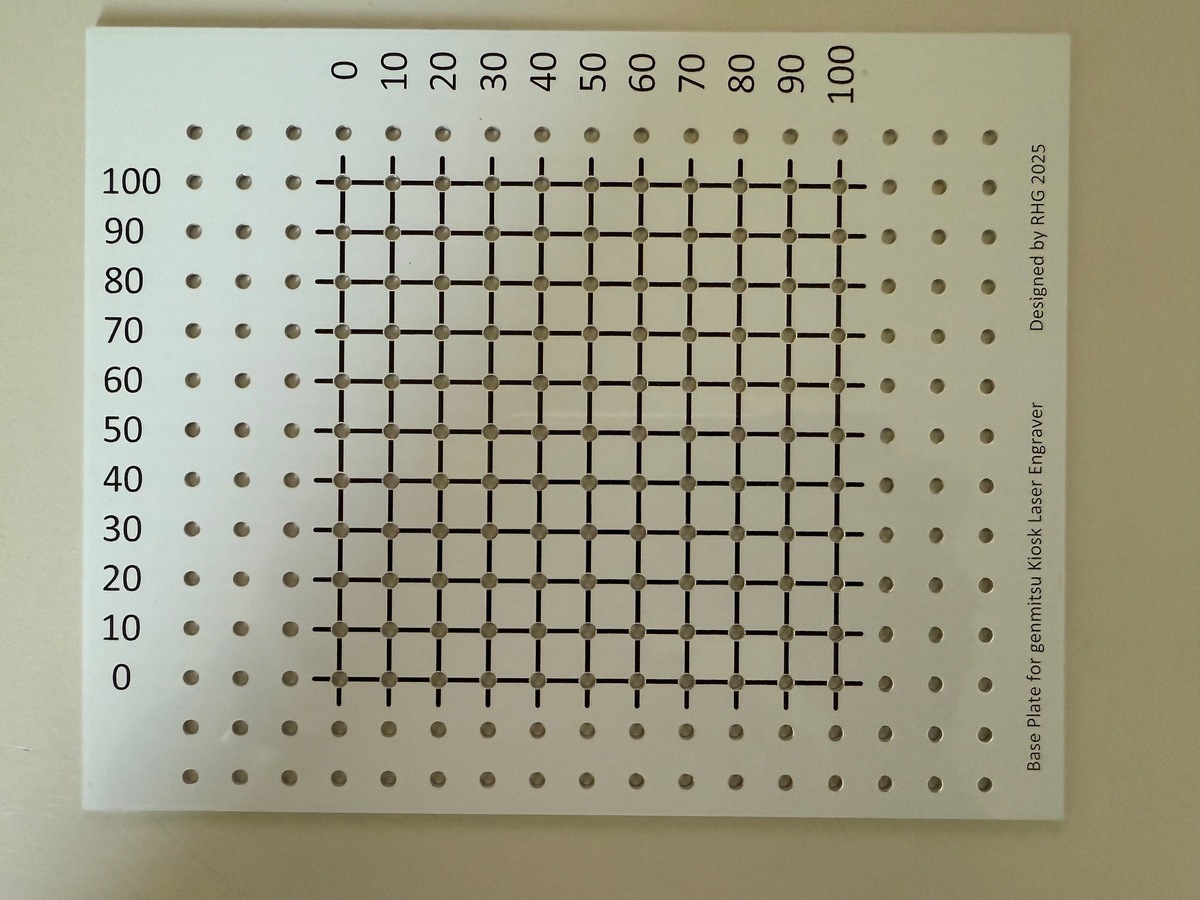
 Bild
Bild

 Bild
Bild
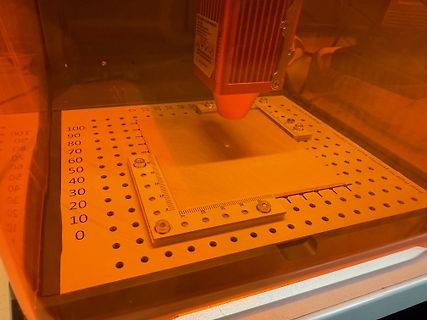
 Bild
Bild
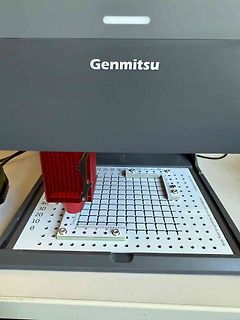
 Bild
Bild