ADP-AT90PWM2-S24 No Need WAVR V5.00 ATMEL MPU/MCU AT90S1200 NONE No Need WAVR V5.00 ATMEL MPU/MCU AT90S1200A NONE No Need WAVR V5.00 ATMEL MPU/MCU AT90S2313 NONE No Need WAVR V5.00 ATMEL MPU/MCU AT90S2323 NONE
calculator to assist in programming AVR microcontrollers (Baudrate, Watchdog, Timer, ...) CrispAVR-USB STK500 V2 kompatibler ISP Adapter mit USB Schnittstelle für Atmel AVR Mikrocontroller (1,8V-5,5V). UCOM-IR - Programmieradapter mit USB Schnittstelle (AT90USB162) und IR-Sender/Empfänger, STK500 V2
diesem Wiki www.canhack.de - Ein Forum, dass sich mit dem CAN bus im Auto beschäftigt www.edevices.lt - USB2CAN inexpensive USB to CAN bus converter USB. eUSB-162 und eUSB-LCD - At90USB162 basiertes universelles USB Prototypen / Mikrocontroller Modul und USB Terminal Interface für HD44780 kompatible LCDs
Option -d ... Kommandozeilenoptionen eines Programmes umgehen grundlegende Einschränkungen eines USB-SATA-Adapters? Magie. Es gibt effektiv zwei Varianten von USB-SATA-Adaptern. Die einen sind simple "USB Mass Storage Devices", die können nur Block-Lese- und Schreibzugriffe auf die Platte durchreichen
Festplatten-Alter häufig wenig zu tun; vor allem bei SSDs 2) Verwende SATA zum Anschließen und keine USB-Dongel. Abgesehen davon, dass USB sau langsam ist (selbst bei USB3.2 Gen 3 4x4 Allrad Super advanced CDTI Version 4 Build 3.123a4), unterscheiden sich die Ergebnisse merklich. Und die optional dritte
letzte Handbuch von 2014 Diskussionen zum usbprog hier im Forum: usbprog von Benedikt Sauter ist ein USB Programmieradapter, der fast alle Atmel-Mikrocontroller unterstützt (ATiny, ATMega, AT89, AT90, ...) und daneben auch für ARM7/9 und MSP universell einsetzbar ist. Der Programmer wurde so entwickelt
miniaturisierte Version findet sich hier www.mikrocontroller.net/articles/AVR-ISP-Stick. Diese ist ab 6,90€ als Bausatz bei eHaJo.de erhältlich. UCOM-IR. Der UCOM-IR Programmieradapter ist ein kommerzieller Bausatz (ca. 25 €), der auf einem AT90USB162 basiert. Durch die Verwendung des STK500v2 Protokolls
" –> 1 2 TV to USB –> 4 "Copy Item" –> "Success" is showing at the end. –> 1 2 My Satellite List, Channel Set., Service Einstellungen., User Set, • Copy data from USB stick intoTV set: All(es) oder MeineProgrammliste
frosted glass or by compensating for the photomultiplier tube output values measured when the tube is at 0 degree and is then rotated to 90 degrees with respect to the light axis. Figure 4-51 shows the polarized-light dependence of a photomultiplier tube with a reflection type photo- cathode, measured with
welches u.a. auch Anwendung in der Automatisierungstechnik findet. Mikrocontroller mit CAN. Atmel AVR. AT90CAN. Atmel AVR Controller mit CAN-Schnittstelle (ein Kanal) Speicher: (FLASH,EEPROM,RAM) AT90CAN32 -> 32KB 1KB 2KB AT90CAN64 -> 64KB 2KB 4KB AT90CAN128 -> 128KB 4KB 4KB 15 CAN "Message Objects", jedes
und MCP2515 Tutorial Olimex AVR-CAN mit AT90CAN128 Dongles. Selbstbau Projekte. Can200 Linux Project von Martin Homuth-Rosemann CAN Businterface am Parallelport (LPT). Mit SJA1000. USB CAN Bus Interface mit AVR ATmega162 Open Source. Mit ATmega162
Pulsuhrempfänger mit AVR Butterfly DCF77-Funkwecker mit AVR Fahrradcomputer Einfacher und billiger Webserver mit AtMega32 AVR RFM12 RF SOAP USB / AtMega88 / RFM12, optional LiPo Akku mit Lader Selbstbau Schachcomputer SHAH mit ATMega88V Giess-o-mat – vollautomatische Blumengießanlage POV-LED mit ATmega8, USB und Beschleunigungssensor
Microprocessor Fundamentals (Internetseite) Tipps & Hinweise. AVR Typen – Die verschiedenen Typen (AT90S, ATmega, ATtiny) AVR Checkliste – Liste mit Hinweisen zur Lösung üblicher Probleme (Little) Endianess Guide for Atmel AVR Übersicht über die Endianess der AVR und AVR32 Fuse-Bits – Das Setzen der
1.245 V — Feedback Input Bias Current VFB — 10 — pA — Quiescent Current – PFM QPFM — 19 30 µA Measured at VOUT = 4.0V; Mode EN = VIN, OUT = 0 mA; Note 3 Quiescent Current – PWM I — 220 — µA Measured at V ; EN = V QPWM OUT IN Mode OUT = 0 mA; Note 3 Quiescent Current – Shutdown I — 0.7 2.3 µA V = EN = GND
Address What 1 breakpoint del y 0x00000000 /home/benny/Projekte_lokal/02_Coding/02_avr_at90usb162/USB/trunk/USB_Serial _ASM/bin/pre/main.i:960 2 breakpoint keep y 0x00000660 /home/benny/Projekte_lokal/02_Coding/02_avr_at90usb162/USB/trunk/USB_Serial _ASM/bin/pre/main.i:3049 (gdb) advance main Program received signal SIGINT, Interrupt. SPIaddr () at /home/benny/Projekte_lokal/02_Coding/02_avr_at90usb162/USB/trunk/USB_Serial_ASM/bin/pre/main.i:1074 (gdb) si main () at /home/benny/Projekte_lokal/02_Coding/02_avr_at90usb162/USB/trunk/USB_Serial_ASM
data. xxx: to the USB terminal is abnormal, “USB Overloaded” is A/D conversion value of voltage at the displayed and the protection function works and the Even if no abnormality is noted while servicing the unit, an power
Hallo, danke für die vielen Antworten. Ja, mein MIDI-Controller hat einen 5pol-Din sowie auch USB. Allerdings habe ich noch einen Atmega 90USB162 für die MIDI Komunikation auf meinem Board, da ich auf diesem die LUFA USB Midi Firmware darauf habe. Wenn ich Johannes richtig verstanden habe dann
Stefan M. schrieb im Beitrag #7944973: > Ja, mein MIDI-Controller hat einen 5pol-Din sowie auch USB. Allerdings > habe ich noch einen Atmega 90USB162 für die MIDI Komunikation auf meinem > Board, da ich auf diesem die LUFA USB Midi Firmware darauf habe. Wenn du den ATmega weglässt, und statt
devices are started and initialized. 2.1.Operation j 2. Hold down buttons " VOLUME d" and "OLUME f" at the same time and press the power button to turn on the power. Startup display Flashing of the standby indicator LED(White). ↓ "Initialize" displayed for 5 seconds Wait for more than 90 seconds after
<avr/iom2560.h> #elif defined (__AVR_ATmega2561__) # include <avr/iom2561.h> #elif defined (__AVR_AT90CAN32__) # include <avr/iocan32.h> #elif defined (__AVR_AT90CAN64__) # include <avr/iocan64.h> #elif defined (__AVR_AT90CAN128__) # include <avr/iocan128.h> #elif defined (__AVR_AT90USB82__) # include <avr/iousb82.h> #elif defined (__AVR_AT90USB162__) # include <avr/iousb162.h> #elif defined (__AVR_AT90USB646__) # include <avr/iousb646.h> #elif defined (__AVR_AT90USB647__) # include <avr/iousb647.h> #elif defined (__AVR_AT90USB1286__) #
The A. schrieb im Beitrag #7872245: > ich habe hier ein board mit AT90USB162 ... > Gibt es eine Ersatz-Software mit anderen Namen? > und der Möglichkeit per USB die Firmware zu updaten. Unter Linux sollte dafür das Tool *dfu-programmer* funktionieren. Der AT90USB162
Prinzipiell kann AVRDUDE auch FLIP bedienen. Der AT90USB162 müsste meiner Meinung nach -c flip1 sein. Ich habe das aber vor Jahren das letzte Mal selbst benutzt.
CARD_POWER 1 G N D 20 FG1 DIR G LOW = Power OFF FG2 TC74VHCT245AFT SCAB1A8100 R255 1 IC94B 100k HD74LV32AT D IC90C IC90D RPC05T@J D 5 CARD_XBUSEN HD74LV00AT HD74LV00AT XCARD_BUS_ENABLE 6 RPC05T@J 9 12 XCA_IOIS16 4 R254 22 8 11 XIOIS16 10 13 RPC05T@J R256 NIU D +5 D +3.3 D LTLXBIG LTLXBIG R257 0 R258 NIU R259
CARD_POWER G N D FG1 1 DIR G LOW = Power OFF 20 FG2 0 TC74VHCT245AFT SCAB1A8100 R255 1 IC94B 100k HD74LV32AT D IC90C IC90D RPC05T@J D 5 CARD_XBUSEN HD74LV00AT HD74LV00AT XCARD_BUS_ENABLE 6 RPC05T@J 9 12 XCA_IOIS16 4 R254 22 8 11 XIOIS16 10 13 RPC05T@J R256 NIU D +5 D +3.3 D LTLXBIG LTLXBIG R257 0 R258 NIU R259
Sache ist, man bekommt von TI recht günstig eine funktionsfähige Hardware, die sich direkt an den USB-Port anstecken lässt. Zudem ist auf dem "Emulation" benannten Teil der roten Platine neben der Programmerhardware auch ein USB-Seriell-Adapter integriert. Nachteil ist, dass der hier verwendete MSP430G2211
USB-Over-Ethernet geht natürlich auch. Also sowas: https://www.reichelt.at/at/de/shop/produkt/4x_usb_over_gigabit_lan_metallgehaeuse-106638 Aber ich würde mich auch erst einmal auf eine Sammelbestellung
cursor; be careful changing this, it can result in not correct displaying the screen! 3 DB COPY TV to USB Press OK DB COPY TV to USB 4 DB READ USB to TV Press OK DB READ USB to TV 5 CLR_TEMP_R 119 128 128 128 128 128 128 Red colour temperature setting 6 CLR_TEMP_G 109 128 128 128 128 128 128 Green colour
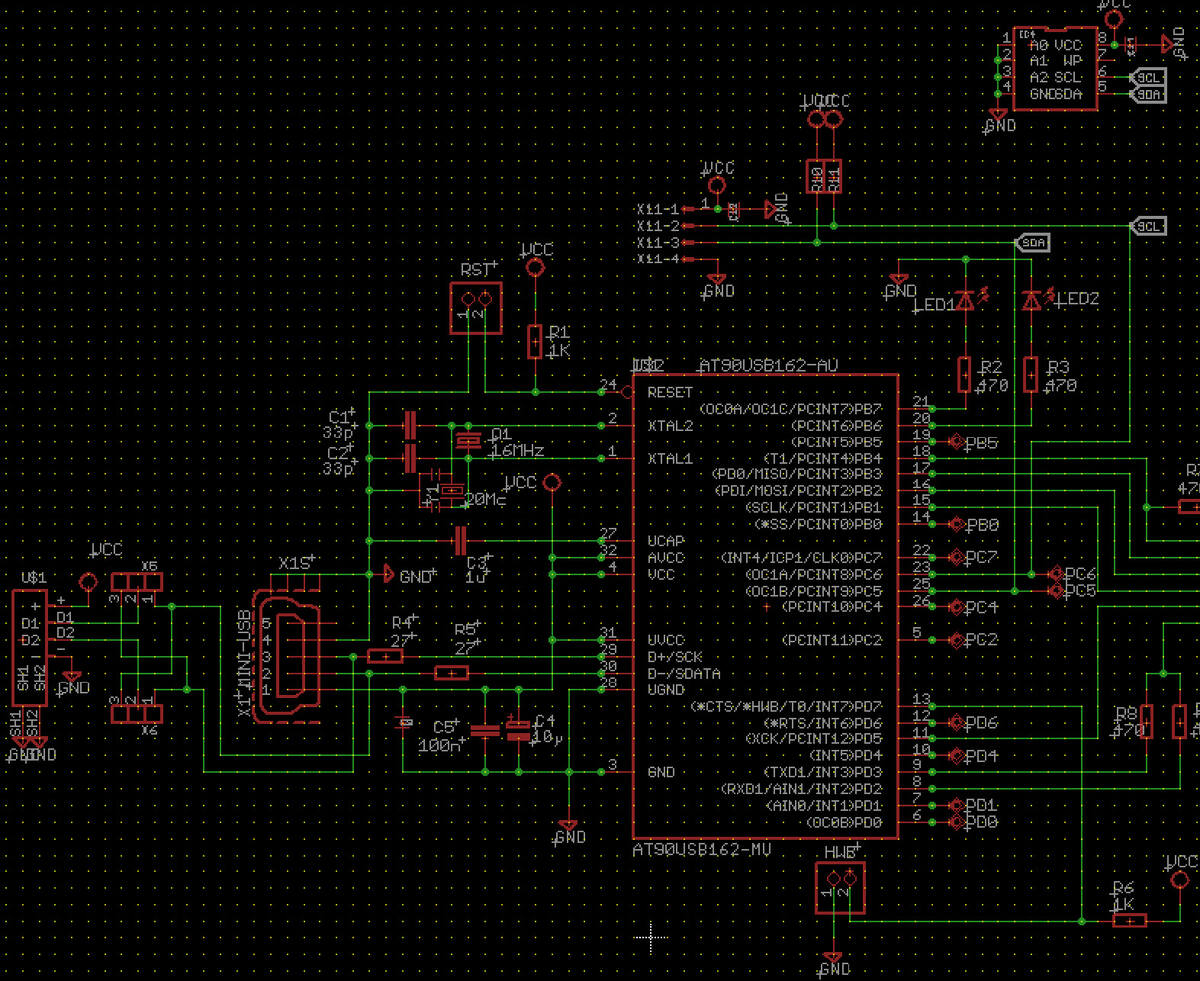
übereinstimmen, bis auf die Ladekapazität. Bei den steht 20pF. Wäre es in Ordnung wenn ich den auch für den AT90USB162-16AU nehmen würde? Es geht um den Quarz auf diesem Schaltplan Gruß
Watchdog Timers (WDT) 0x14 eFuse reset Core Reset Triggered by eFuse CRC error Triggered when external USB host sends a specific com- 0x15 USB (UART) reset Core Reset mand to the Serial interface of USB-Serial-JTAG. See 30 USB Serial/JTAG Controller (USB_SERIAL_JTAG) Triggered when external USB host sends
Watchdog Timers (WDT) 0x14 eFuse reset Core Reset Triggered by eFuse CRC error Triggered when external USB host sends a specific com- 0x15 USB (UART) reset Core Reset mand to the Serial interface of USB-Serial-JTAG. See 30 USB Serial/JTAG Controller (USB_SERIAL_JTAG) Triggered when external USB host sends
1.5 as the USB clock 01: The PLL clock is directly used as the USB clock 10: Divide the PLL clock by 2 as the USB clock 11: Divide the PLL clock by 3 as the USB clock 21:18 PLLMULFCT[3:0] PLL multiplication factor
my entire collection of tape machines from the Abbey Road J37 to my 3M M79 and the Studer 827 all at different ips settings. I really like the way I can hit the tape machines as I normally do and instantly be able to edit in Pro Tools, without having to do syncing or bouncing back and forth between
wie z.B. den Röhrenverstärkern oder den XXXL Plattendrehern, reine HiFi Ideologie. Oft hört dann zu 90% das Auge mit und das Ohr vertaubt ;-)
2 G Sattler, DJ4LB 1973/2 66 - 80 Television 2 m Band A 144 MHz Linear Amplifier with 25 W Output at 12 V to 14 V G Otto, DC6HL 1973/2 81 - 90 Measuring A Dual Input Preamplifier with 2:1 Prescaler for Frequency Counters from W R Kritter, DL8TM 1973/2 91 - 94 Technology 1 Hz to Min 100 MHz Measuring
used for data change. As Figure 19-3 on page 179 shows, when UCPOLn is zero the data will be changed at rising XCKn edge and sampled at falling XCKn edge. If UCPOLn is set, the data will be changed at falling XCKn edge and sampled at rising XCKn edge. 19.5 Frame formats A serial frame is defined to be
das Flip-Flop einen definierten Zu- für Endgeräte, die mit Low-Speed (1,5 stand einnimmt, wenn der USB-Schalter MBit/s) und Full-Speed (12 MBit/s) als über die USB-B-Buchse mit dem PC ver- Übertragungsrate auf den USB-Datenlei- bunden wird. Das an der USB-A-Buchse tungen arbeiten. „Hi-Speed“ (480 MBit
listet. Hinzu kommen DU Devices wie AVR64DU32. Die Frontseite der AVR-LibC v2.1.0 listet unter USB: [pre] at90usb82 at90usb162 at90usb646 at90usb647 at90usb1286 at90usb1287 atmega8u2 atmega16u2 atmega16u4 atmega32u2 atmega32u4 atmega32u6 [/pre] also etwas veraltet. Dann gibt's noch
versucht. Diesmal ging es etwas leichter von der Hand, da der aus einem alten Fussshalter ausgelöteten AT90USB162 etwas größer ist. Ich hab es mal auf einer Lochstreifenplatine verlötet. Es sollen noch Konnektoren ran, damit man die Pins abgreifen kann. Als Draht habe ich einen beschichteten Kupferlackdraht
Hallo, ich habe hier einen AT90USB162 und möchte ihn nach dem Schlafenlegen mit einem Pin Change Interrupt an PB4 wieder aufwecken. Das soll mit einer LED an PB5 optisch angezeigt werden. Leider lässt sich der Contrller nicht mehr
interrupt * 2024 * */ #ifndef F_CPU // Include guards #define F_CPU 8000000UL // AT90USB162 runs at 8 MHz clock speed - unsigned long #endif // Include guards //#include <stdint.h> // Integer variable #include <avr/io.h> // I/O ports #include <util/delay.h>
Voltages – 2.7 - 5.5V Operating temperature – Industrial (-40°C to +85°C) Maximum Frequency – 8 MHz at 2.7V - Industrial range – 16 MHz at 4.5V - Industrial range 2 AT90USB82/162 7707F–AVR–11/10 AT90USB82/162 1. Pin Configurations Figure 1-1. Pinout AT90USB82/162 B . C ) / 1 T A N IN A K C C C C D S D
Hi, i habe eine Platine mit einem AT90USB162 aufgebaut, an USB angeschlossen tut sich aber nix, hab mal am quarz gemessen (mit'm oszi), da schwingt nix ;( i hatte das so verstanden das da direkt der USB Bootloader funktioniern soll
Charly B. schrieb im Beitrag #7602596: > AT90USB162 Ja, der wird mit USB-Bootloader ausgeliefert. Zeig mal deinen Aufbau, als Schaltplan und Foto.
kleinen Streich erinnert, den wir vor einigen Jahren unseren Kollegen gespielt haben. Ein kleiner AT90USB162 wurde dazu mit der LUFA-Bibliothek von Dean Camera (Four Walled Cubicle) so programmiert, daß er sich beim Rechner als HID-Tastatur und -Maus angemeldet, und zufällig "eine Taste gedrückt" oder
warten, um offiziellen USB-Support zu bekommen. Wirklich relevant wurde USB ohnehin erst Ende der 90er ("Useless Serial Bus").
signal modulation spec. Note: B models: 80% In adjustment, you must setting to modulation of signal at 80%. Other models: 90% 1. Receive a RF PAL 100% Full White or Split Colour bar shown as below. Note: Sub-contrast adjustment is unadjusted for AV/ HD input. But, when needing the adjustment cho- sen
more V R CENTER ....................................................................................90 W X SURROUND L/R ...........................................................90 W + 90 Wal Noise (IHF-A Network) R SURROUND BACK L/R ................................................90 W + 90 W FRONT L
Table 2-16. Other Clocks Name Type Description CLK14 I Oscillator Clock: Used for 8254 timers. Runs at 14.31818 MHz. This clock is permitted to stop during S3 (or lower) states. CLK48 I 48 MHz Clock: Used to run the USB controller. Runs at 48.000 MHz. This clock is permitted to stop during S3 (or lower
Type-A female sockets reserved on the user's system board. - 162- STC32G Series Technical Manual USB Type-A-USB Type-A - 163- STC32G Series Technical Manual 5.16.4 Download with U8-Mini tool, supports ISP online and offline downloads grout Comput er/PC STC Type USB

 Bild
Bild
 Bild
Bild